
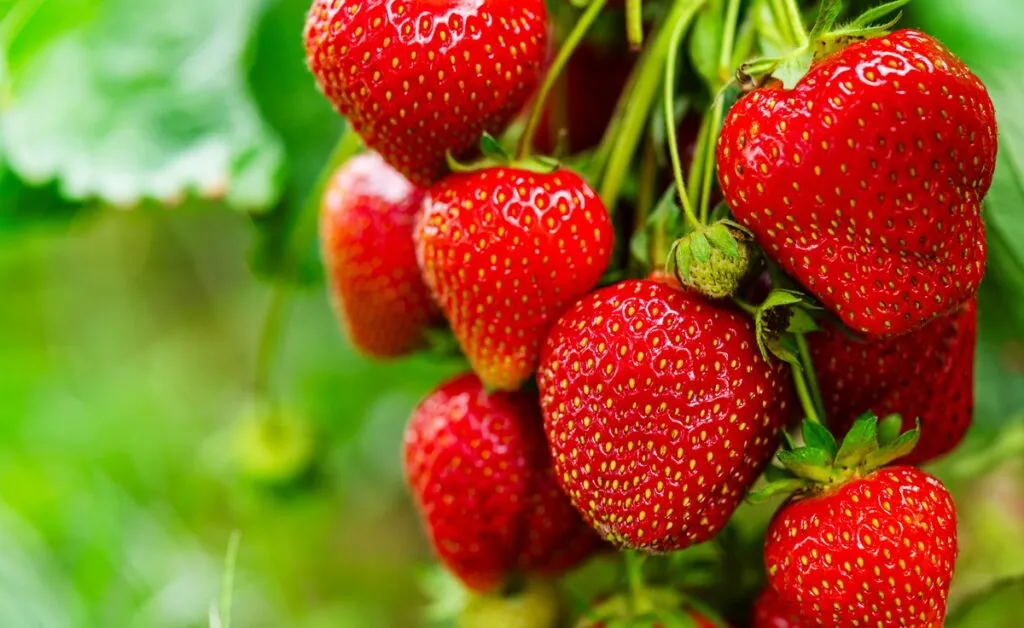
In the quest for sustainable agriculture, strawberry producers across Europe are facing a sweet challenge: how to reduce the environmental impact of their crops without compromising yield or quality. A recent study published in *Food and Energy Security* offers some tantalizing insights, providing a roadmap for breeders and growers to cultivate strawberries with a lighter carbon footprint.
The research, led by Kofi Armah Boakye-Yiadom from the Department of Agricultural, Food and Environmental Sciences at Università Politecnica delle Marche in Italy, evaluated the environmental impact of different strawberry genotypes and cultivation systems. Using Life Cycle Assessment (LCA) methodology, the team analyzed 57 strawberry genotypes across 19 field trials, comparing open field and protected systems.
The findings reveal a significant variation in climate change impacts, with an average of 0.58 kg CO2 eq. per kilogram of strawberries produced. The highest impact was observed in a greenhouse system at 3.8 kg CO2 eq./FU, while the lowest was in a polyethylene-covered tunnel system at 0.21 kg CO2 eq./FU. These results underscore the pivotal role of cultivation systems, genotype selection, and management practices in the environmental performance of strawberry production.
“Our study highlights the critical environmental impacts associated with strawberry production,” said Boakye-Yiadom. “By understanding these impacts, breeders can develop high-quality cultivars designed for sustainable production under different climatic environments.”
The commercial implications of this research are substantial. For strawberry producers, the findings provide a benchmark to evaluate and improve the sustainability of their operations. By adopting low-impact cultivation systems and selecting genotypes with favorable environmental profiles, growers can reduce their carbon footprint and meet the growing consumer demand for sustainably produced fruits.
Moreover, the study offers valuable insights for policymakers and industry stakeholders. By identifying the key drivers of environmental impact, the research can inform policy decisions aimed at promoting sustainable agriculture practices. “This work is not just about reducing emissions; it’s about creating a more resilient and sustainable strawberry industry,” Boakye-Yiadom added.
As the agriculture sector grapples with the challenges of climate change and resource depletion, studies like this one are crucial. They provide the data-driven insights needed to guide the development of sustainable practices and technologies. For strawberry producers, the message is clear: by embracing innovative cultivation systems and selecting the right genotypes, they can produce delicious, high-quality fruits while minimizing their environmental impact.
In the ever-evolving landscape of sustainable agriculture, this research serves as a beacon, illuminating the path forward for strawberry producers and breeders. As the industry continues to innovate, the insights from this study will undoubtedly shape the future of strawberry cultivation in Europe and beyond.