
In the rolling hills of tea plantations and the bustling floors of processing facilities, a quiet revolution is underway, driven not by steam or machinery, but by data and algorithms. Machine learning (ML), a subset of artificial intelligence, is emerging as a powerful tool to tackle longstanding challenges in the tea industry, promising to enhance quality, sustainability, and efficiency. A comprehensive review published in *Beverage Plant Research* sheds light on how ML is transforming the tea sector, from cultivation to cup.
The tea industry, valued at over $150 billion globally, grapples with quality inconsistency, climate change impacts, labor shortages, and outdated production methods. These challenges threaten both the economic viability and environmental sustainability of tea production. Enter machine learning, which offers data-driven solutions to optimize every stage of the tea production chain.
“Machine learning allows us to process vast amounts of data and extract meaningful insights that were previously hidden,” says Fuquan Gao, lead author of the study and a researcher at the Fujian Provincial Key Laboratory of Haixia Applied Plant Systems Biology. “This enables us to make more informed decisions, automate processes, and ultimately improve the quality and sustainability of tea production.”
The review highlights several key applications of ML in the tea industry. In cultivation, automated monitoring systems equipped with sensors and cameras can track soil health, plant growth, and pest infestations in real-time. This data can then be fed into ML algorithms to predict optimal planting times, irrigation needs, and pesticide applications, reducing resource waste and environmental impact.
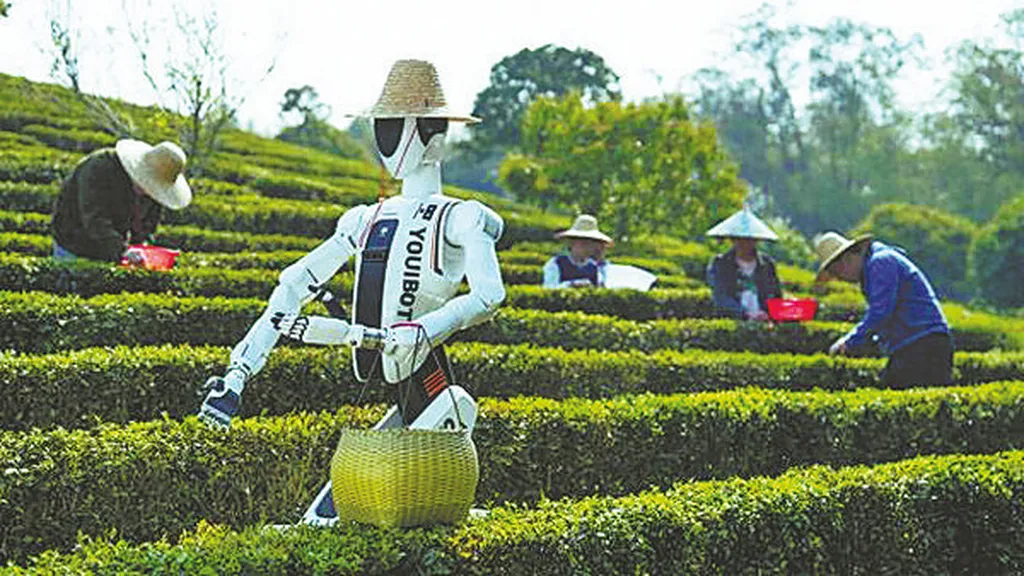
During harvesting, ML-powered robotic systems can identify and pick tea leaves at the peak of quality, ensuring consistency and reducing labor costs. “These systems can work around the clock, adapting to changing conditions and improving overall productivity,” Gao explains.
Processing is another area where ML is making waves. Non-destructive spectroscopic and imaging techniques, coupled with ML algorithms, can assess the quality of tea leaves without physical sampling. This not only speeds up the process but also reduces waste. Moreover, ML can optimize processing parameters such as temperature, humidity, and fermentation time to enhance tea quality and yield.
The commercial implications of these advancements are significant. For tea producers, ML can lead to higher quality products, reduced costs, and increased yields. For consumers, it promises more consistent and better-tasting tea. For the environment, it offers a path towards more sustainable and efficient production methods.
However, the path to widespread adoption is not without hurdles. Limited data availability, scalability issues, and integration with established practices pose significant challenges. To overcome these, the review suggests advanced preprocessing techniques, resource-efficient ML architectures, and user-centered interfaces that bridge computational insights with traditional expertise.
As the tea industry stands on the brink of this data-driven revolution, the insights from this review provide a roadmap for researchers, industry stakeholders, and practitioners. By harnessing the power of machine learning, the tea industry can navigate its challenges and unlock new opportunities for growth and sustainability. The future of tea, it seems, is not just in the leaves, but in the data.
Published in *Beverage Plant Research*, the study was led by Fuquan Gao of the Fujian Provincial Key Laboratory of Haixia Applied Plant Systems Biology, Haixia Institute of Science and Technology, and College of Horticulture at Fujian Agriculture and Forestry University.