
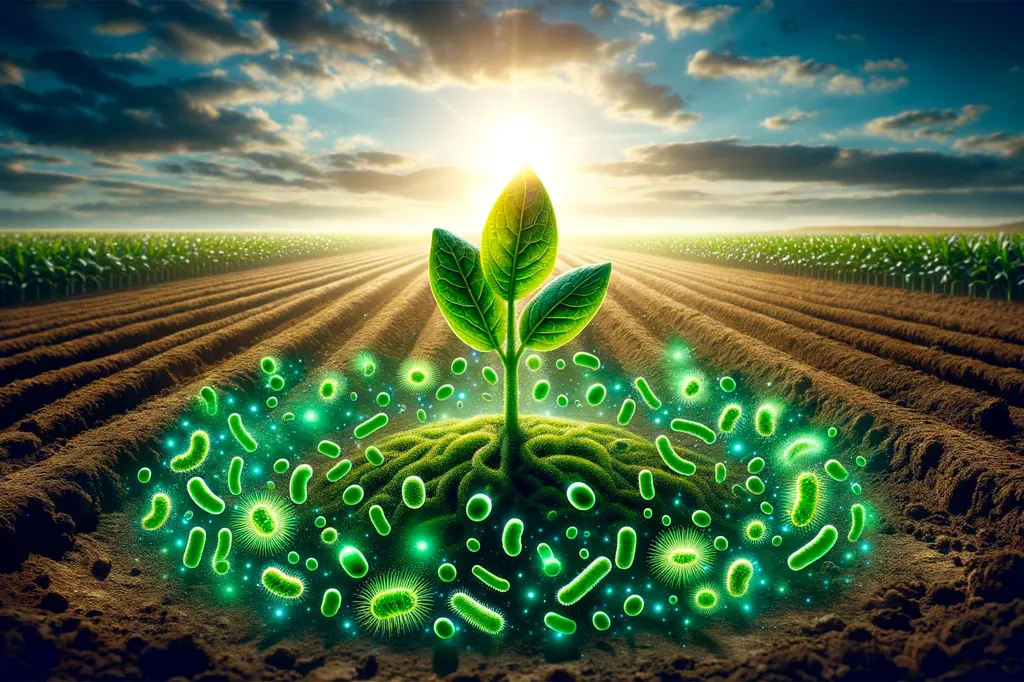
In the heart of every thriving agricultural ecosystem lies an intricate dance of life, a symphony of plants and microbes working in harmony to boost crop health and productivity. This dance, often overlooked, is now taking center stage as researchers delve deeper into the potential of microbial partnerships to revolutionize sustainable agriculture. A recent review published in *Circular Agricultural Systems* sheds light on these relationships, offering a glimpse into a future where microbes could play a pivotal role in addressing some of the most pressing challenges faced by modern agriculture.
The review, led by Nuwandhya S. Dissanayaka from the Agronomy Division at the Coconut Research Institute in Sri Lanka, explores the complex interactions within the soil microbiome and their impact on sustainable crop production. These interactions, often referred to as ‘agricultural engines,’ have historically supported global food security. However, with the backdrop of soil degradation and over-reliance on synthetic inputs, the need to understand and harness these partnerships has never been more critical.
“Plants and microbial organisms develop close symbioses that significantly influence agricultural productivity and plant health,” Dissanayaka explains. “These partnerships are crucial for nutrient cycling, biotic stress suppression, hormone modulation, and stimulating crop growth.”
The review highlights the potential of biological nitrification inhibitors, biocontrol agents, and biofertilizers, such as nitrogen-fixing bacteria and phosphorus-solubilizing microbes, to optimize nutrient use efficiency, suppress biotic stress, enhance nutrient availability for crops, and mitigate climate change. These innovations could not only improve crop yields but also reduce the environmental footprint of agriculture, a win-win for both farmers and the planet.
The commercial implications of this research are substantial. As the global population continues to grow, so does the demand for food. Traditional farming methods, reliant on synthetic fertilizers and pesticides, are increasingly unsustainable. Microbial partnerships offer a promising alternative, one that is both environmentally friendly and economically viable.
However, the path to commercial adoption is not without its challenges. Environmental factors and the variability of microbial products can pose significant hurdles. Yet, as Dissanayaka notes, “Future research directions should focus on integrating microbial partnerships into sustainable climate resilience agricultural practices. This holistic approach can address current agricultural challenges and pave the way for a more resilient and environmentally friendly food production system.”
The review concludes by envisioning a future where microbiome-based solutions improve global food production and agricultural resource use efficiency. As we stand on the brink of a new agricultural revolution, the dance of life beneath our feet could very well be the key to feeding the world sustainably.