
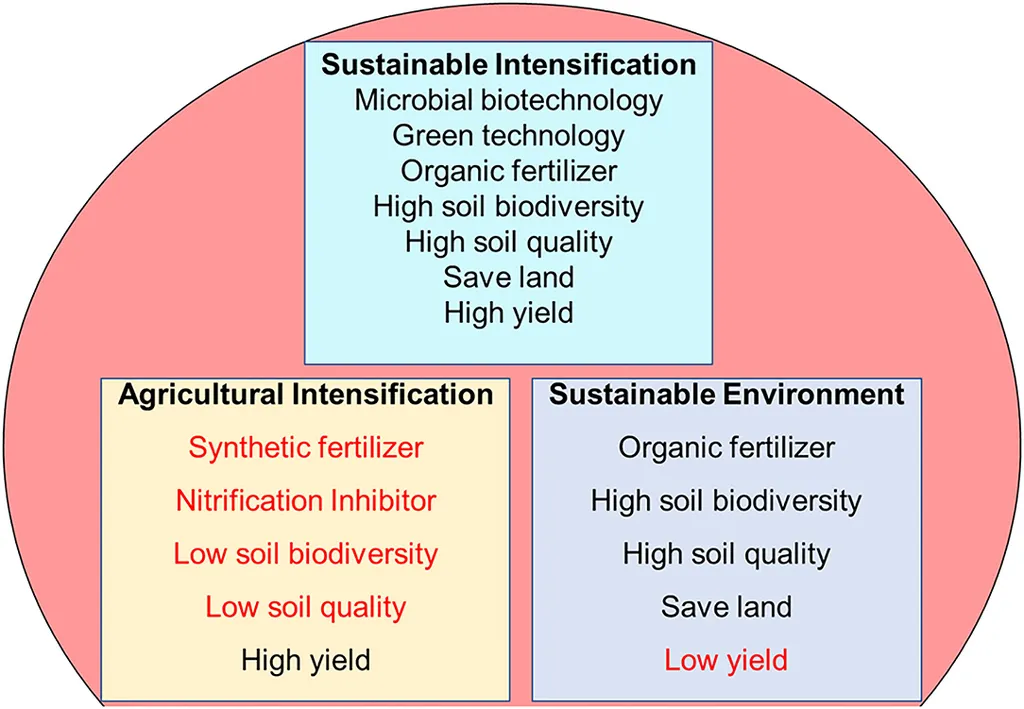
In the heart of Nepal’s Kaski district, a promising solution to the global challenge of sustainable food production is taking root. Researchers have found that combining phosphate-solubilizing bacteria (PSB) with conventional chemical fertilizers can significantly boost maize yields, offering a potential game-changer for farmers and the agriculture sector at large.
The study, led by Shubha Sigdel from the Faculty of Agriculture at Agriculture and Forestry University in Chitwan, Nepal, and published in ‘Technology in Agronomy’, explored the impact of integrating PSB with NPK fertilizers on the growth and yield of maize. The findings are compelling: the combined application of chemical fertilizers at the recommended rate with PSB resulted in the highest maize yield of 3.92 metric tons per hectare, a notable increase compared to the control group.
“This approach not only enhances nutrient use efficiency but also has the potential to reduce the environmental footprint of agriculture,” Sigdel explained. “By optimizing nutrient supply, we can produce more food with fewer resources, addressing both food security and sustainability concerns.”
The research employed a randomized complete block design with seven treatments and three replications, ensuring robust and reliable data. The treatments included varying combinations of urea, diammonium phosphate (DAP), muriate of potash (MOP), and PSB. The results were clear: the combination of the recommended NPK dose with PSB (T3) outperformed all other treatments, including the control, in terms of yield, yield attributes, and growth parameters.
For the agriculture sector, these findings hold significant commercial potential. Farmers can potentially increase their maize yields by adopting this integrated approach, leading to higher productivity and profitability. Moreover, the use of biofertilizers like PSB can reduce dependency on chemical fertilizers, lowering input costs and mitigating environmental impacts.
“This research opens up new avenues for sustainable agriculture,” said a spokesperson for an agricultural technology firm. “The integration of biofertilizers with conventional methods can drive innovation in the sector, benefiting both farmers and the environment.”
The study’s implications extend beyond Nepal, offering a scalable solution for global agriculture. As the world grapples with the dual challenges of feeding a growing population and mitigating climate change, innovative approaches like this one are crucial. By enhancing nutrient use efficiency and boosting crop yields, this research could shape future developments in agricultural practices, contributing to a more sustainable and food-secure world.
In the quest for sustainable food production, this research from Nepal shines a light on the path forward, demonstrating the power of integrating traditional and innovative methods to meet the demands of a changing world.