
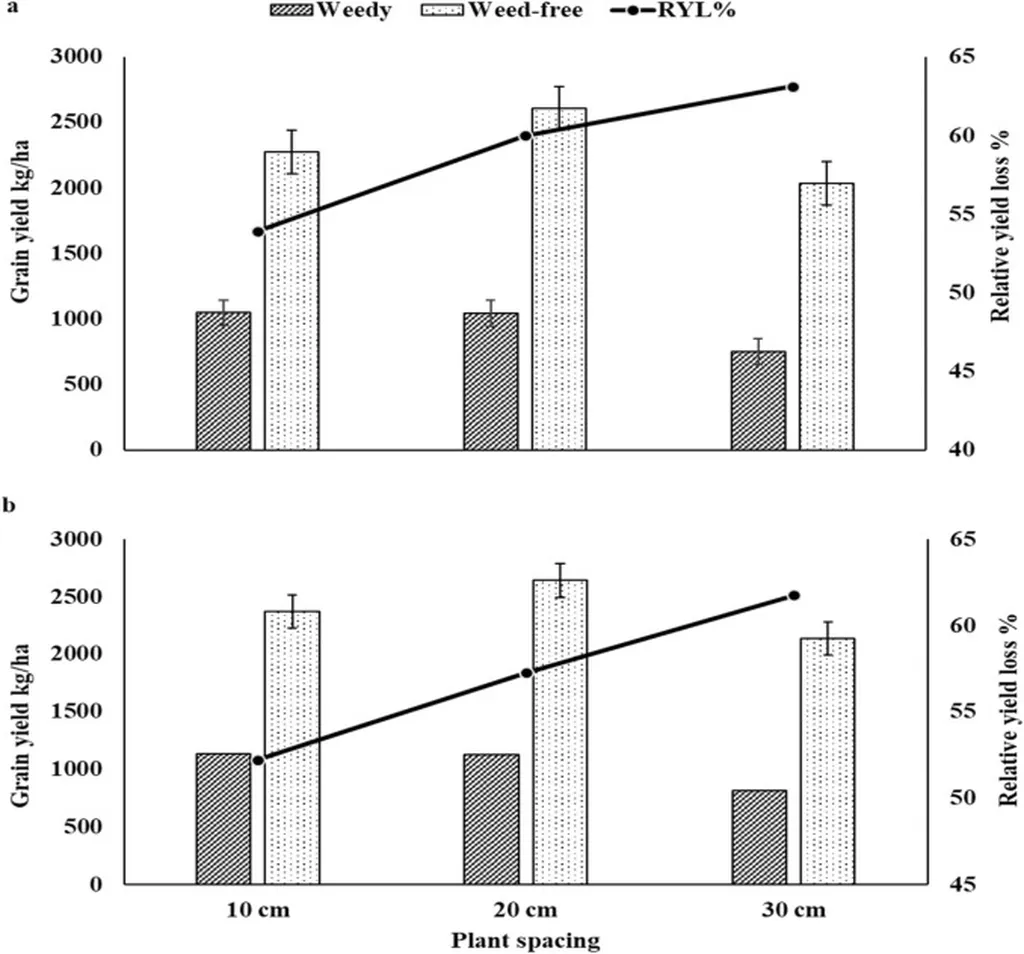
In the ever-evolving landscape of agriculture, understanding the competitive dynamics between crops and weeds is crucial for optimizing yields and ensuring food security. A recent study published in *Technology in Agronomy* sheds light on this very topic, focusing on the competitive outcomes of quinoa genotypes against two notorious weeds: wild radish (Raphanus raphanistrum) and ryegrass (Lolium multiflorum). Led by Leandro Galon from the Laboratory of Sustainable Management of Agricultural Systems at the Federal University of Fronteira Sul, the research provides valuable insights into how different quinoa varieties fare when faced with increasing levels of weed infestation.
The study, conducted under greenhouse conditions, employed a randomized complete block design to compare the competitive ability of three quinoa genotypes—Q 1303, Q 1331, and Q 1324—against wild radish and ryegrass. The experiments began by determining the optimal plant density for both quinoa and weeds, which was found to be 20 plants per pot. Subsequently, five replacement series experiments were established to assess the competitive interactions between quinoa and the weeds, with species combined in relative proportions ranging from 100:0 to 0:100.
The results revealed that quinoa genotypes competed for the same environmental resources as the weeds and exhibited similar competitive ability against each weed species. However, the study highlighted that quinoa showed greater relative growth in the presence of ryegrass but reduced growth when infested with wild radish, which proved to be a more competitive weed species. “The competitive ability of quinoa genotypes varied significantly depending on the weed species,” noted Leandro Galon, the lead author of the study. “This understanding is crucial for developing effective weed management strategies that can enhance quinoa productivity.”
The findings have significant implications for the agriculture sector, particularly for farmers cultivating quinoa. By identifying the competitive dynamics between quinoa and common weeds, farmers can make informed decisions about weed management practices. This knowledge can lead to the development of more effective and sustainable strategies for controlling weed infestations, ultimately improving quinoa yields and economic returns.
Moreover, the study’s insights can guide breeders in developing quinoa varieties with enhanced competitive abilities against specific weed species. “Understanding the competitive interactions between crops and weeds is essential for breeding programs aimed at improving crop resilience,” added Galon. This research paves the way for future developments in agronomy, where the focus is on creating more robust and competitive crop varieties that can thrive in the presence of weeds.
The study, published in *Technology in Agronomy*, underscores the importance of competitive ability in agricultural systems and provides a foundation for future research in this area. As the agriculture sector continues to evolve, such studies will be instrumental in shaping sustainable and productive farming practices. By leveraging the findings of this research, farmers and breeders can work towards a future where quinoa and other crops can coexist with weeds while maintaining high productivity and profitability.