
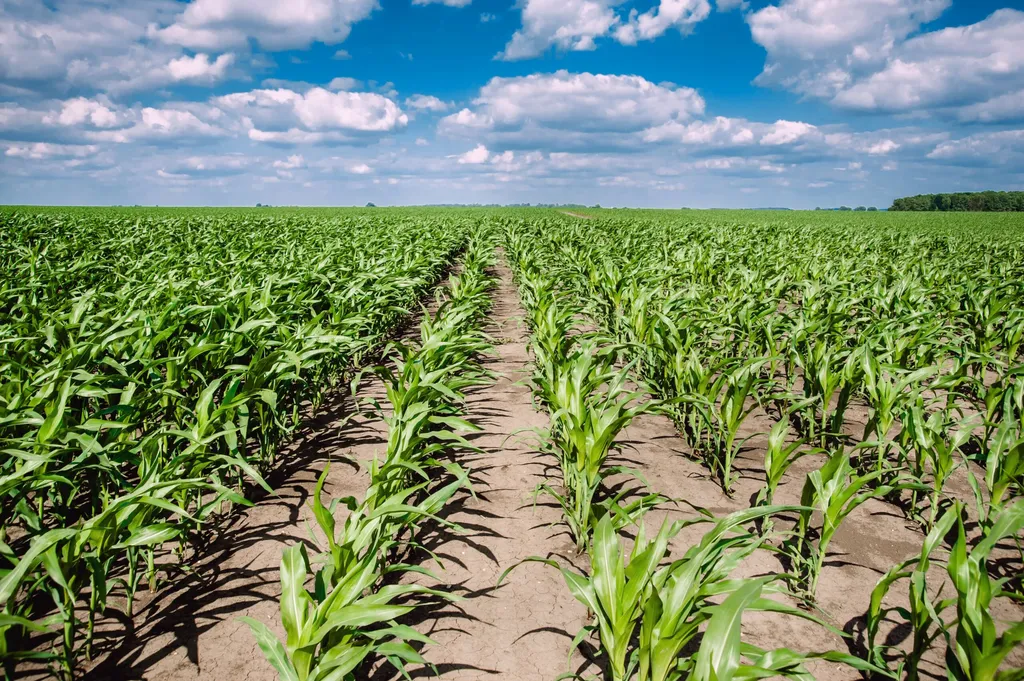
In the heart of America’s Corn Belt, a new player is emerging in the agricultural landscape, and it’s not a new variety of corn or soybeans. It’s Miscanthus × giganteus, or M×g, a towering perennial grass that’s catching the eye of farmers and researchers alike. A recent study published in *GCB Bioenergy* sheds light on the commercial potential of this bioenergy crop, offering insights that could reshape the future of sustainable agriculture.
The study, led by Shah-Al Emran from the University of Illinois Urbana-Champaign, is the first to examine the spatial and temporal variability of M×g yields in commercial fields in Iowa. The findings are promising, demonstrating that M×g can be a profitable addition to a farmer’s rotation, especially under favorable conditions.
The research team used a novel approach, combining remote sensing technology with ground truth data to predict yield variability across four commercial M×g fields. They found that high-resolution satellite-sensed vegetation indices could capture over 90% of the yield variation within fields. This is a significant breakthrough, as it allows farmers to monitor and manage their crops more effectively.
“Remote sensing technologies can guide sustainable and competitive commercial-scale M×g production,” Emran said. “By addressing yield gaps, reducing costs, and implementing precision agriculture strategies, we can enhance profitability.”
The study revealed substantial spatial variability in biomass dry matter yields, ranging from 9.3 to 18.1 megagrams per hectare (Mg ha⁻¹). Despite this variability, all fields were profitable in all site-years. The breakeven yield at a selling price of $130 per megagram (Mg⁻¹) varied from 9.0 to 12.1 Mg ha⁻¹, with breakeven prices ranging from $73 to $122.4 Mg⁻¹. These figures are in line with those used in the Department of Energy Billion Ton Report, indicating the commercial viability of M×g.
The implications for the agriculture sector are significant. M×g offers a sustainable alternative to traditional grain crops, particularly on marginal lands or in drought conditions. Its high yield potential and profitability, especially under favorable precipitation, make it an attractive option for farmers looking to diversify their operations.
Moreover, the study highlights the importance of the M×g management “learning curve.” As farmers gain more experience with this crop, they can improve yields and profits, further enhancing its commercial appeal.
This research could shape future developments in the field by promoting the adoption of precision agriculture strategies and remote sensing technologies. As Emran noted, “These findings emphasize the value of remote sensing technologies in guiding sustainable and competitive commercial-scale M×g production.”
In the quest for sustainable and profitable agriculture, Miscanthus × giganteus is proving to be a formidable ally. With continued research and technological advancements, this perennial grass could very well become a staple in America’s agricultural landscape, contributing to a more sustainable and resilient future for farmers and the environment alike.