
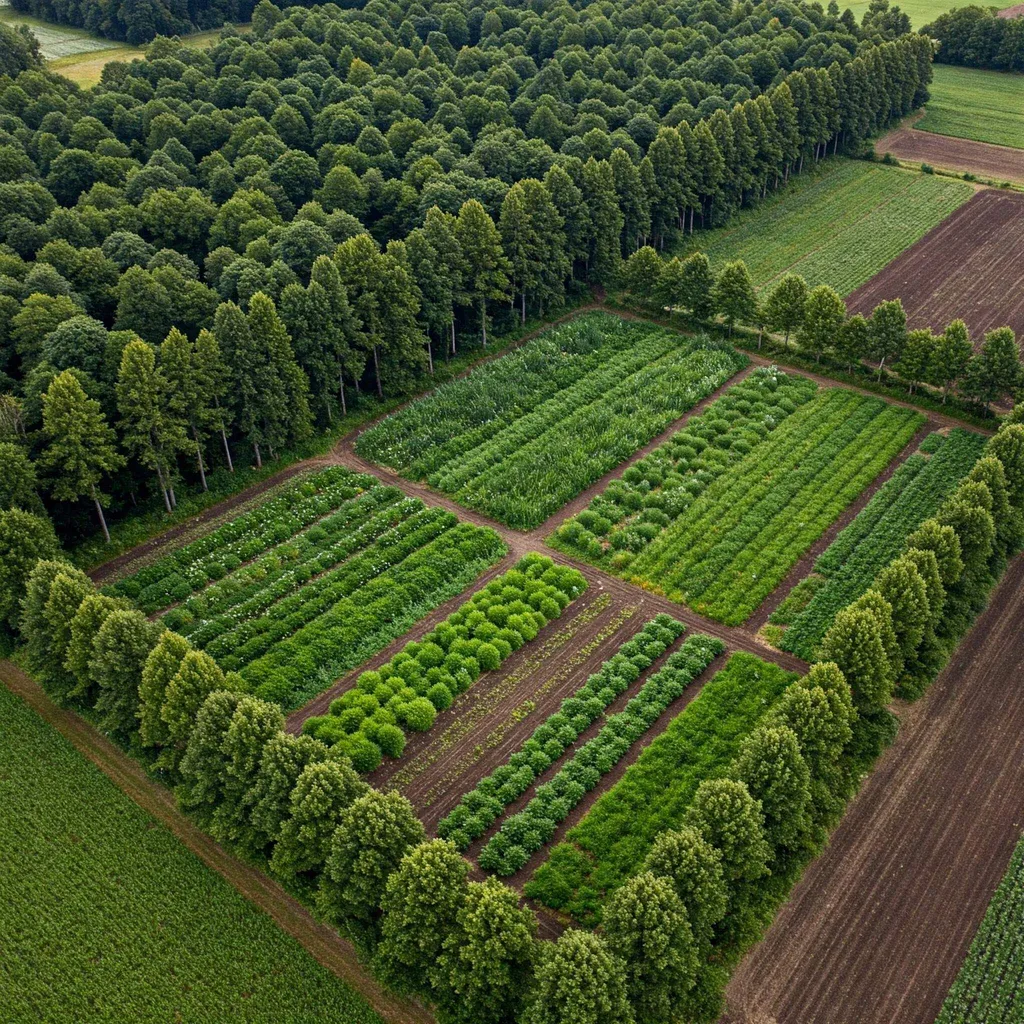
In a groundbreaking systematic review published in *Climate Resilience and Sustainability*, researchers have shed light on the transformative potential of agroforestry practices in combating climate change and enhancing agricultural resilience. The study, led by Sintayehu Eshetu Abebaw of the Department of Forestry at Mekdela Amba University in Ethiopia, synthesizes findings from 109 peer-reviewed studies, offering a comprehensive look at how integrating trees with crops and livestock can mitigate greenhouse gas emissions and adapt to changing climatic conditions.
Agroforestry, the practice of combining agricultural crops with tree cultivation, has emerged as a powerful tool in the fight against climate change. The review reveals that these systems can sequester an average of 3.5 to 9.8 megagrams of CO2 per hectare per year, a significant contribution to carbon reduction efforts. “The integration of trees with crops and livestock not only enhances biodiversity but also improves soil health and water retention,” notes Abebaw. This dual benefit of mitigation and adaptation makes agroforestry a compelling strategy for farmers and policymakers alike.
The commercial impacts of these findings are substantial. Farmers adopting agroforestry practices can expect yield increases of up to 30% compared to traditional monocropping methods. Enhanced soil organic carbon content, improved water retention, and reduced vulnerability to drought translate into more stable and productive farming systems. “This isn’t just about environmental benefits; it’s about creating sustainable livelihoods and ensuring food security for future generations,” Abebaw emphasizes.
However, the review also highlights challenges that must be addressed to unlock the full potential of agroforestry. Land tenure insecurity and limited access to technical support remain significant barriers to wider adoption. To overcome these hurdles, the study calls for supportive policies, such as those under the Bonn Challenge, REDD+ initiatives, and the UNFCCC’s Koronivia Joint Work on Agriculture. Financial incentives and capacity-building initiatives are also crucial to empower farmers and communities to embrace these practices.
The findings of this systematic review could shape future developments in the agriculture sector by promoting climate-smart practices that are both environmentally sustainable and economically viable. As the world grapples with the impacts of climate change, agroforestry offers a promising pathway to resilience and prosperity. By integrating trees into farming systems, we can create a more sustainable future for agriculture, one that benefits both the planet and the people who depend on it.