
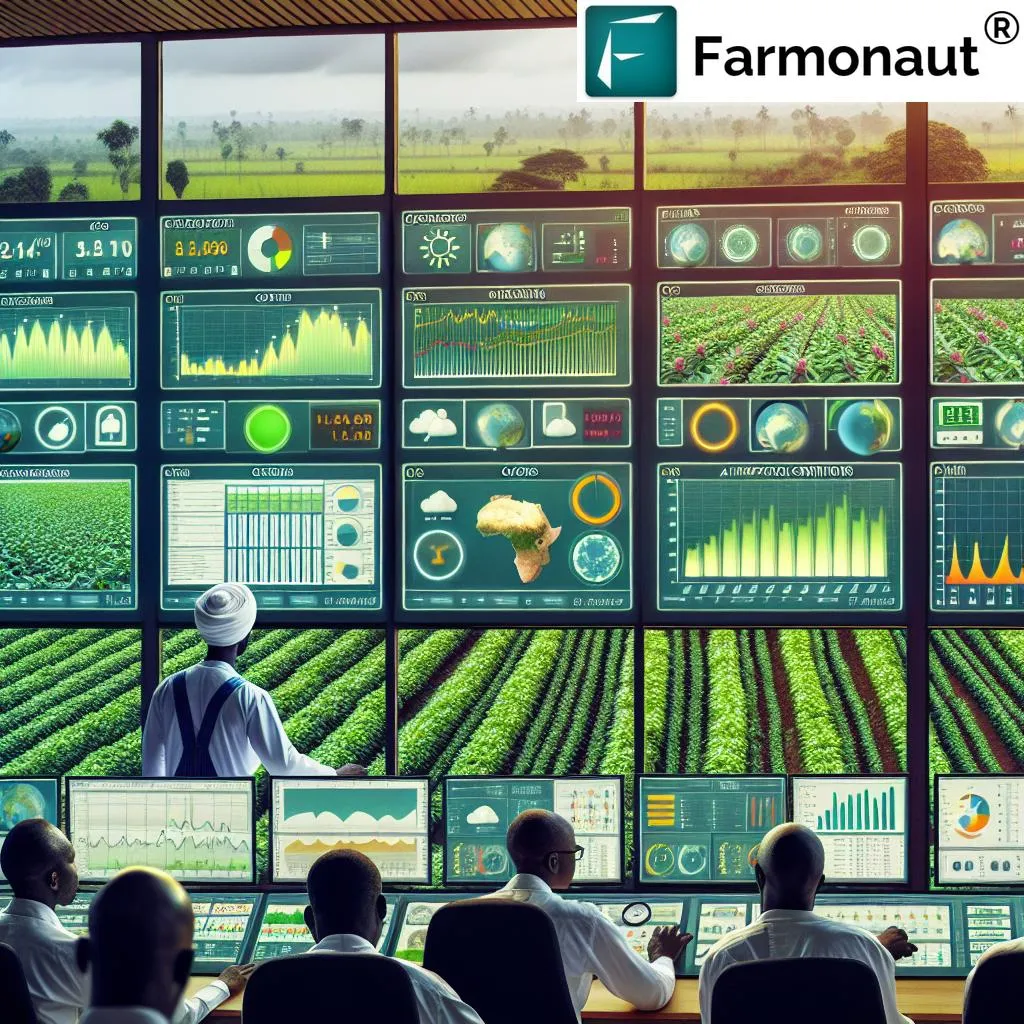
In the rapidly evolving landscape of smart agriculture, a groundbreaking study published in *Agronomy* is shedding light on how big data and artificial intelligence (AI) are transforming decision-making processes on smart farms. Led by Chang Qin from the School of Resources and Environmental Science at Hubei University in Wuhan, China, the research offers a comprehensive review of the challenges and opportunities in leveraging big data for intelligent farming practices.
The study highlights critical bottlenecks that have hindered the widespread adoption of intelligent decision-making models in agriculture. At the data level, issues such as fragmentation, high acquisition costs, and inadequate secure sharing pose significant challenges. At the model level, regional heterogeneity, weak adaptability, and insufficient explainability further complicate the implementation of these technologies.
“Addressing these challenges requires a systematic approach that spans the entire production cycle,” Qin explains. The research proposes a theoretical framework that integrates various stages of agricultural production, from pre-harvest planning to post-harvest evaluation.
One of the key trends identified in the study is the shift towards federated data governance systems. These systems utilize unified metadata and layered storage technologies, such as federated learning, to ensure secure lifecycle management of agricultural data. This approach not only enhances data security but also facilitates better collaboration and sharing among stakeholders.
In terms of decision-making, the study notes a transition from experience-based methods to data-driven intelligence. Pre-harvest planning now incorporates mechanistic models and transfer learning to optimize crop suitability and variety selection. In-season management benefits from advanced techniques like deep reinforcement learning (DRL) and model predictive control (MPC), which enable precise regulation of seedlings, water, fertilizer, and pest control.
Post-harvest evaluation strategies have also seen significant advancements. Spatio-temporal deep learning architectures, such as Transformers and LSTMs, along with intelligent optimization algorithms, are being used for yield prediction and machinery scheduling. These innovations are crucial for improving efficiency and reducing waste in the agricultural supply chain.
The study proposes a staged development pathway for the future of smart agriculture. In the short term, the focus should be on standardized data governance and the development of foundation models. Mid-term goals include advancing federated learning and enhancing human-machine collaboration. Long-term aspirations involve achieving real-time, ethical edge AI that can operate autonomously and make decisions in real-time.
The implications of this research for the agriculture sector are profound. By addressing the current bottlenecks and leveraging advanced technologies, farmers and agribusinesses can achieve greater precision, transparency, and sustainability in their operations. This, in turn, can lead to increased productivity, reduced costs, and improved environmental outcomes.
As the agriculture industry continues to embrace digital transformation, the insights provided by this study will be invaluable in shaping the future of smart farming. By prioritizing data governance and intelligent decision-making, stakeholders can pave the way for a more efficient and sustainable agricultural ecosystem.
The study, published in *Agronomy*, was led by Chang Qin from the School of Resources and Environmental Science at Hubei University in Wuhan, China.