
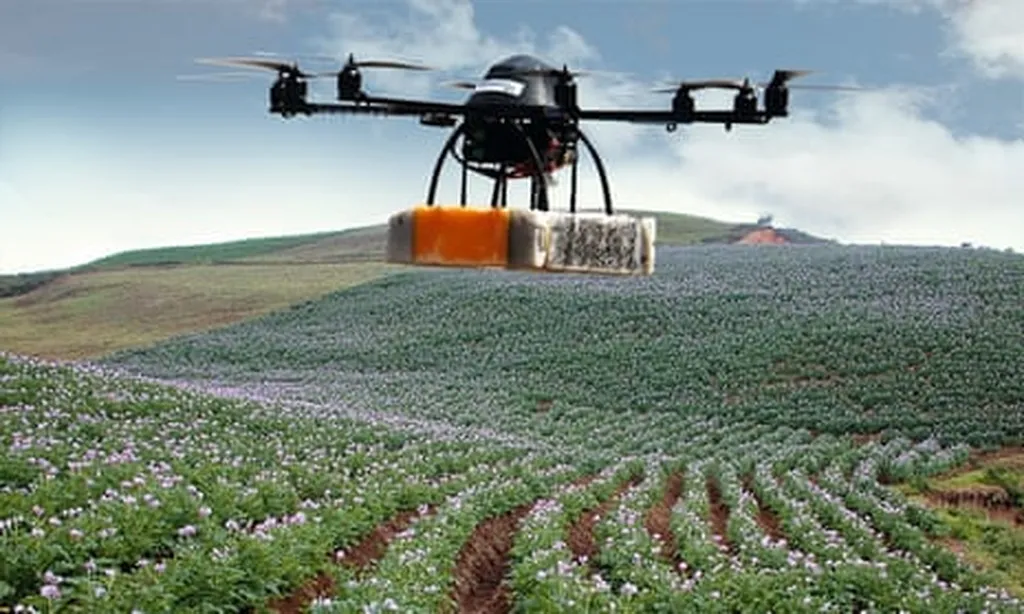
In a groundbreaking development poised to revolutionize environmental monitoring and agricultural practices, researchers have unveiled an advanced autonomous Unmanned Aerial Vehicle (UAV) equipped with cutting-edge sensors and artificial intelligence capabilities. This innovative system, detailed in a recent study published in *Engineering Proceedings*, promises to enhance air quality assessment and pollution source identification, offering significant benefits for the agriculture sector and beyond.
The UAV, developed by a team led by Vijayaraja Loganathan from the Department of Electrical and Electronics Engineering at Sri Sairam Institute of Technology in Chennai, India, is designed to navigate various environments, collecting real-time data on atmospheric conditions. Equipped with sophisticated sensors, the UAV can detect a range of air pollutants, including carbon monoxide (CO), carbon dioxide (CO₂), methane (CH₄), ammonia (NH₃), and hydrogen sulfide (H₂S). These sensors continuously monitor air quality as the UAV traverses different areas, transmitting detailed data to a central unit for analysis.
One of the most compelling aspects of this research is the integration of the YOLO V3 algorithm, a state-of-the-art object detection system. “The YOLO V3 algorithm allows our UAV to capture and process real-time images of the environment, identifying the context and sources of pollution,” explains Loganathan. This capability enables the UAV to pinpoint specific activities contributing to pollution, such as industrial operations, traffic congestion, or natural events like wildfires.
For the agriculture sector, the implications are profound. Farmers and agricultural businesses often face challenges related to air quality, which can impact crop health, yield, and overall productivity. The autonomous UAV system can provide instant alerts and detailed insights into air quality, allowing farmers to take proactive measures to protect their crops. For instance, if high levels of ammonia or methane are detected, which can be harmful to certain crops, farmers can adjust their practices or implement protective measures to mitigate potential damage.
Moreover, the system’s ability to identify pollution sources can help agricultural businesses optimize their operations. By understanding the specific sources of pollution, farmers can make informed decisions about resource allocation, reducing waste and improving efficiency. This not only benefits the environment but also enhances the bottom line for agricultural enterprises.
The commercial impact of this technology extends beyond individual farms. Agricultural cooperatives and large-scale farming operations can deploy fleets of these UAVs to monitor vast areas, ensuring comprehensive coverage and real-time data collection. This can lead to more sustainable and efficient farming practices, ultimately contributing to food security and environmental conservation.
Looking ahead, the research by Loganathan and his team opens up exciting possibilities for future developments in environmental monitoring and precision agriculture. The integration of advanced sensors and AI algorithms in UAVs represents a significant step forward in our ability to understand and manage environmental challenges. As technology continues to evolve, we can expect even more sophisticated systems that will further enhance our capacity to protect and sustain our agricultural landscapes.
In conclusion, the development of this autonomous UAV system marks a pivotal moment in the intersection of technology and environmental stewardship. With its potential to transform air quality monitoring and agricultural practices, this innovation underscores the importance of continued research and investment in agritech solutions. As we move forward, the insights gained from this study will undoubtedly shape the future of sustainable agriculture and environmental protection.