
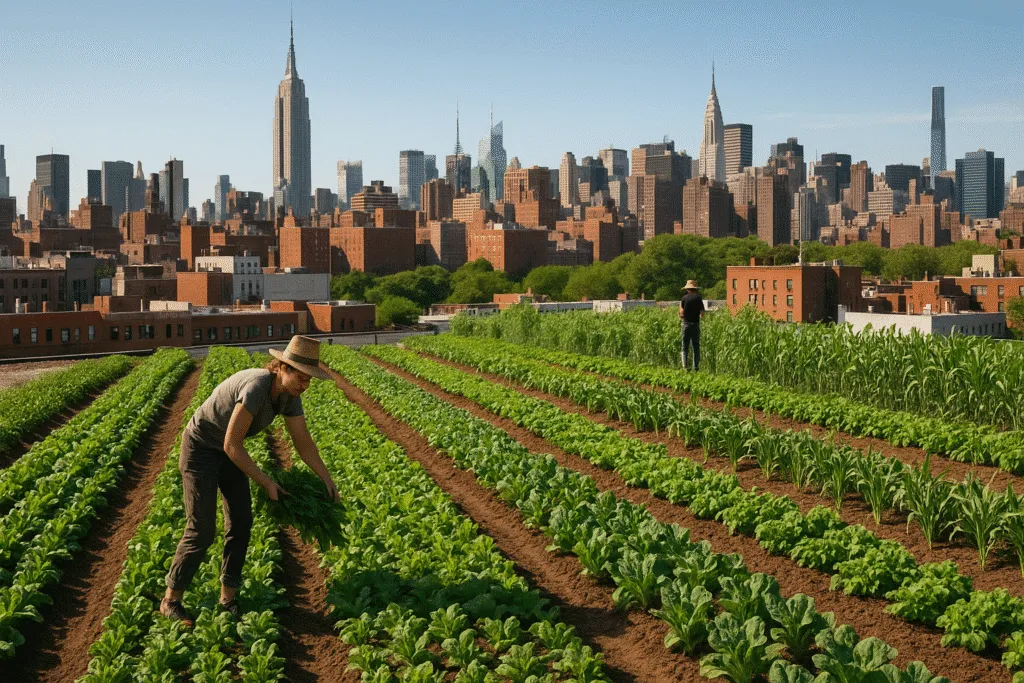
In the heart of New York, researchers are unlocking new ways to grow food sustainably, and their work could reshape how we think about agriculture in the face of climate change and urbanization. Controlled Environment Agriculture (CEA), which includes greenhouses and plant factories, is gaining traction as a method to produce food with precision and minimal environmental impact. But managing these systems is complex, requiring careful control of light, temperature, humidity, and CO2 levels. Enter artificial intelligence (AI), which is emerging as a game-changer in this field.
A recent review published in *Modern Agriculture* highlights how AI is revolutionizing CEA by enabling automated climate control, yield optimization, and data-driven decision-making. The lead author, Wei-Han Chen from Cornell University’s College of Engineering, explains, “AI allows us to predict climate conditions, estimate yields, and even detect diseases before they spread. This level of precision helps farmers optimize resources, reduce waste, and improve crop resilience.”
One of the most exciting applications of AI in CEA is predictive modeling. By analyzing vast amounts of data, machine learning algorithms can forecast environmental conditions, allowing growers to adjust settings proactively. This not only enhances crop quality but also reduces energy consumption—a critical factor as the world seeks to lower its carbon footprint.
AI is also transforming disease detection. Traditional methods often rely on visual inspections, which can be time-consuming and prone to human error. AI-powered systems, however, can analyze images of plants with remarkable accuracy, identifying early signs of disease and enabling timely interventions. “Early detection is key to preventing outbreaks,” says Chen. “AI helps us catch problems before they escalate, saving crops and reducing the need for chemical treatments.”
The commercial implications of these advancements are significant. As urban populations grow, the demand for locally produced, sustainable food is rising. CEA systems equipped with AI can operate efficiently in urban settings, reducing supply chain distances and minimizing ecological impacts. This could lead to a new era of hyper-local food production, where fresh, high-quality produce is grown right where it’s needed.
However, challenges remain. AI models require robust datasets and continuous refinement to improve accuracy. Additionally, integrating AI into existing CEA systems can be complex and costly. Chen acknowledges these hurdles but remains optimistic. “As research progresses, we expect these barriers to diminish. The potential of AI in CEA is vast, and we’re just scratching the surface of what’s possible.”
For the agriculture sector, the integration of AI into CEA represents a significant opportunity. By optimizing resource use and improving crop yields, AI-driven systems could enhance profitability while promoting sustainability. As urbanization continues and climate change poses new challenges, these technologies may become indispensable tools for farmers and agribusinesses alike.
The research led by Wei-Han Chen from Cornell University’s College of Engineering is paving the way for a future where AI and CEA work hand in hand to create a more sustainable and efficient food system. As the world grapples with the complexities of feeding a growing population, these innovations offer a beacon of hope.