
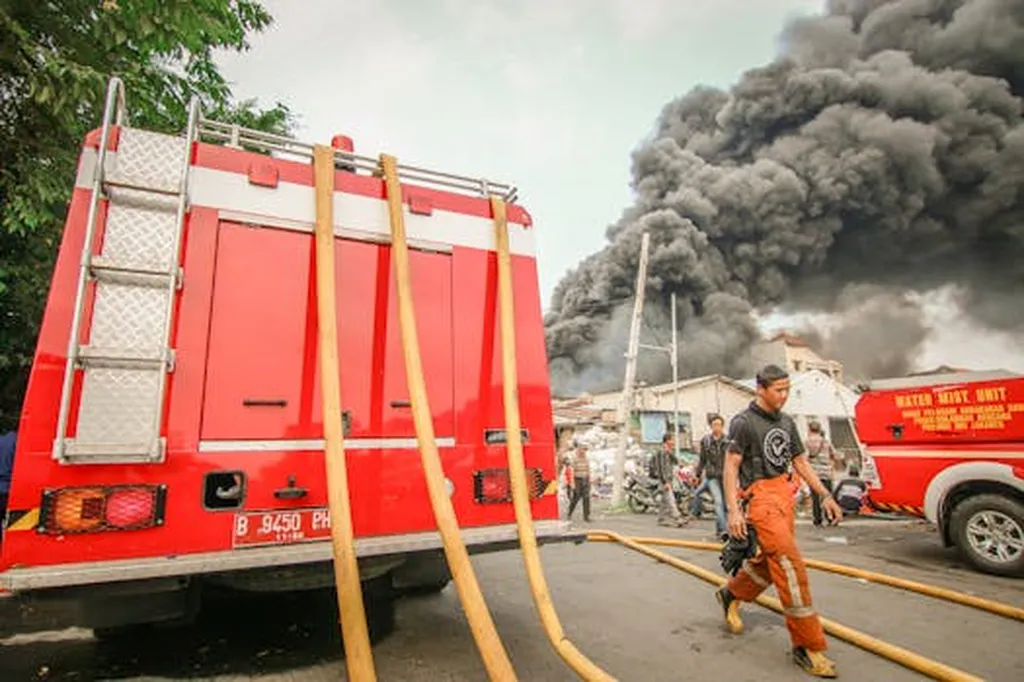
In the heart of Southern Europe, where urban sprawl meets wild landscapes, a silent threat looms large. Wildfires, fueled by a potent mix of climatic conditions, agricultural abandonment, and urban encroachment, are increasingly threatening regions like Attica, Greece. A recent study, published in *Remote Sensing*, has shed new light on the intricate dance between urban development and wildfire risk in this densely populated area, offering a roadmap for better land-use planning and agricultural management.
The research, led by Antonia Oikonomou from the Department of Natural Resources & Agricultural Engineering at the Agricultural University of Athens, is the first of its kind to provide a comprehensive, region-wide mapping of the Wildland-Urban Interface (WUI) and associated wildfire risk in Attica. By leveraging advanced Earth Observation and GIS analysis techniques, Oikonomou and her team have painted a detailed picture of the region’s vulnerability to wildfires.
The study reveals that WUI zones encompass a staggering 26.29% of Attica, with shrub-dominated areas being the most prevalent. “This is a critical finding,” Oikonomou explains, “as these areas are not only highly susceptible to wildfires but also pose significant challenges for fire management and suppression.”
The research also delves into the historical fire frequency, showing that approximately 102,366 hectares have been affected by wildfires from 1983 to 2023. The risk assessments indicate that moderate hazard zones are the most widespread, covering 36.85% of the region. Alarmingly, around 25% of Attica is classified as moderate, high, or very high susceptibility zones, with 37.74% of the region situated in high- and very high-risk zones, primarily in peri-urban areas.
For the agriculture sector, these findings are particularly pertinent. The study underscores the need for enhanced land-use planning and fuel management, which could help mitigate the risk of wildfires encroaching upon agricultural lands. “By understanding the spatial patterns of wildfire risk, we can better inform land-use decisions and implement targeted fuel management strategies,” Oikonomou notes. This could not only protect valuable agricultural lands but also ensure the safety of rural communities and the sustainability of local economies.
The integrated risk map produced by the study offers a powerful tool for civil protection efforts, enabling more effective resource allocation and strategic planning. As Oikonomou puts it, “This research provides a viable methodology for enhancing our preparedness and response to wildfires, ultimately safeguarding both lives and livelihoods.”
The study’s innovative use of Earth Observation and GIS analysis sets a new standard for wildfire risk assessment in Mediterranean landscapes. By coupling various geospatial datasets, including Copernicus High Resolution Layers, multi-decadal Landsat fire history archive, UCR-STAR building footprints, and CORINE Land Cover, the research offers a blueprint for future studies in the field.
As the threat of wildfires continues to grow, driven by climate change and urban expansion, the insights from this study will be invaluable for policymakers, land managers, and agricultural stakeholders. By embracing the methodologies outlined in this research, we can strive towards a more resilient and fire-adapted future, ensuring the protection of our landscapes, communities, and economies.