
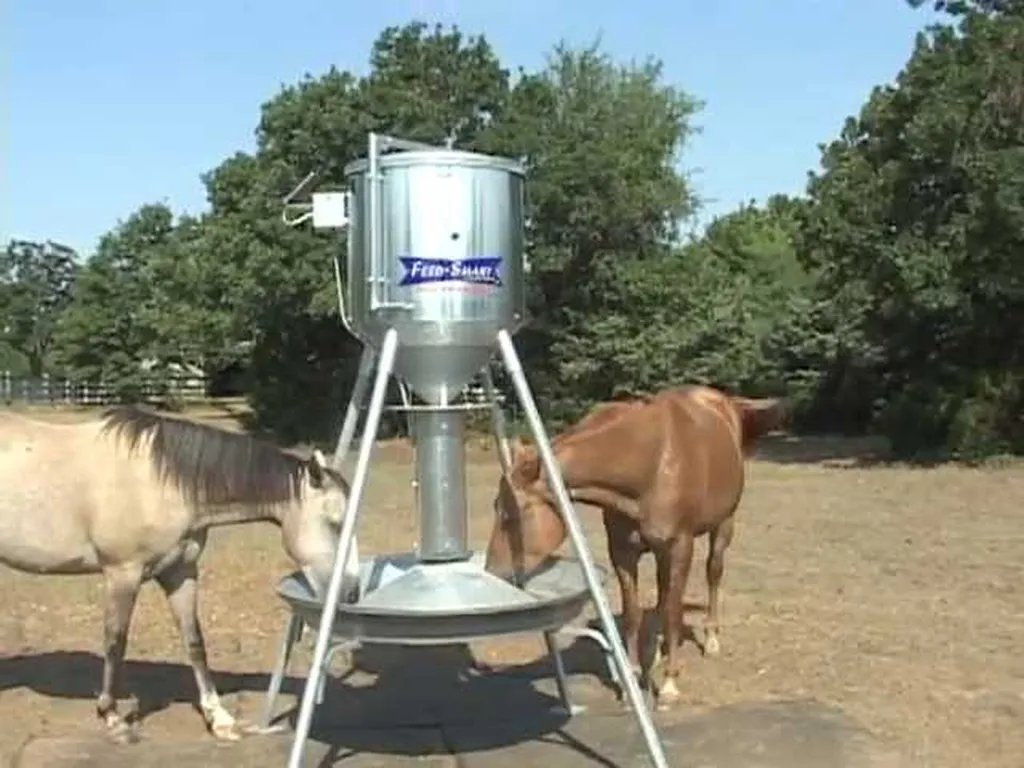
In the world of precision agriculture, where technology meets livestock management, a significant stride has been made in the realm of autonomous feeding systems for sport horses. Researchers have developed an enhanced path planning algorithm that promises to revolutionize the efficiency and accuracy of sport horse feeding robots, potentially opening new avenues for automation in the agriculture sector.
The challenge at hand is a familiar one for those working with autonomous systems in unstable environments: uneven terrain and moist ground can cause drive wheel slippage, leading to path deviation and cumulative pose errors. This is particularly problematic in stable environments where precise navigation is crucial for accurate feeding. Enter Xinwen Chen and colleagues from the Xinjiang Intelligent Livestock Key Laboratory, who have proposed an enhanced Dynamic Window Approach (DWA) path planning framework to tackle this issue head-on.
The enhanced DWA integrates an automatic drift correction module based on an Inertial Measurement Unit (IMU) and a two-stage cascade proportional–integral–derivative (PID) controller. This innovation enables precise yaw adjustment while preserving the native velocity sampling and trajectory evaluation framework of conventional DWA. “Our goal was to mitigate slippage-induced pose drift and improve the locomotion capability of robots in these challenging environments,” explains Chen. “The results have been promising, to say the least.”
Field validations were conducted through ten independent trials along a fixed 28 m feeding route in an actual sport horse feeding environment. The results were impressive: the enhanced algorithm reduced the standard deviation of path deviation by 10.56% and decreased yaw angle standard deviation by 20.55%. These improvements translate to more accurate feeding and increased operational efficiency, which are critical factors for the commercial viability of such robotic systems.
The implications for the agriculture sector are substantial. As the demand for precision livestock farming grows, the need for reliable, autonomous systems becomes ever more pressing. This research not only addresses a key technical challenge but also paves the way for broader adoption of autonomous feeding systems in the industry. “The potential for scaling this technology is enormous,” Chen notes. “It could transform the way we manage livestock, making operations more efficient and sustainable.”
The study, published in *Applied Sciences*, represents a significant step forward in the field of autonomous navigation for agricultural robots. As the technology continues to evolve, we can expect to see more innovative solutions that enhance the precision and efficiency of livestock management, ultimately benefiting both farmers and animals alike. The research led by Xinwen Chen, affiliated with the Xinjiang Intelligent Livestock Key Laboratory, Xinjiang Uygur Autonomous Region Academy of Animal Science, underscores the importance of continued investment in agritech research and development.
In the broader context, this research highlights the potential for autonomous systems to play a pivotal role in the future of agriculture. As the sector grapples with challenges such as labor shortages and the need for sustainable practices, technologies like the enhanced DWA offer a glimpse into a future where precision and automation go hand in hand. The journey towards fully autonomous livestock management is still in its early stages, but with each breakthrough, we move closer to a future where technology and agriculture coalesce to create more efficient, sustainable, and humane systems.