
In the ever-evolving landscape of agricultural technology, a groundbreaking study published in *AgriEngineering* is set to revolutionize how we approach plant disease detection. The research, led by Ana-Maria Cristea from the Faculty of Automatic Control and Computer Science at the National University of Science and Technology Politehnica Bucharest, introduces a novel method that combines federated learning and transfer learning to tackle the persistent challenges faced by farmers and agronomists worldwide.
Plant diseases pose a significant threat to global food security and agricultural economies, often exacerbated by environmental variability and the limitations of current detection methods. Traditional approaches, while promising, struggle with poor cross-site generalization, limited labels, and dataset bias. Real-field complexities, such as variable illumination, dense vegetation, and changing symptom expression, further complicate the scenario. Cristea’s research addresses these issues head-on by leveraging federated transfer learning, a technique that enables collaborative model training across diverse agricultural environments without compromising data privacy.
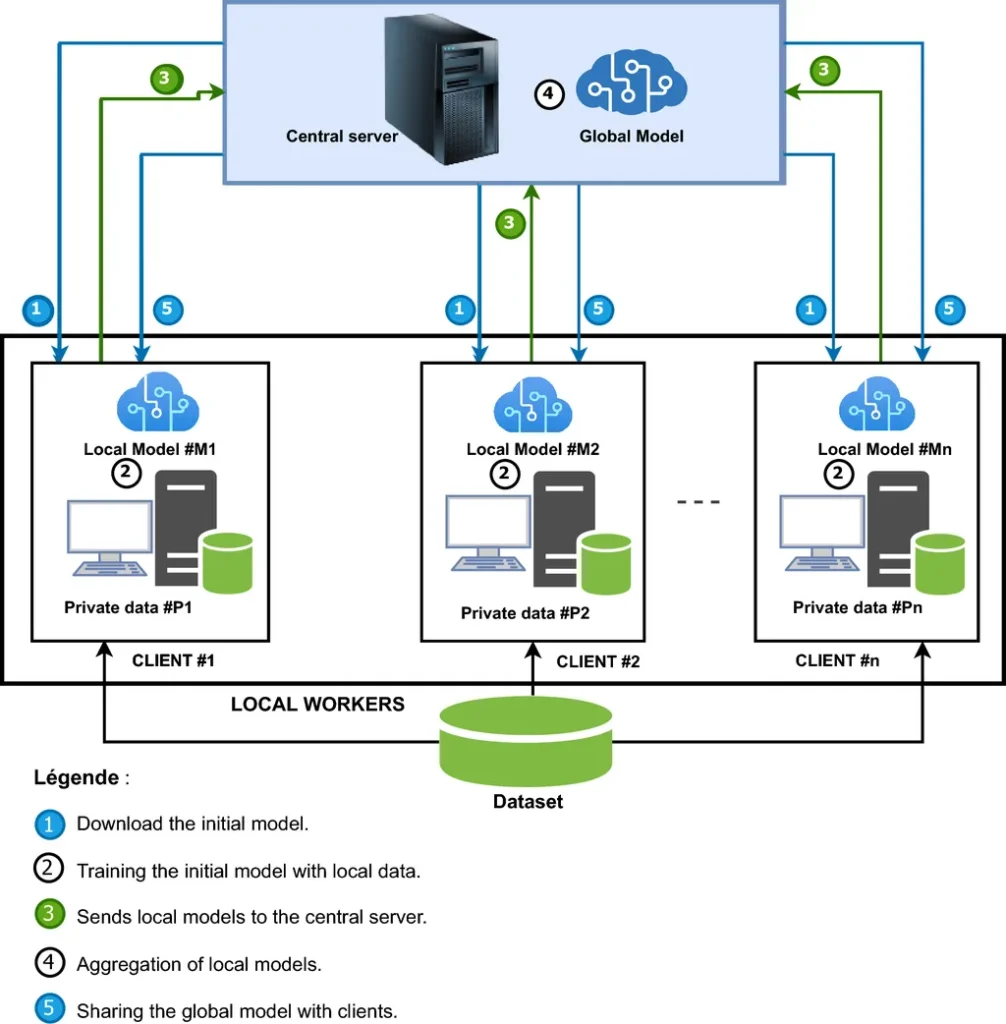
The study’s innovative approach involves training a hybrid Graph–SNN (Spiking Neural Network) model using federated learning (FL). This method allows multiple participants to contribute to the model’s development using their in-field data, ensuring that the model adapts to real-world conditions while preserving data privacy. “Federated learning offers a promising approach to enhance plant disease detection by enabling collaborative training of models across diverse agricultural environments,” Cristea explains. “This not only improves the model’s robustness but also ensures that sensitive data remains confidential.”
The results are impressive. The model achieved an accuracy of 0.9445 on clean laboratory data, demonstrating its effectiveness in controlled environments. However, when tested exclusively on field data, the accuracy dropped to 0.6202, highlighting the considerable challenges posed by real-world conditions. Despite this discrepancy, the study underscores the potential of federated learning for reliable plant disease detection under field conditions.
The commercial implications of this research are vast. For the agriculture sector, which is increasingly reliant on data-driven decision-making, the ability to detect plant diseases accurately and efficiently can lead to significant cost savings and improved crop yields. Farmers can benefit from early detection and targeted treatment, reducing the need for broad-spectrum pesticides and minimizing environmental impact. Moreover, the collaborative nature of federated learning allows for the sharing of knowledge and resources across different regions, fostering a more resilient and adaptive agricultural ecosystem.
Looking ahead, this research paves the way for future developments in the field of agricultural technology. As Cristea notes, “Our findings demonstrate the potential of federated learning for privacy-preserving and reliable plant disease detection under real field conditions.” The integration of federated learning with other advanced technologies, such as hyperspectral and thermal imaging, could further enhance the accuracy and robustness of disease detection models.
In conclusion, the study published in *AgriEngineering* by Ana-Maria Cristea and her team represents a significant step forward in the fight against plant diseases. By harnessing the power of federated transfer learning, the research offers a promising solution to the challenges faced by the agriculture sector, ultimately contributing to a more sustainable and food-secure future. As the agricultural industry continues to evolve, the insights gained from this study will undoubtedly shape the development of next-generation technologies aimed at safeguarding our crops and ensuring global food security.