
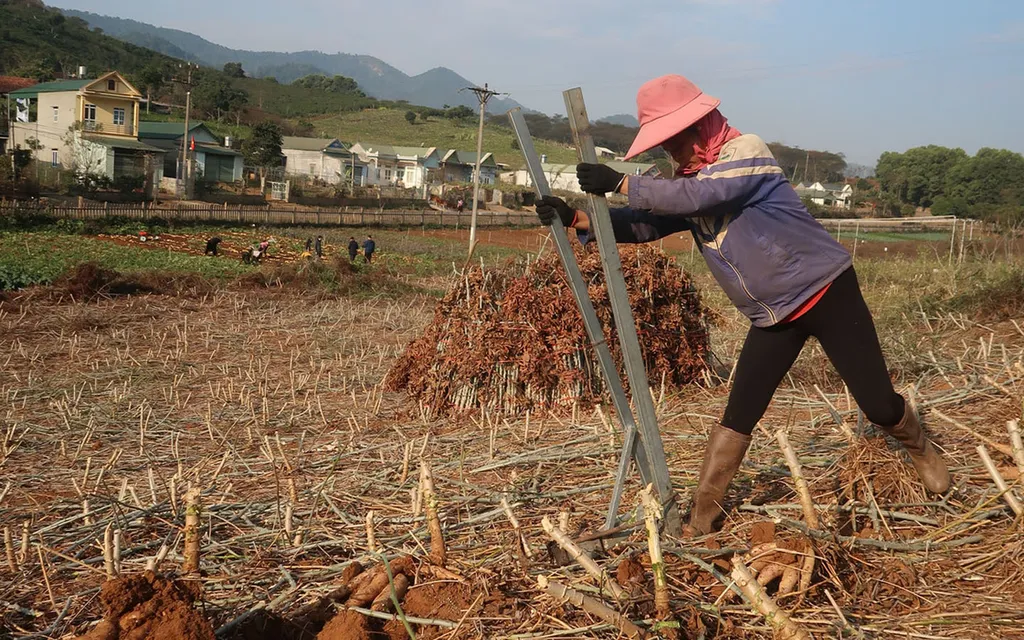
In the heart of Tamil Nadu, a silent revolution is taking root, quite literally. Cassava, a humble tuber, is emerging as a game-changer for farmers, thanks to high-yielding varieties (HYVs) that are reshaping the agricultural landscape. A recent study published in *The Indian Journal of Agricultural Sciences* sheds light on the economic impact of these HYVs, offering insights that could steer the future of cassava cultivation in the region.
The study, led by Prakash Pachiyappan, surveyed 300 farm households across six major cassava-producing districts: Salem, Tiruchirappalli, Namakkal, Cuddalore, Dharmapuri, and Pudukkottai. The findings are promising. Farmers adopting HYVs saw a 13% increase in yield and a 17% boost in income compared to those sticking with local varieties. This is not just a marginal improvement; it’s a significant leap that could redefine the economic prospects of cassava farming.
“Higher yield was a key driver for adoption,” Pachiyappan notes, highlighting that factors like farm size, tuber price, technical advice, and irrigation access played pivotal roles. The study employed robust methodologies, including cost-benefit analysis, propensity score matching, and a logit regression model, to ensure the findings were both reliable and actionable.
The economic impact is substantial. Farmers reported income growth as their primary motivation for adopting HYVs, with many reinvesting the extra earnings back into their agricultural activities or using them to repay loans. The Sree Athulya variety, in particular, stood out, yielding the highest net income per hectare. This variety could become a cornerstone for future cassava cultivation strategies.
However, the journey is not without challenges. Farmers still grapple with reliance on intermediaries and the labor-intensive nature of harvesting. These issues need addressing to fully unlock the potential of HYVs. Farmers also expressed a preference for traits like high yield, pest resistance, short duration, and drought tolerance. These preferences could guide future breeding programs and agricultural policies.
The study’s implications are far-reaching. Promoting HYVs can boost the cassava sector, contributing to Sustainable Development Goals and driving economic prosperity and sustainability in the region. As Pachiyappan’s research shows, the adoption of HYVs is not just about increasing yield; it’s about transforming livelihoods and fostering a more resilient agricultural sector.
For the agriculture sector, this research underscores the importance of investing in high-yielding varieties and providing farmers with the necessary support, from technical advice to irrigation access. It’s a call to action for policymakers, researchers, and agricultural stakeholders to collaborate and create an environment where farmers can thrive.
As we look to the future, the insights from this study could shape the development of new cassava varieties and agricultural practices. The goal is clear: to create a sustainable and prosperous future for cassava farmers in Tamil Nadu and beyond. With the right strategies and support, the humble cassava could indeed become a cornerstone of economic growth and food security.