
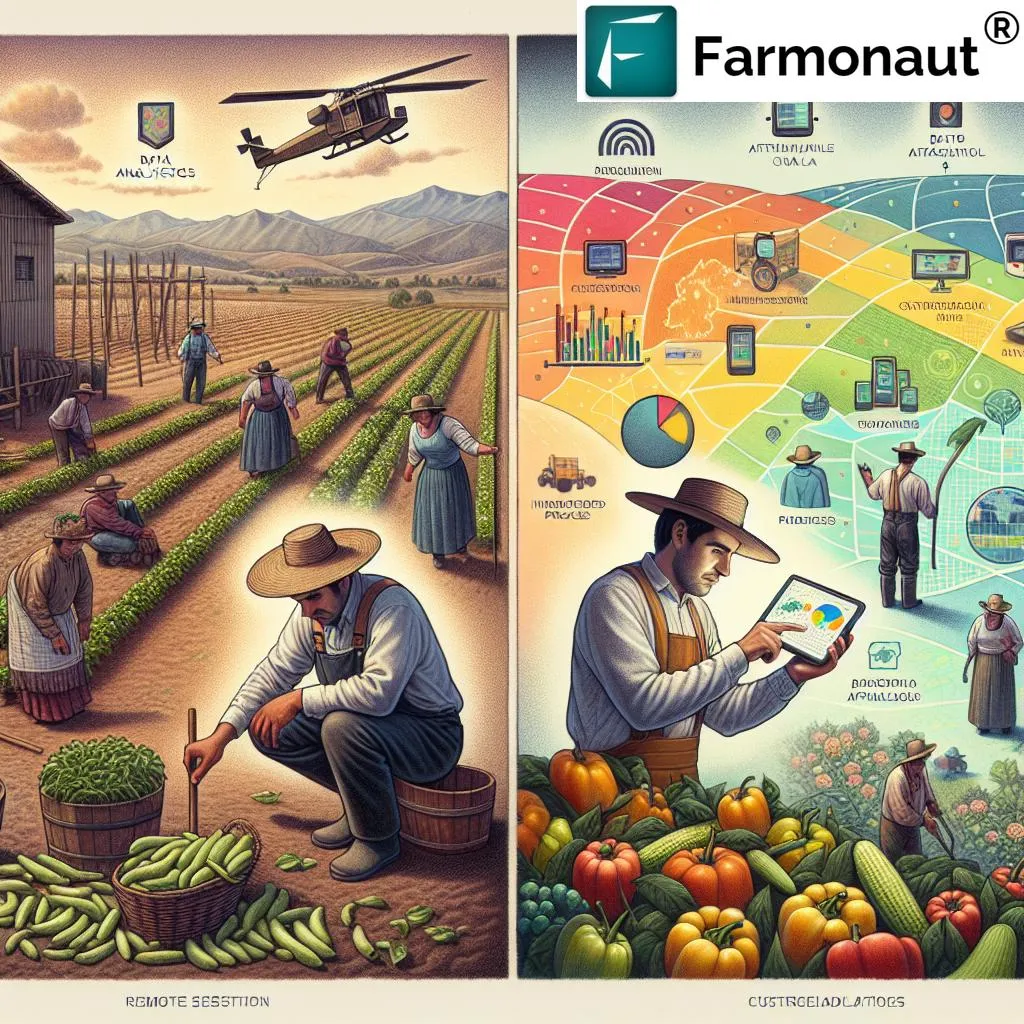
In the heart of Chile’s agricultural landscape, a quiet revolution is brewing, one that promises to reshape the way smallholder farmers tackle age-old challenges. Precision Farming (PF), a suite of technologies that enables farmers to monitor and manage their crops with unprecedented accuracy, is gaining traction. However, its adoption among small- and medium-sized farmers is hindered by several factors, according to a recent study published in ‘Agriculture’.
The research, led by Eva Orellana of the Facultad de Ingeniería y Negocios at Universidad de Las Américas, sheds light on the opportunities and challenges that PF presents for Chile’s agricultural sector. “Precision Farming can help solve a myriad of problems that smallholder farmers face, from spring frosts to water stress,” Orellana explains. The study highlights that PF can aid in frost forecasting, crop monitoring, and even the selection of more drought-tolerant crops.
Yet, the path to widespread adoption is not without obstacles. The high cost of PF technologies and the lack of support from state institutions are significant barriers. “Small farmers often lack the resources and infrastructure to implement these technologies,” Orellana notes. This is a critical issue, as smallholder farmers make up a substantial portion of Chile’s agricultural sector.
The commercial impacts of this research are profound. As the agriculture sector increasingly embraces digital transformation, the insights from this study could guide policymakers and technology providers in developing more accessible and affordable solutions for smallholder farmers. This could unlock new levels of productivity and sustainability, benefiting not just individual farmers but the entire agricultural value chain.
The study also underscores the need for greater collaboration between the public and private sectors. By working together, they can create an enabling environment that fosters the adoption of PF technologies. This could include providing subsidies, improving infrastructure, and offering training and support services.
Looking ahead, this research could shape the future of precision agriculture in Chile and beyond. As the technology continues to evolve, it is crucial that the needs of smallholder farmers are taken into account. By doing so, the agriculture sector can ensure that the benefits of PF are accessible to all, paving the way for a more productive and sustainable future.
In the words of Orellana, “The future of agriculture lies in our ability to adapt and innovate. Precision Farming offers a powerful tool in this endeavor, but we must ensure that it is accessible to all farmers, regardless of their size or resources.” This study serves as a timely reminder of the work that still needs to be done to make this vision a reality.