
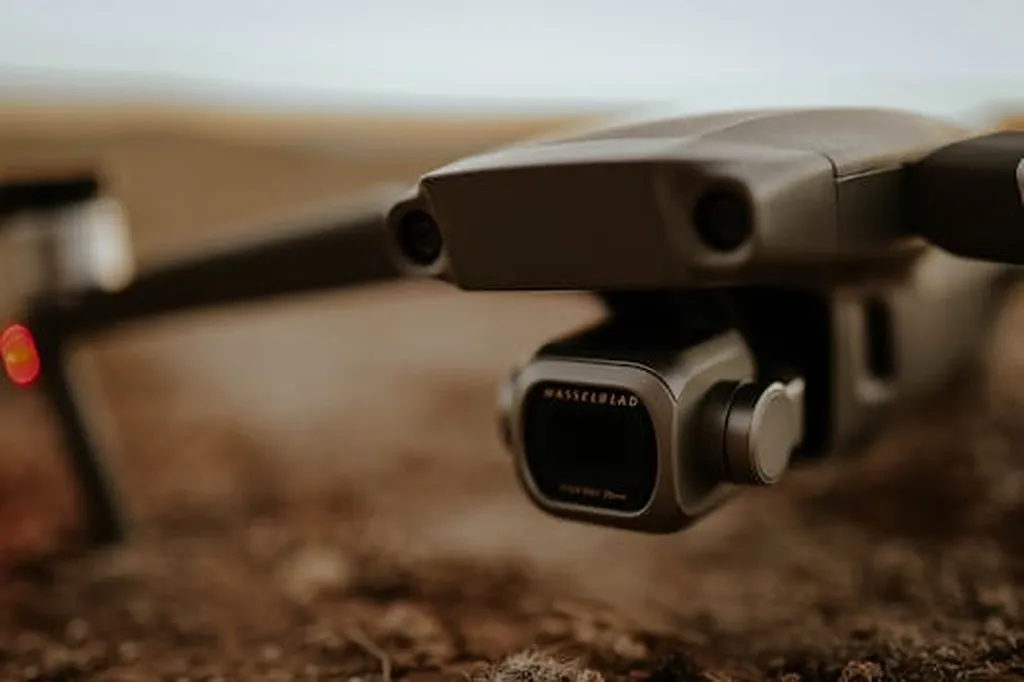
In the rapidly evolving world of precision agriculture, researchers are constantly seeking innovative ways to enhance crop monitoring and breeding processes. A recent study published in the journal ‘Drones’ introduces a novel approach that could significantly improve maize phenotyping using unmanned aerial vehicles (UAVs). The research, led by Huanzhe Wang from the Embodied AI and Agricultural Robotics Center at China Agricultural University, focuses on enhancing object detection models to better identify maize tassels in complex backgrounds, a critical task for maize breeding and precision agriculture.
The study addresses a common challenge in UAV-based aerial imaging: the complex backgrounds that can hinder the accurate detection of maize tassels. Traditional models often struggle to balance computational complexity and feature extraction, which can limit their effectiveness in real-world applications. To overcome this, Wang and his team proposed an enhanced model that incorporates Spatial and Channel Reconstruction Convolution (SCConv) into the neck network of the YOLOv8 baseline model. This integration aims to reduce computational complexity while maintaining high detection accuracy.
“The enhanced model achieved impressive results, with a precision of 92.2%, recall of 84.3%, and [email protected] of 91.7%,” Wang explained. “This represents a significant improvement over the original model and even outperforms the latest YOLOv10n model in several key metrics.” The enhanced model also demonstrated reduced computational complexity and a smaller model size, making it more suitable for deployment on UAVs.
The commercial impacts of this research could be substantial for the agriculture sector. Accurate and efficient maize tassel detection is crucial for precision agriculture, as it enables farmers and breeders to monitor crop health, optimize resource use, and make data-driven decisions. The enhanced model’s ability to perform well in complex scenarios could lead to more widespread adoption of UAV-based phenotyping, ultimately improving crop yields and agricultural sustainability.
“This research provides a methodological basis for deploying advanced object detection models in precision agriculture,” Wang noted. “It supports maize tassel detection and holds potential for application in maize breeding, which could have far-reaching implications for the agriculture industry.”
The study’s findings suggest that future developments in the field could focus on further optimizing object detection models for UAV-based applications. As precision agriculture continues to advance, the integration of advanced technologies like SCConv could play a pivotal role in enhancing crop monitoring and breeding processes. The research published in ‘Drones’ by Huanzhe Wang and his team at the Embodied AI and Agricultural Robotics Center, China Agricultural University, Beijing 100083, China, represents a significant step forward in this exciting and rapidly evolving field.