
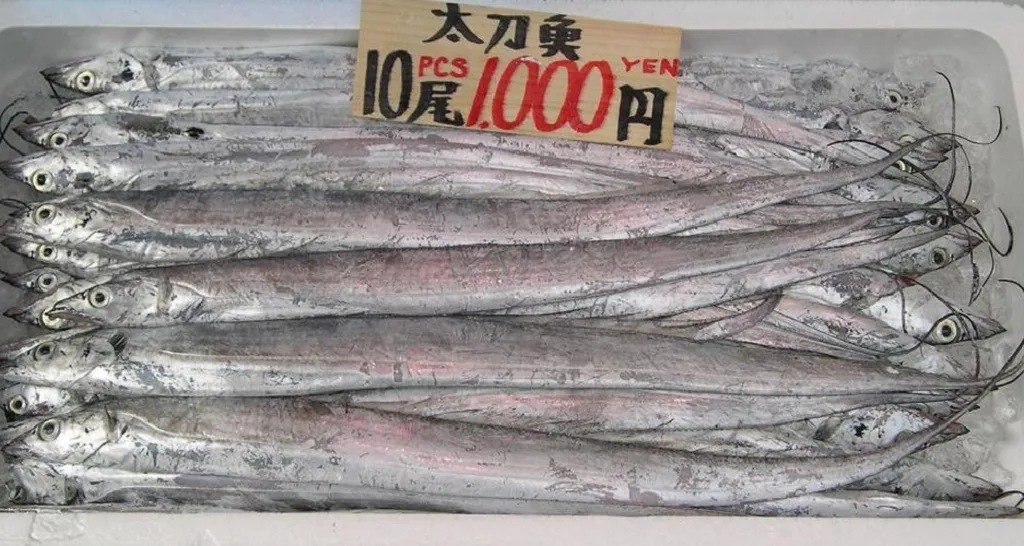
In the bustling coastal waters of China, where the fishing industry plays a pivotal role in the local economy, a significant stride has been made towards sustainable fishing practices. Researchers, led by Lei Yan from the College of Marine Living Resource Sciences and Management at Shanghai Ocean University, have published a study in the journal ‘Animals’ that could reshape the way *Coilia mystus*, a commercially important fish species, is harvested.
The study focuses on improving the selectivity of stownet, a crucial fishing gear used in China’s coastal waters. By employing square-mesh codends of varying sizes—25 mm, 30 mm, 35 mm, and 40 mm—the researchers aimed to find the optimal mesh size that would allow juvenile fish to escape, thereby promoting the sustainable utilization of *C. mystus* resources.
The findings are promising. The 50% selection length (L50), which indicates the size at which 50% of the fish are retained in the net, increased with mesh size. “The L50 values for the different mesh sizes were 105.83 mm, 109.02 mm, 114.36 mm, and 116.66 mm, respectively,” explained Lei Yan. This means that larger mesh sizes are more selective, allowing smaller, juvenile fish to escape and ensuring that only mature fish are caught.
The commercial implications of this research are substantial. By reducing the catch of juvenile fish, the fishing industry can maintain healthy fish populations, ensuring long-term sustainability and economic stability. “The proportion of juvenile *C. mystus* in the codends decreased correspondingly with larger mesh sizes,” noted Yan. This not only benefits the environment but also the fishermen, as it helps maintain a steady supply of fish for the market.
The study also estimated the minimum mesh size for *C. mystus* to be 43.81 mm. However, considering the management regulation of the minimum landing size (120 mm) for *C. mystus*, the L50 obtained for the 40 mm square-mesh was still below this standard. This suggests that further optimization of the codend is necessary to fully align with regulatory standards and promote sustainable fishing practices.
Looking ahead, this research could pave the way for more selective and sustainable fishing practices not just for *C. mystus* but for other commercially important species as well. As Lei Yan and her team continue to refine their methods, the fishing industry can look forward to more efficient and environmentally friendly practices that balance economic needs with ecological conservation.
In an era where sustainable practices are more important than ever, this study serves as a beacon of hope for the future of fishing, ensuring that we can continue to enjoy the bounty of the sea without compromising the health of our oceans.