
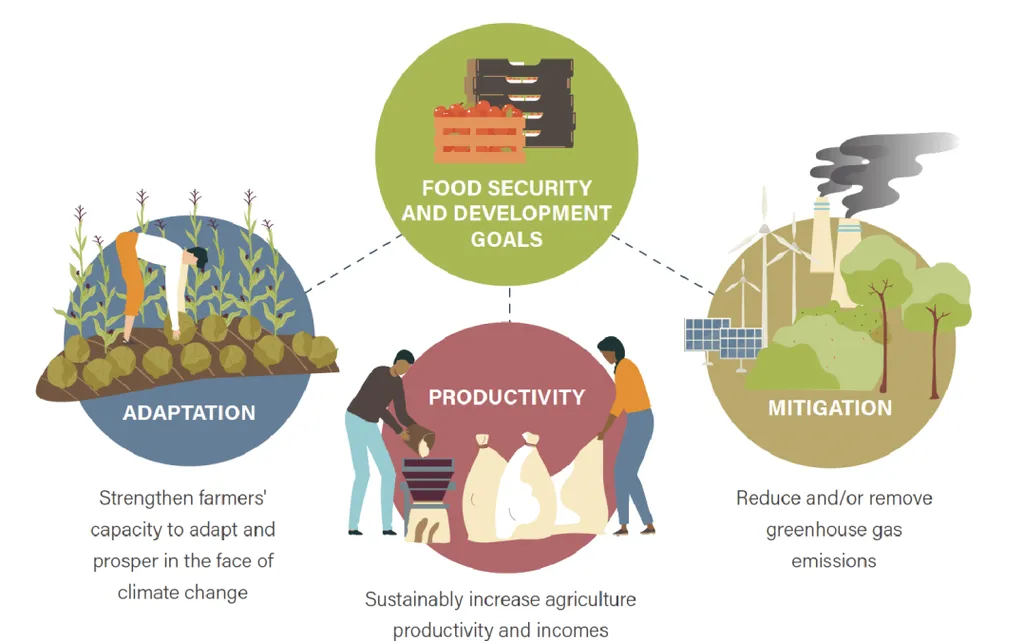
In the face of climate change, Sub-Saharan Africa (SSA) is grappling with a formidable challenge: food insecurity. As temperatures rise and weather patterns become increasingly unpredictable, farmers are struggling to maintain consistent yields, threatening the food supply for millions. Enter climate-smart agriculture (CSA), a suite of practices designed to boost productivity, resilience, and adaptability in the face of a changing climate. But how effective has CSA been in securing food for households across the region? A recent systematic review published in *Climate Resilience and Sustainability* sheds light on this critical question, offering insights that could reshape agricultural strategies and policy in SSA.
The study, led by Gordon Yenglier Yiridomoh of the Department of Community Development at Simon Diedong Dombo University of Business and Integrated Development Studies in Wa, Ghana, systematically reviewed 26 studies that directly examined the link between CSA and food security. The findings reveal a clear pattern: while CSA has made strides in improving food availability and accessibility, its impact on food stability—the consistent availability of food over time—remains understudied.
“Food availability featured predominantly in all the reviewed articles, followed by food accessibility,” Yiridomoh explains. “However, food stability was the least featured component of food security.” This gap highlights a critical area for future research and intervention. If CSA is to truly address food security in SSA, it must go beyond short-term gains and focus on long-term stability.
The review also uncovered key factors influencing farmers’ adoption of CSA practices, including household characteristics, farm-level factors, and institutional support. These findings underscore the need for targeted policies and programs that empower farmers to embrace climate-smart techniques. “Governments in SSA should create avenues for building the capacity of farmer households to adopt CSA practices for improved food production and food security,” Yiridomoh emphasizes.
For the agriculture sector, these insights carry significant commercial implications. As climate change continues to disrupt traditional farming systems, the adoption of CSA practices could open new markets for innovative technologies, sustainable inputs, and advisory services. Companies that invest in developing and promoting CSA solutions stand to gain a competitive edge, while also contributing to food security in the region.
Moreover, the study’s emphasis on food stability suggests a growing opportunity for businesses to support long-term agricultural resilience. This could involve developing technologies that help farmers predict and adapt to climate variability, or creating financial instruments that provide stability in the face of unpredictable yields.
As the world grapples with the dual challenges of climate change and food insecurity, the findings of this review offer a roadmap for action. By focusing on the often-overlooked dimension of food stability, researchers, policymakers, and businesses can work together to build a more resilient and secure food system in Sub-Saharan Africa. The journey toward climate-smart agriculture is far from over, but with targeted research and strategic investments, the path forward is becoming clearer.