
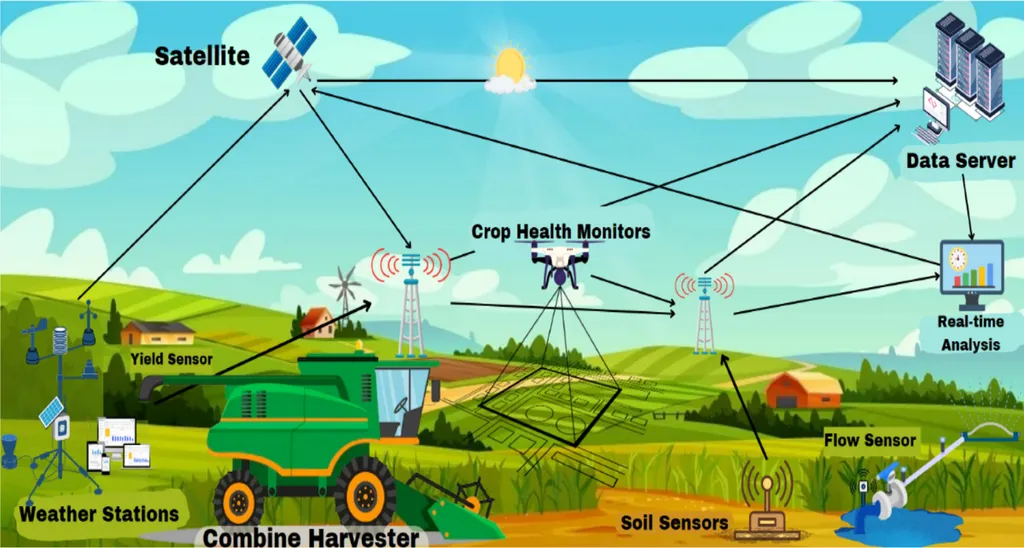
In the ever-evolving landscape of agriculture, a new review published in *Agronomy* is shedding light on how digital technologies could revolutionize agroforestry systems, offering a beacon of hope for sustainable farming practices. Agroforestry, which integrates trees and shrubs with crop and animal farming, has long been praised for its ecological benefits, including enhanced biodiversity and improved soil fertility. However, challenges such as high initial investments, long maturation periods for trees, and complex management have hindered its widespread adoption. Enter digital agriculture, a field brimming with advanced sensors and data-driven solutions that could address these very challenges.
The review, led by Lorenzo Pippi from the Department of Agriculture, Food and Environment at the University of Pisa, explores how digital technologies can optimize agroforestry systems. “By integrating advanced sensing technologies into agroforestry, we can address key challenges, optimize irrigation and nutrient management, and enhance overall system productivity and sustainability,” Pippi explains. This integration promises to make agroforestry more efficient and economically viable, potentially transforming the agricultural sector.
One of the most significant impacts of this research could be on the commercial viability of agroforestry. Precision agriculture technologies, such as sensors that provide real-time data on soil moisture, nutrient levels, and plant health, enable farmers to make informed decisions. This precision can lead to better resource management, reduced costs, and increased yields. “Increased investment in research and development, along with supportive policies, is essential for advancing the adoption of these innovative practices in agroforestry,” Pippi emphasizes. This call to action underscores the need for both technological innovation and policy support to drive the agricultural sector forward.
The review also highlights several case studies that demonstrate the potential of digital technologies in agroforestry. For instance, sensors can monitor tree health and growth, providing valuable data that can be used to optimize planting strategies and improve yields. Additionally, digital platforms can facilitate better land management by integrating data from various sources, offering a comprehensive view of the agroforestry system. This holistic approach can help farmers make more informed decisions, ultimately leading to more sustainable and profitable farming practices.
Looking ahead, the integration of digital technologies into agroforestry systems could pave the way for more resilient and sustainable agricultural practices. As climate change continues to pose challenges to traditional farming methods, the ability to adapt and optimize land use through digital technologies becomes increasingly crucial. The review published in *Agronomy* by Lorenzo Pippi and his team not only highlights the current state of digital agroforestry but also points to a future where technology and agriculture converge to create more sustainable and productive farming systems. This research could shape future developments in the field, driving innovation and supporting the agricultural sector in its quest for sustainability and profitability.