
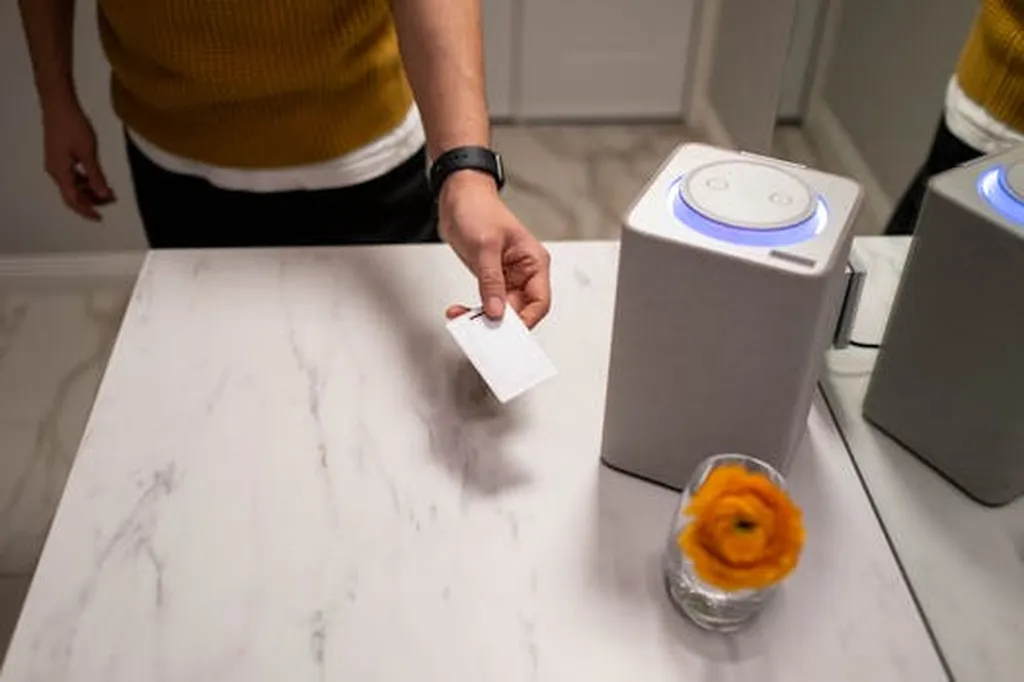
In a significant stride towards integrating smart technology into residential spaces, researchers have developed a novel home automation system that merges the robustness of industrial-grade programmable logic controllers (PLCs) with the versatility of microcontrollers. This innovative system, detailed in a recent paper published in *Engineering Proceedings*, offers a dual-mode control mechanism—manual and voice-activated—opening new avenues for residential and potentially agricultural automation.
The system, designed by María Daniela Villegas of the Facultad de Ciencias Técnicas at Universidad Internacional del Ecuador, leverages a Siemens LOGO! PLC in tandem with an ESP32 microcontroller. This combination enables seamless control of essential home functions such as lighting, irrigation, gate control, and ventilation. The ESP32, equipped with the fauxmoESP library, communicates with Amazon Alexa, translating voice commands into GPIO signals that the PLC interprets. “This integration allows for a more intuitive and user-friendly interaction with home automation systems,” Villegas explains, highlighting the system’s ability to convert voice commands into actionable signals with remarkable efficiency.
One of the standout features of this system is its operational redundancy. Manual control via pushbuttons ensures that the system remains functional even in the event of network or hardware failures. This redundancy is crucial for applications where reliability is paramount, such as in agricultural settings where automated irrigation and gate control can significantly enhance productivity and efficiency.
The system architecture includes optocouplers and relays to ensure voltage compatibility and device protection between the 3.3 V microcontroller and the 12–24 V PLC inputs. Functional tests revealed a 100% success rate in manual operations and over 95% in voice-controlled actions, with notable differences in response times. “The system’s high success rate in both manual and voice-controlled operations underscores its reliability and potential for widespread adoption,” Villegas notes.
The cost breakdown and risk analysis included in the study assess the feasibility and sustainability of the system, making it an attractive option for both residential and commercial applications. The prototype’s scalability potential is particularly noteworthy, as it could be adapted for broader smart home applications and even educational or industrial implementations.
For the agriculture sector, the implications are profound. Automated irrigation systems, for instance, can optimize water usage and improve crop yields by ensuring precise and timely water delivery. Gate control systems can enhance security and streamline operations on farms, while ventilation systems can maintain optimal environmental conditions for livestock and crops. The integration of voice control further simplifies the management of these systems, allowing farmers to focus on other critical tasks.
As the demand for smart home technologies continues to grow, this research paves the way for more sophisticated and reliable automation solutions. The fusion of PLCs with microcontrollers like the ESP32 represents a significant step forward in the field of home automation, offering a practical, low-cost solution that is both scalable and adaptable. With further refinements, this technology could become a cornerstone of modern residential and agricultural automation, shaping the future of smart living and farming.
The research, led by María Daniela Villegas of the Facultad de Ciencias Técnicas at Universidad Internacional del Ecuador, was published in *Engineering Proceedings*, providing a comprehensive overview of the system’s design, development, and testing. This work not only highlights the potential of integrating PLCs with microcontrollers but also underscores the importance of redundancy and reliability in smart home automation systems. As the technology evolves, it is poised to revolutionize the way we interact with our living spaces and agricultural environments.