
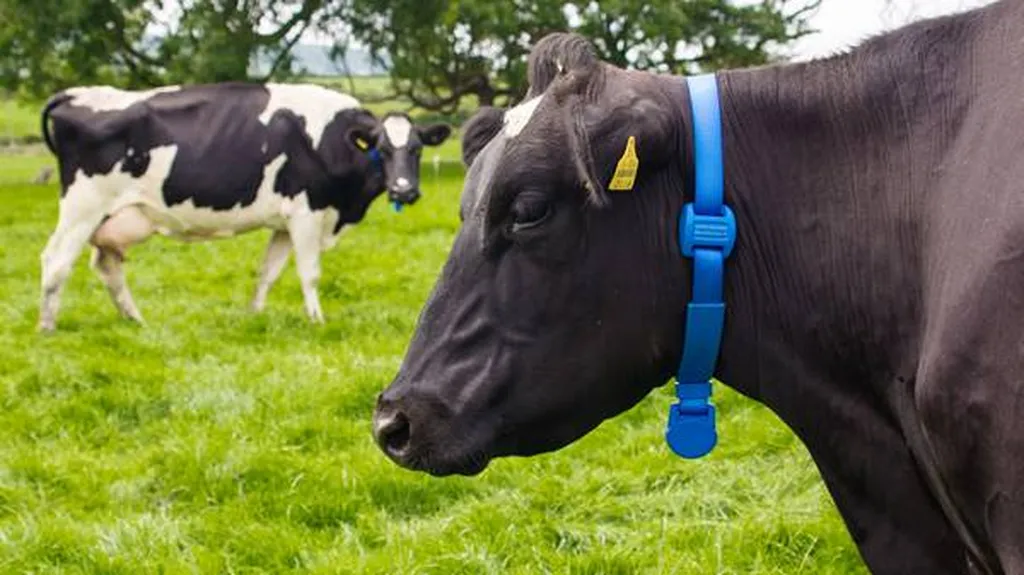
In the heart of Hawaii, a team of researchers led by Mrinmoy Modak from the University of Hawaii at Manoa is revolutionizing livestock management with the power of the Internet of Things (IoT). Their recent review, published in ‘IET Wireless Sensor Systems’, offers a comprehensive look at how IoT technologies are transforming the way farmers monitor and care for their livestock.
The integration of IoT in agriculture has opened up new avenues for real-time data collection and analysis, leading to improved animal welfare and productivity. As Modak explains, “The implementation of IoT technology in livestock monitoring systems has been a game-changer. It enables us to collect and analyze data in real time, which contributes to improved animal welfare and productivity.”
The review highlights the use of various microcontrollers and sensors, such as accelerometers, temperature sensors, and heart rate sensors, coupled with platforms like ThingSpeak and Blynk. These tools allow for extensive user input and data analysis, making it easier for farmers to keep track of their livestock’s health and well-being.
One of the most exciting aspects of this research is the integration of advanced algorithms, including support vector machines (SVM), decision trees, artificial neural networks (ANN), and YOLOv5 object detection. These algorithms can detect a wide range of parameters, from acetone levels and body temperature to activity level and oestrous cycle. As Modak puts it, “The integration of state-of-the-art algorithms allows us to detect various parameters that are crucial for livestock health monitoring. This not only improves the accuracy of our data but also enhances our ability to predict and prevent potential health issues.”
The commercial impacts of this research are significant. With the global livestock market valued at over $1 trillion, the adoption of IoT solutions can lead to more sustainable and effective livestock management practices. This can result in increased productivity, reduced costs, and improved animal welfare, ultimately benefiting both farmers and consumers.
Looking ahead, this research could shape future developments in the field by encouraging more farmers to adopt IoT technologies. As Modak notes, “Our goal is to facilitate the adoption of IoT solutions for sustainable and effective livestock management practices. By offering a thorough analysis of existing IoT technologies used in livestock monitoring, we hope to inspire more farmers to embrace these technologies and reap their benefits.”
In conclusion, the research led by Modak and his team is paving the way for a new era in livestock management. By harnessing the power of IoT and advanced algorithms, farmers can now monitor their livestock more effectively and efficiently, leading to improved productivity and animal welfare. As the agriculture sector continues to evolve, the integration of IoT technologies is set to play a pivotal role in shaping its future.