
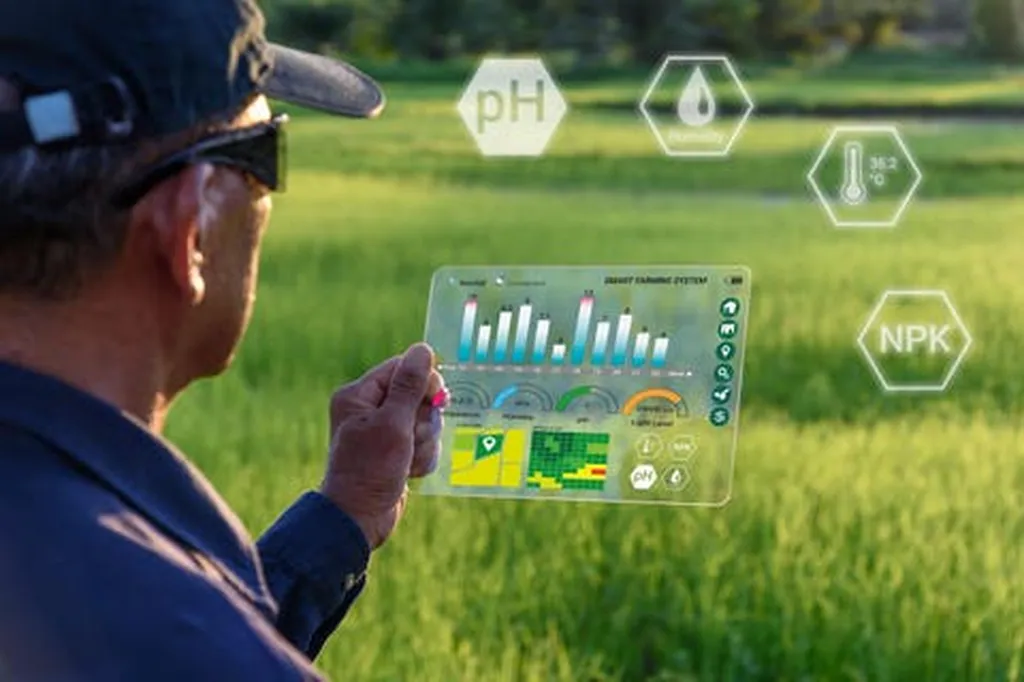
In the face of erratic weather patterns and dwindling groundwater reserves, farmers are increasingly turning to technology to optimize water usage and boost crop yields. A recent study published in *Engineering Proceedings* offers a promising solution: advanced machine learning models that can significantly enhance the predictive accuracy of IoT-based smart irrigation systems. The research, led by Satyajit Puajpanda from the School of Engineering and Technology at GIET University in India, compares cutting-edge ensemble learning models with traditional techniques to determine their real-time effectiveness in soil fertility assessment and water optimization.
The study’s innovative approach lies in its use of hybrid ensemble models, specifically LRBoost and a combination of Logistic Regression (LR) and Random Forest (RF). These models were trained and tested using data from open-access agricultural repositories, including soil moisture, temperature, humidity, and rainfall. The results were striking: the hybrid LR+RF model outperformed others with an impressive R² score of 96.34%, a mean squared error (MSE) of 0.0016, and a root mean squared error (RMSE) of 0.040.
“This level of accuracy is a game-changer for the agriculture sector,” says Puajpanda. “It allows farmers to make data-driven decisions that minimize water wastage and maximize crop production, ultimately leading to more sustainable and profitable farming practices.”
The commercial implications of this research are vast. With water scarcity becoming an increasingly pressing issue, the ability to optimize irrigation systems can lead to significant cost savings for farmers. Moreover, the enhanced predictive accuracy can help in planning and resource allocation, reducing the risk of crop failure and increasing overall productivity.
The study also opens up new avenues for future research. As Puajpanda notes, “The success of these ensemble models suggests that there is great potential in exploring other advanced machine learning techniques, such as apriori, FP-Growth, and clustering algorithms like K-Mean and K-Medoid, for agricultural applications.”
The findings of this research could shape the future of smart agriculture, driving the development of more sophisticated and efficient irrigation systems. As the agriculture sector continues to grapple with the challenges posed by climate change and resource depletion, the integration of advanced machine learning models into IoT-based systems offers a beacon of hope for a more sustainable and productive future.
In the words of Puajpanda, “This is just the beginning. The intersection of agriculture, IoT, and machine learning holds immense promise for revolutionizing the way we farm, and we are excited to be at the forefront of this transformative journey.”