
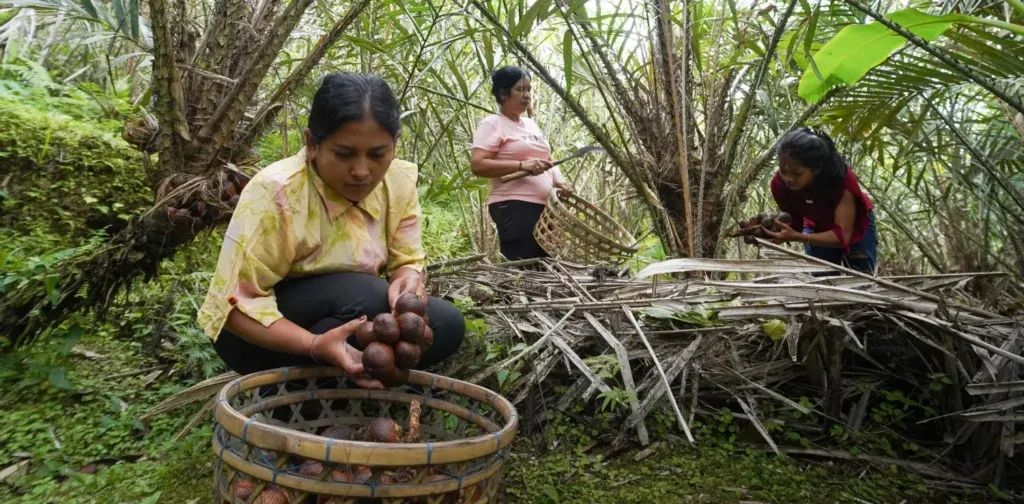
In the heart of Indonesia, a humble fruit is making waves in the world of sustainable agriculture. Salak Pondoh Sleman (SPS), a unique variety of snake fruit, has gained geographical indication (GI) certification, a seal that signifies its distinct characteristics tied to its place of origin. But what does this mean for the future of sustainable farming and the commercial agriculture sector? A recent study published in *Agritech* sheds light on this very question.
Researchers, led by Rizky Brisha Nuary from the Department of Agricultural Product Technology at Universitas Sebelas Maret (UNS), have developed a novel approach to assess the sustainability of SPS. Their method, dubbed RAPSalacca, is a rapid appraisal technique that considers multiple dimensions of sustainability—environmental, organizational, and technological.
The study found that the SPS plantation system is “quite sustainable,” with a sustainability index of 59.83. This is a significant finding, as it highlights the potential for other GI products to be evaluated and improved in a similar manner. “Our goal was to create a comprehensive framework that could be applied to other GI products,” Nuary explained. “By understanding the key attributes that contribute to sustainability in each dimension, we can help farmers and producers make informed decisions.”
The commercial implications of this research are substantial. As consumers increasingly demand sustainably produced goods, products like SPS that can demonstrate their commitment to sustainability are likely to gain a competitive edge in the market. “This research provides a roadmap for other producers to follow,” said Nuary. “It’s not just about meeting consumer demands; it’s about future-proofing their businesses.”
The study also underscores the importance of technological innovation in sustainable agriculture. By identifying the most influential sustainability attributes in the technological dimension, the research paves the way for targeted investments in technologies that can enhance sustainability and productivity.
Looking ahead, the RAPSalacca method could be adapted and applied to a wide range of GI products, not just SPS. This could lead to a more sustainable and resilient agricultural sector, capable of meeting the challenges of climate change and resource scarcity.
In the words of Nuary, “This is just the beginning. We hope that our work will inspire further research and collaboration in this area, ultimately contributing to a more sustainable future for agriculture.”
As the agriculture sector continues to evolve, research like this will be crucial in shaping its trajectory. By embracing a multidimensional approach to sustainability, farmers and producers can ensure that their products not only meet market demands but also contribute to a healthier planet.