
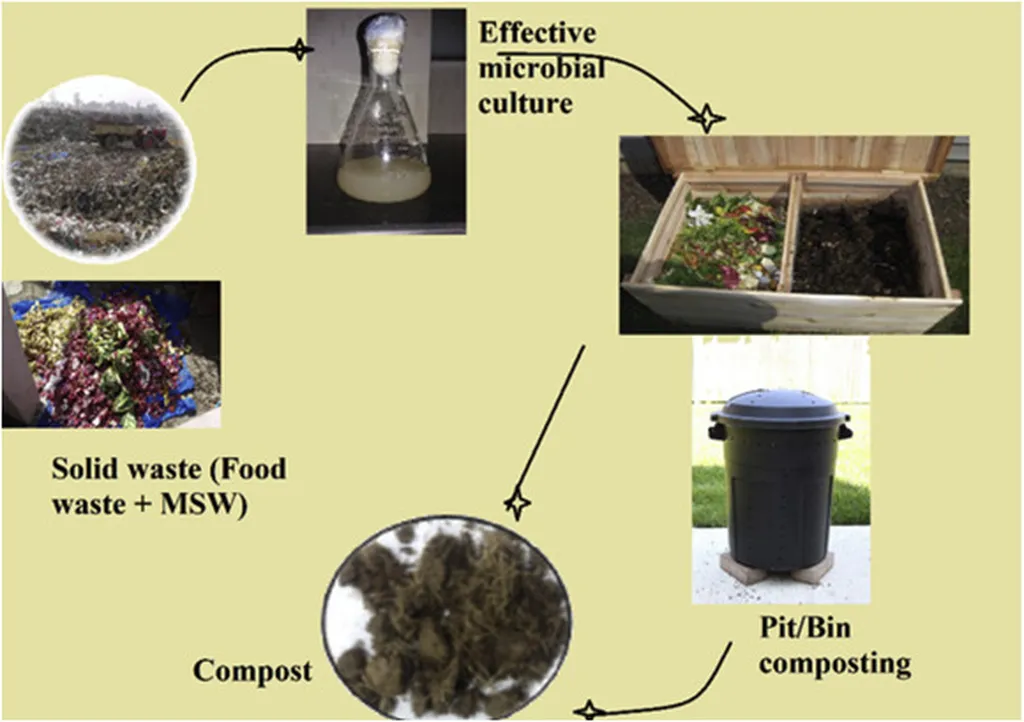
In the quest for sustainable agricultural practices, scientists are delving deep into the microbial world to unlock the secrets of efficient composting. A recent study published in *Applied Sciences* has shed light on the dynamic interplay between nutrients and microbial communities in cattle manure composting systems inoculated with *Lactobacillus acidophilus*. The research, led by Junkyung Lee from the Department of Applied Plant Science at Sangji University in South Korea, offers valuable insights that could revolutionize composting techniques and enhance agricultural productivity.
The study focused on the temporal changes in nutrient levels and microbial composition during the composting process. Samples were collected at two critical points: day 15 (D15) and day 60 (D60). The results revealed significant increases in key nutrient parameters, including ammonium nitrogen (NH₄⁺-N), potassium (K), phosphorus (P), calcium (Ca), magnesium (Mg), and total nitrogen (T-N). Notably, NH₄⁺-N levels surged from 813.01 mg/kg at D15 to 1714.24 mg/kg at D60, a finding that underscores the enhanced nutrient retention capabilities of the inoculated composting system.
Microbial analysis, based on 16S rRNA gene sequencing, showed intriguing shifts in community composition. While the overall alpha diversity remained relatively stable, the relative abundance of *Firmicutes* increased, accompanied by a decrease in *Bacteroidetes* and *Proteobacteria*. “This shift suggests a more efficient decomposition process, which is crucial for nutrient cycling and soil health,” explained Lee.
The study also highlighted strong associations between specific bacterial phyla and manure chemical properties. For instance, *Firmicutes* were strongly correlated with higher levels of NH₄⁺-N, chloride, and sodium. Functional prediction using PICRUSt2 indicated that mature compost samples had a higher representation of genes associated with nitrogen- and energy-related pathways, such as arginine and polyamine biosynthesis and butanoate fermentation.
The implications of these findings for the agriculture sector are profound. Enhanced nutrient retention and microbial diversity in compost can lead to more fertile soils, improved crop yields, and reduced reliance on synthetic fertilizers. “By understanding these nutrient–microbe–function linkages, we can optimize composting processes to create more effective and sustainable agricultural practices,” Lee noted.
This research not only provides a roadmap for future studies but also offers practical applications for farmers and agritech companies. As the global push for sustainable agriculture intensifies, innovations in composting technology could play a pivotal role in achieving food security and environmental sustainability. The study’s findings, published in *Applied Sciences* and led by Junkyung Lee from Sangji University, represent a significant step forward in this endeavor.