
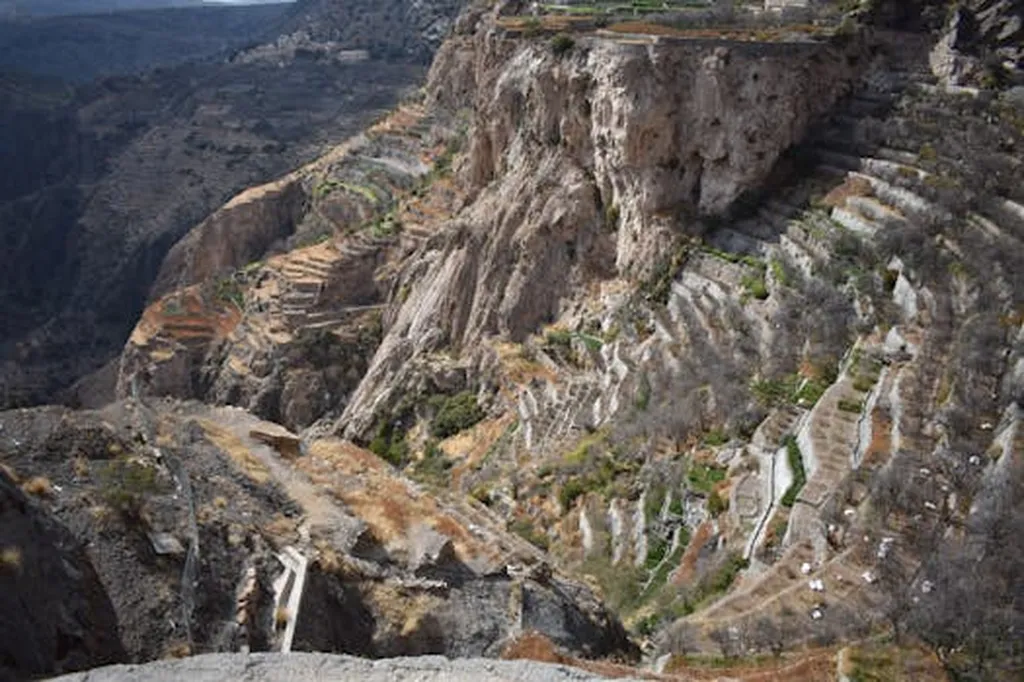
In the heart of China, the Loess Plateau has long been a battleground against soil erosion, with terraces serving as the frontline defense. A recent study, published in the journal *Remote Sensing*, has shed new light on the dynamic changes and sediment reduction effects of these terraces, offering promising insights for the agriculture sector.
The research, led by Chenfeng Wang from the State Key Laboratory of Soil and Water Conservation and Desertification Control at Northwest A&F University, leveraged Landsat series data and machine learning techniques to map terrace changes over three decades. The study identified key parameters for remote sensing identification of terraces, including Elevation, red band, Normalized Difference Vegetation Index (NDVI), Enhanced Vegetation Index (EVI), and Near-infrared Reflectance of Vegetation (NIRv). These variables explained a substantial 88% of the terrace recognition variance, demonstrating the robustness of the approach.
The study’s innovative use of the Random Forest classification model coupled with the LandTrendr algorithm enabled rapid time-series mapping of terrace spatial distribution characteristics. The results were impressive, with a producer’s accuracy of 93.49%, user’s accuracy of 93.81%, overall accuracy of 88.61%, and a Kappa coefficient of 0.87. “The LandTrendr algorithm effectively removes terraces affected by human activities,” noted Wang, highlighting the precision of their methodology.
The findings revealed a significant increase in terrace area on the Loess Plateau, from 0.9790 million hectares in 1990 to 9.8981 million hectares in 2020. This expansion has led to a notable reduction in soil erosion, with an average decrease of 49.75% across the region. “Terraces are a key measure for soil erosion control in the region and a critical strategy for improving farmland productivity,” Wang emphasized.
The commercial implications for the agriculture sector are substantial. By providing scientific evidence for soil erosion control and enhancing the precision of terrace management, this research can guide future investments in sustainable agricultural practices. The data offers a roadmap for farmers and policymakers to optimize terrace construction and maintenance, ultimately boosting crop yields and economic returns.
Looking ahead, this research could shape future developments in agritech by integrating remote sensing and machine learning for precision agriculture. The methodology developed by Wang and his team could be applied to other regions facing similar challenges, offering a scalable solution for soil conservation and agricultural productivity enhancement.
As the agriculture sector continues to grapple with the impacts of climate change and land degradation, innovative approaches like this one will be crucial in building resilient and sustainable farming systems. The study not only advances our understanding of terrace dynamics but also paves the way for smarter, data-driven agricultural practices.