
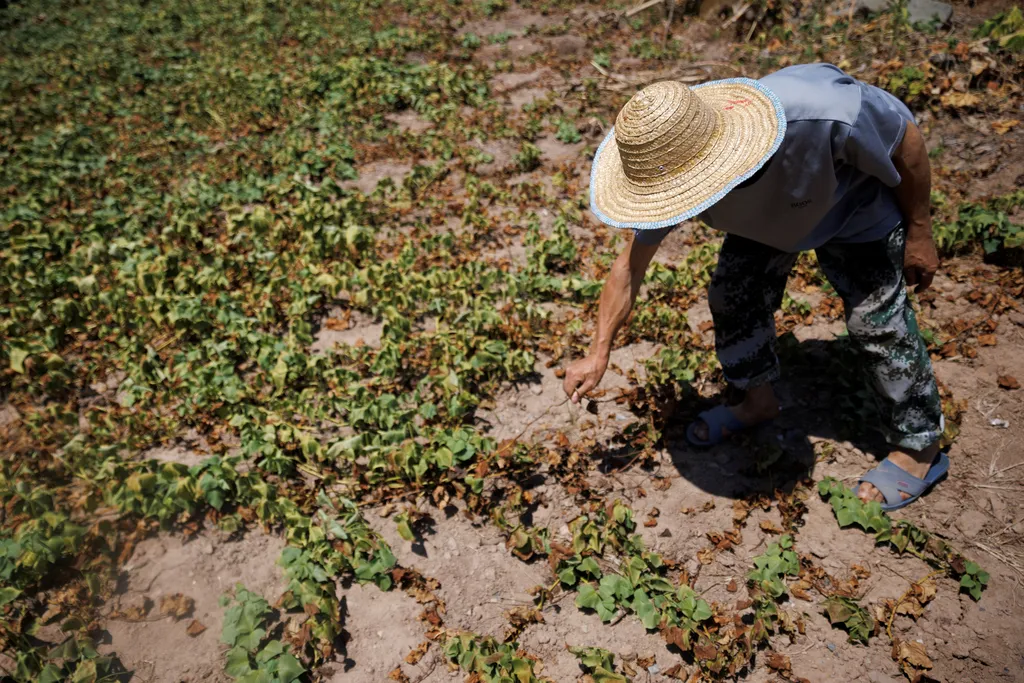
In the vast, arid expanse of Northern China, where agriculture is a dance with drought, a recent study has shed new light on the intricate relationship between water scarcity and agricultural productivity. The Ningxia-Inner Mongolia Irrigation District, a critical agricultural hub, has been the focus of a comprehensive analysis published in ‘Guan’gai paishui xuebao’, led by QIAN Jialin from Ningxia University. The research delves into the spatiotemporal dynamics of meteorological and soil droughts and their impact on water use efficiency (WUE), offering valuable insights for farmers and policymakers alike.
The study, which integrated long-term experimental data from 1989 to 2018, reveals a complex interplay between drought conditions and agricultural productivity. “We found that meteorological drought is the dominant factor influencing WUE in this region,” explains QIAN Jialin. This is a crucial finding, as it underscores the need for strategies that mitigate the effects of meteorological drought, such as improved irrigation techniques and drought-resistant crop varieties.
One of the most significant findings is the lag effect of meteorological drought on WUE. The research shows that WUE responds strongly to meteorological drought conditions, but with a notable lag of up to seven months. This lag effect is particularly pronounced in the Inner Mongolia section of the district, where the negative impact of drought on WUE can persist for over a year. “This lag effect is something that farmers need to be aware of,” says QIAN. “It means that the impact of drought conditions can persist long after the drought has ended, affecting crop yields and water use efficiency.”
The study also highlights the spatial variability in WUE across the district. The central areas show higher WUE compared to the edges, with the Ningxia section outperforming the Inner Mongolia section in terms of gross primary productivity (GPP) and evapotranspiration (ET). This spatial variability underscores the need for localized strategies to improve water use efficiency and agricultural productivity.
From a commercial perspective, these findings are invaluable. They provide a scientific basis for developing targeted drought-resistance strategies that can enhance agricultural productivity and water use efficiency. For instance, farmers in the Ningxia section could benefit from practices that capitalize on the faster increase in GPP compared to ET, thereby boosting WUE. Meanwhile, in the Inner Mongolia section, strategies to mitigate the prolonged impact of meteorological drought could be crucial.
Looking ahead, this research could shape future developments in the field of agritech. The emphasis on the lag effect of drought conditions suggests that predictive models and early warning systems could be developed to help farmers anticipate and mitigate the impact of drought. Additionally, the spatial variability in WUE highlights the need for precision agriculture techniques that tailor practices to specific locations within the district.
In conclusion, this study offers a nuanced understanding of the relationship between drought and water use efficiency in one of China’s critical agricultural regions. By providing actionable insights, it paves the way for more sustainable and productive agricultural practices. As QIAN Jialin puts it, “Understanding these dynamics is the first step towards developing effective strategies to enhance agricultural productivity and resilience in the face of climate change.”