
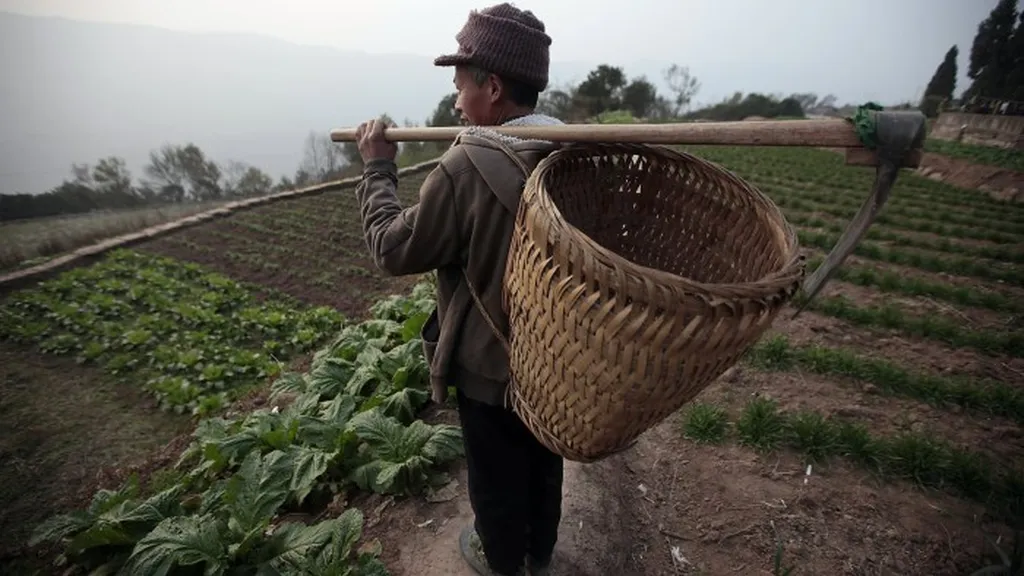
In the heart of Russia, a long-term study is challenging conventional wisdom about soil management and offering new insights into the future of sustainable agriculture. For twelve years, researchers at the V.V. Dokuchaev Soil Science Institute in Moscow have been closely monitoring the effects of different tillage practices on the composition of soil organic matter (SOM) in Haplic Chernozem Pachic, a fertile soil type found in temperate grasslands and forest-steppe zones. The findings, recently published in the journal ‘Soil Systems’, could reshape the way farmers approach soil conservation and carbon retention.
The study, led by Yulian Farkhodov, compared two non-inversion tillage systems—minimum tillage (MP) and no-till (NT)—with the traditional moldboard plowing. The results revealed that, after a decade, non-inversion tillage showed no significant differences in soil organic carbon (SOC), water-extractable organic carbon (WEOC), and soil structure condition compared to MP. However, the NT treatment distinctly enhanced the coefficient of soil structuring and the mean diameter of water-stable aggregates, indicating improved soil structure.
But the most intriguing findings were related to the composition of SOM. “Non-inversion tillage favored microbial-derived stable SOM, whereas NT enriched SOM with fresh plant material,” Farkhodov explained. This shift in SOM composition has significant implications for carbon retention and soil health.
The study found that non-inversion tillage, particularly NT, can lead to a loss of carbon due to limited fresh organic matter input and enhanced mineralization of unprotected SOM during tillage. This poses a risk to soil health and productivity, as SOM is crucial for soil structure, water retention, and nutrient cycling.
So, what does this mean for the agriculture sector? The findings suggest that periodic moldboard plowing might be necessary to improve carbon retention in non-inversion tillage systems. By incorporating plant residues into the soil profile, moldboard plowing can replenish organic matter and enhance soil health.
This research challenges the notion that no-till is always the best practice for soil conservation. Instead, it advocates for a more nuanced approach that considers the specific needs and conditions of the soil. As the agriculture sector grapples with the challenges of climate change and sustainable intensification, such insights are invaluable.
The study also opens up new avenues for research into the composition of SOM and its role in soil health and carbon retention. Future developments in this field could lead to more precise and effective soil management practices, benefiting both farmers and the environment.
In the words of Farkhodov, “Our findings reveal that the composition of SOM is a complex and dynamic aspect of soil health that requires careful consideration in soil management practices.” As we strive towards more sustainable and productive agriculture, understanding and managing SOM will be key.
The research was published in ‘Soil Systems’ and led by Yulian Farkhodov from the V.V. Dokuchaev Soil Science Institute in Moscow, Russia.