
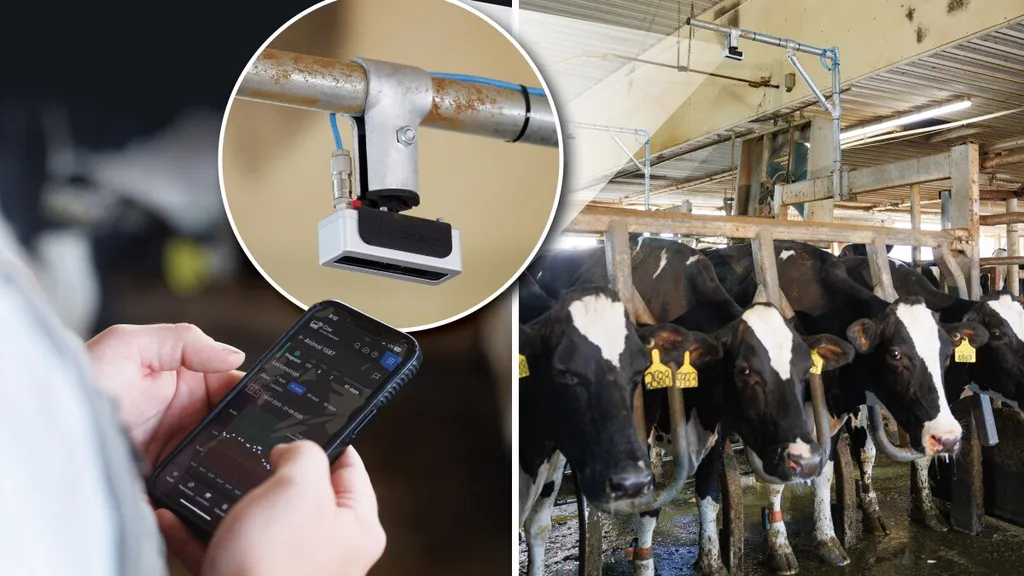
In the rapidly evolving world of agricultural technology, a groundbreaking study published in *Agriculture* is paving the way for more efficient and accurate cattle morphometric evaluations. Led by Sara Marchegiani from the Department of Agricultural, Food and Environmental Sciences at Università Politecnica delle Marche, the research explores the potential of affordable 3D technologies for contactless morphometric data collection in cattle. This innovation could revolutionize how farmers and livestock managers assess body condition, health, and productivity, ultimately enhancing agricultural performance and reducing the urban–rural digital gap.
The study compared three cutting-edge methods: smartphone-based LiDAR, photogrammetry, and AI-based models like Neural Surface Reconstruction (NSR), 3D Gaussian Splatting (3DGS), and Neural Radiance Fields (NeRF). The results were promising, with LiDAR offering the most consistent estimates, boasting a relative error ranging from -1.55% to 4.28%. Photogrammetry also showed potential, with accuracy ranging from 0.75 to -14.56. However, AI-based models exhibited more variability, indicating a need for further refinement.
“LiDAR-equipped smartphones present a cost-effective and portable solution for non-invasive morphometric data collection,” Marchegiani explained. “This technology could significantly improve the accuracy and efficiency of livestock evaluations, supporting enhanced agricultural performance and accelerating sector digitalization.”
The implications for the agriculture sector are substantial. Traditional methods of morphometric evaluation often involve manual measurements, which can be time-consuming, labor-intensive, and prone to human error. The adoption of smartphone-based 3D technologies could streamline these processes, allowing farmers to collect precise data quickly and easily. This could lead to better-informed decision-making, improved animal welfare, and increased productivity.
Moreover, the affordability and portability of these technologies could help bridge the urban–rural digital divide. By making advanced tools accessible to a broader range of farmers, regardless of their location or resources, these innovations could contribute to more equitable and sustainable agricultural practices.
Looking ahead, the study highlights the need for further research and development in AI-based models. While these methods showed potential, their variability suggests that more work is needed to optimize their accuracy and reliability. As Marchegiani noted, “The future of agricultural technology lies in the integration of advanced tools and methodologies. By continuing to refine these technologies, we can unlock new opportunities for precision agriculture and sustainable livestock management.”
In conclusion, this research represents a significant step forward in the field of agricultural technology. By leveraging the power of affordable 3D technologies, farmers and livestock managers can enhance their evaluation processes, improve animal welfare, and boost productivity. As the sector continues to evolve, the integration of these innovative tools will be crucial in shaping the future of agriculture.