
In the ever-evolving landscape of precision agriculture, researchers are continually seeking innovative methods to enhance crop management and yield prediction. A recent study published in the *Plant Phenome Journal* offers a promising approach to predict end-of-season maize yield using plant height growth curves, potentially revolutionizing mid-season management decisions.
The study, led by Dorothy D. Sweet from the Department of Agronomy and Plant Genetics at the University of Minnesota, explores the use of unoccupied aerial vehicles (UAVs) equipped with red, green, and blue (RGB) sensors to collect temporal plant height data. This data is then used to model within-field variation in growth curves and correlate it with grain yield.
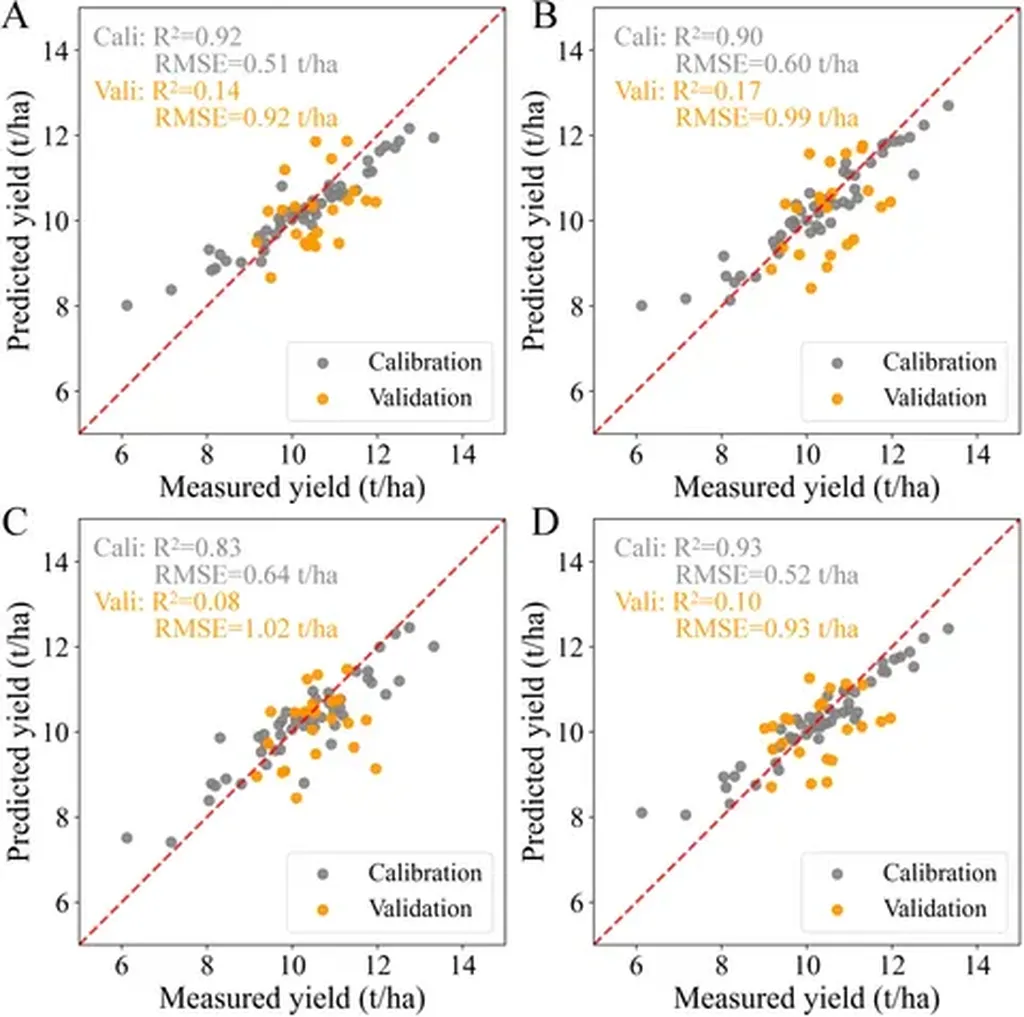
“Temporal plant height and growth rates collected with UAVs have the potential to predict variation in end-of-season grain yield throughout the field,” Sweet explains. The research demonstrates that by analyzing weekly plant height data from planting to flowering, it is possible to predict grain yield variation with an average correlation of r = 0.46 across different years and commercial hybrids.
The implications for the agriculture sector are significant. Traditional methods of yield prediction often rely on end-of-season data, limiting the opportunity for mid-season interventions. This new approach allows farmers to identify variations in growth patterns early in the season, enabling timely adjustments to management practices. “This method has potential for high accuracy grain yield prediction across a range of environmental conditions,” Sweet notes, highlighting the versatility of the approach.
However, the study also acknowledges challenges. Insufficient water affected prediction accuracy in one field due to limited representation of drought environments in the training data. This underscores the need for more comprehensive data sets that encompass a variety of stress environments, such as drought, to improve the model’s robustness.
The commercial impact of this research is substantial. By providing a quick, easy, and low-cost method to quantify within-field variation, farmers can make more informed decisions about resource allocation, fertilizer application, and other management practices. This can lead to increased efficiency, reduced costs, and ultimately, higher yields.
Looking ahead, the integration of UAV technology with advanced data analytics holds immense potential for the future of precision agriculture. As Sweet and her team continue to refine their models with more diverse training data, the accuracy and reliability of yield predictions are expected to improve. This could pave the way for widespread adoption of mid-season management strategies, benefiting farmers and the agriculture industry as a whole.
In the rapidly advancing field of agritech, this research represents a significant step forward. By harnessing the power of UAVs and data-driven insights, the study offers a glimpse into the future of sustainable and efficient crop management. As the technology evolves, so too will the tools available to farmers, ensuring they are better equipped to meet the challenges of feeding a growing global population.