
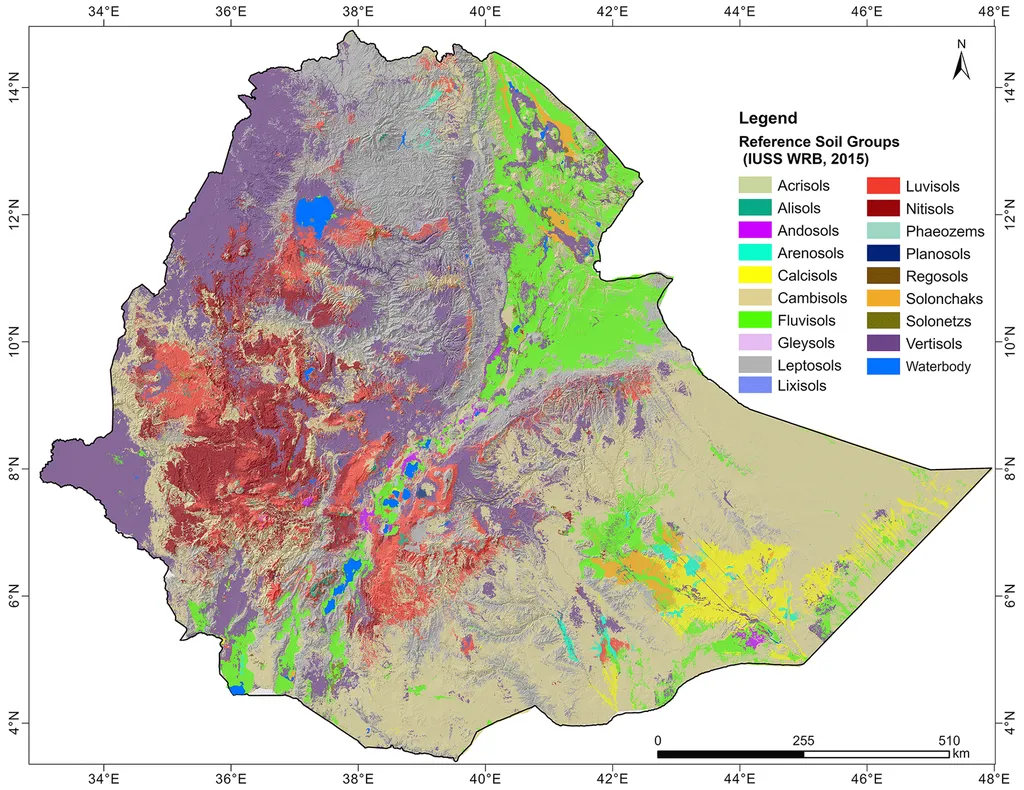
In the heart of Western Ethiopia, a groundbreaking study is reshaping how we understand and manage soil for sustainable sugarcane production. The Arjo‐Dhidhesa Estate Sugar Factory, spanning a vast 28,092 hectares, has long grappled with limited site-specific soil data, hindering optimal crop yields. A recent study published in ‘Agrosystems, Geosciences & Environment’ aims to change that, offering a detailed characterization and classification of the region’s soils that could revolutionize land management practices.
Led by Shasho Zeleke Nurgisa from the Department of Soil Resource and Watershed Management at Wallaga University, the research underscores the critical role of soil in plant growth and ecosystem sustainability. “Soil is a fundamental resource, yet its potential has been underutilized due to a lack of detailed, site-specific information,” Nurgisa explains. By conducting a thorough field survey, including 90 auger observations and the selection of representative pedons, the team has uncovered a wealth of data that promises to inform better agricultural practices.
The study revealed significant variability in soil properties across the estate. Most soils exhibited clay to heavy clay textures, ideal for water and nutrient retention, while Pedon A‐5 showed sandy clay loam, suggesting better drainage. These findings highlight the need for tailored soil management strategies to enhance productivity. “The diversity of soil types across the estate necessitates customized approaches to improve crop yields and long-term soil health,” Nurgisa notes.
The implications for the agriculture sector are profound. Understanding the physical and chemical properties of soil—such as texture, bulk density, pH, organic carbon, and exchangeable bases—allows for more precise and effective land management. This, in turn, can lead to increased sugarcane productivity and sustainability. “Site-specific soil data is crucial for guiding sugarcane management,” Nurgisa emphasizes. “It helps in making informed decisions that can significantly boost crop yields and ensure the long-term health of the soil.”
The study’s findings provide a foundation for implementing targeted soil management practices. By leveraging this data, farmers and agricultural businesses can optimize their operations, reduce costs, and enhance environmental sustainability. This research not only shapes future developments in soil management but also sets a precedent for similar studies in other regions. As the agricultural sector continues to evolve, the insights gained from this study will be invaluable in driving innovation and sustainability.
In an era where sustainable agriculture is more important than ever, this research offers a beacon of hope. By understanding and utilizing the unique properties of our soils, we can pave the way for a more productive and sustainable future. The work of Shasho Zeleke Nurgisa and his team serves as a testament to the power of scientific inquiry in transforming agricultural practices and ensuring a healthier planet for generations to come.