
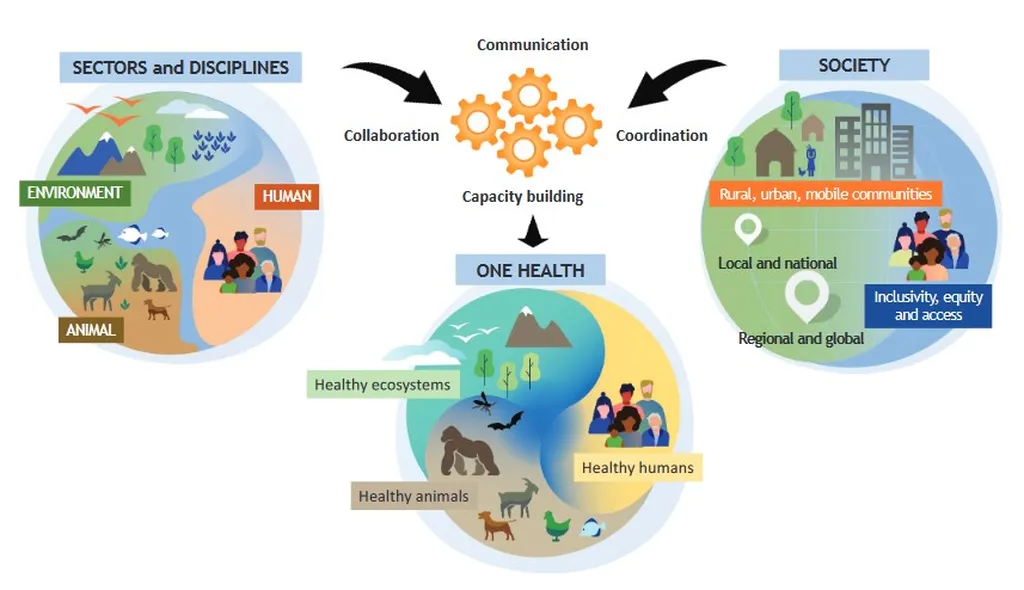
In an era where global health challenges are becoming increasingly complex, a novel approach is gaining traction, promising to reshape how we tackle these issues. The One Health approach, which underscores the interconnectedness of human, animal, and environmental health, is at the heart of a transformative movement. This approach is not just a scientific concept but a practical framework that could redefine global health strategies, particularly in the agriculture sector.
The One Health approach recognizes that the health of humans, animals, and the environment are intricately linked. This interconnectedness means that addressing one area can have ripple effects across the others. For instance, the emergence of zoonotic diseases, which jump from animals to humans, highlights the need for a holistic approach to health management. By understanding and mitigating risks at the intersections of these domains, we can better prevent and manage global health crises.
Yasser Sanad, a Zoonotic and One Health Advisor at the University of Arkansas, emphasizes the importance of this approach. “The One Health framework provides a comprehensive lens through which to understand, prevent, and manage global risks that affect all species and ecosystems,” Sanad notes. This perspective is crucial for developing effective strategies that can safeguard public health and promote sustainable development.
The One Health & Risk Management journal, established in 2019 by the Moldavian Biosafety and Biosecurity Association (MDBBA), is a pivotal platform for advancing this integrated approach. The journal serves as a hub for researchers, policymakers, and practitioners to exchange ideas and collaborate on innovative solutions. Aligned with global standards set by organizations like the World Health Organization (WHO), the World Organization for Animal Health (WOAH), the Food and Agriculture Organization (FAO), and the United Nations Environment Programme (UNEP), the journal offers invaluable insights into the interconnected nature of health and risk management.
For the agriculture sector, the One Health approach holds significant commercial implications. By adopting this framework, farmers and agribusinesses can better manage risks related to animal health, environmental sustainability, and food safety. For example, implementing One Health principles can help prevent the spread of diseases among livestock, reduce the use of antimicrobials, and promote sustainable farming practices. These measures not only improve animal welfare but also enhance the quality and safety of agricultural products, ultimately benefiting consumers and the market.
Looking ahead, the One Health approach is poised to shape future developments in global health and agriculture. As Yasser Sanad points out, “The One Health & Risk Management journal plays a pivotal role in advancing this integrated approach, contributing to global efforts for a healthier, more resilient world.” By fostering international collaboration and supporting the development of innovative solutions, the journal and the One Health approach are set to drive significant advancements in the field.
In conclusion, the One Health approach offers a promising path forward for addressing the complex challenges of global health. By emphasizing the interconnectedness of human, animal, and environmental health, this framework provides a comprehensive and effective strategy for managing risks and promoting sustainable development. For the agriculture sector, adopting the One Health approach can lead to improved animal health, enhanced food safety, and greater market opportunities. As the One Health & Risk Management journal continues to advance this integrated approach, it will undoubtedly play a crucial role in shaping a healthier and more resilient future for all.