
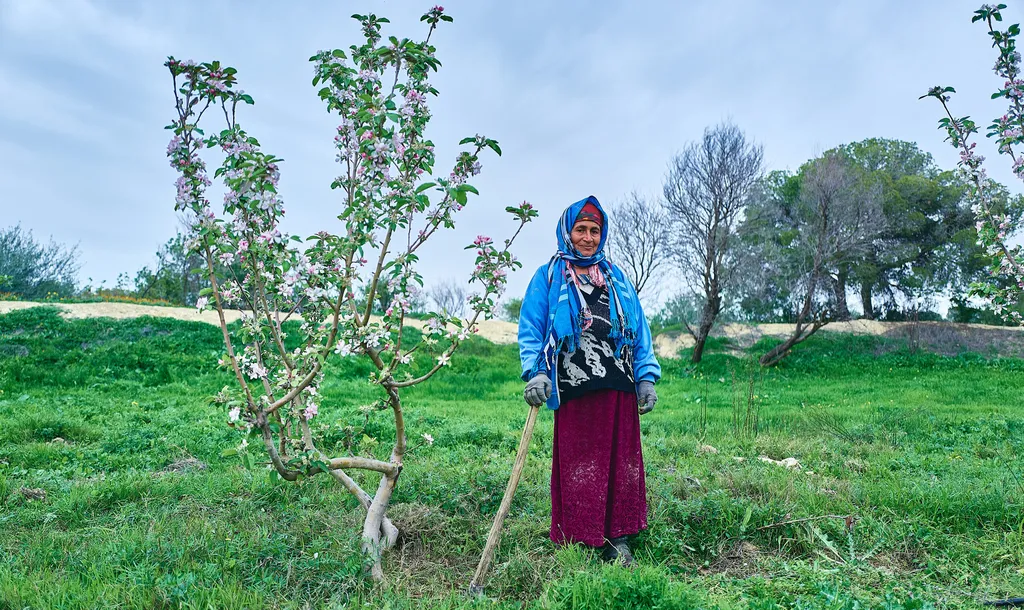
In the heart of Tunisia’s arid south, a groundbreaking study is paving the way for sustainable agriculture and food security. Researchers, led by Amina Mohamed of the Dryland and Oases Cropping Laboratory at the Arid Land Institute, have successfully identified and selected local pea populations that could revolutionize crop production in harsh, dry environments. Their work, published in the ‘Journal of Oasis Agriculture and Sustainable Development’, combines classical breeding methods with cutting-edge molecular tools to develop resilient pea varieties tailored to the unique challenges of arid regions.
The study addresses a critical gap in the agricultural sector: the lack of locally adapted pea varieties for irrigated areas in Tunisia’s southern arid zones. By employing a combination of SSR and ISSR markers, the research team evaluated the genetic diversity of local pea populations, identifying promising genotypes with improved yield, quality, and resilience to environmental stresses. “Our goal was to enhance the genetic potential of these local populations to meet the demands of sustainable agriculture in arid regions,” Mohamed explained.
The research team’s innovative approach involved index selection to enhance yield-related traits and a multi-marker analysis that integrated genetic, morphological, and biochemical data. This comprehensive analysis classified the populations into two distinct groups: white-flowered populations (P3, P5, P7), characterized by high yields and protein content, and purple-flowered populations (P2, P6, P8, P9), distinguished by their high seed productivity and rich antioxidant content.
The commercial implications of this research are significant. The development of resilient pea varieties adapted to arid environments can enhance food security, improve agricultural sustainability, and open new markets for high-quality, locally adapted crops. “The integration of traditional breeding techniques with molecular approaches provides a robust foundation for developing resilient pea varieties tailored to arid environments,” Mohamed noted.
This study not only highlights the potential for genetic improvement in local pea populations but also sets a precedent for future research in agricultural sustainability. By combining classical breeding methods with advanced molecular tools, researchers can develop crops that are not only resilient to environmental stresses but also meet the nutritional demands of a growing population.
The findings of this research have the potential to shape future developments in the field of agritech, particularly in the development of composite varieties that are adapted to specific environmental conditions. As the global demand for sustainable and resilient crops continues to grow, the integration of genetic, morphological, and biochemical data will play a crucial role in the development of new varieties that can thrive in challenging environments.
In the words of Amina Mohamed, “This research is a testament to the power of combining traditional knowledge with modern technology to address the pressing challenges of agricultural sustainability and food security in arid regions.” The study’s success underscores the importance of continued investment in agricultural research and the development of locally adapted crops that can meet the needs of a changing climate and a growing population.