
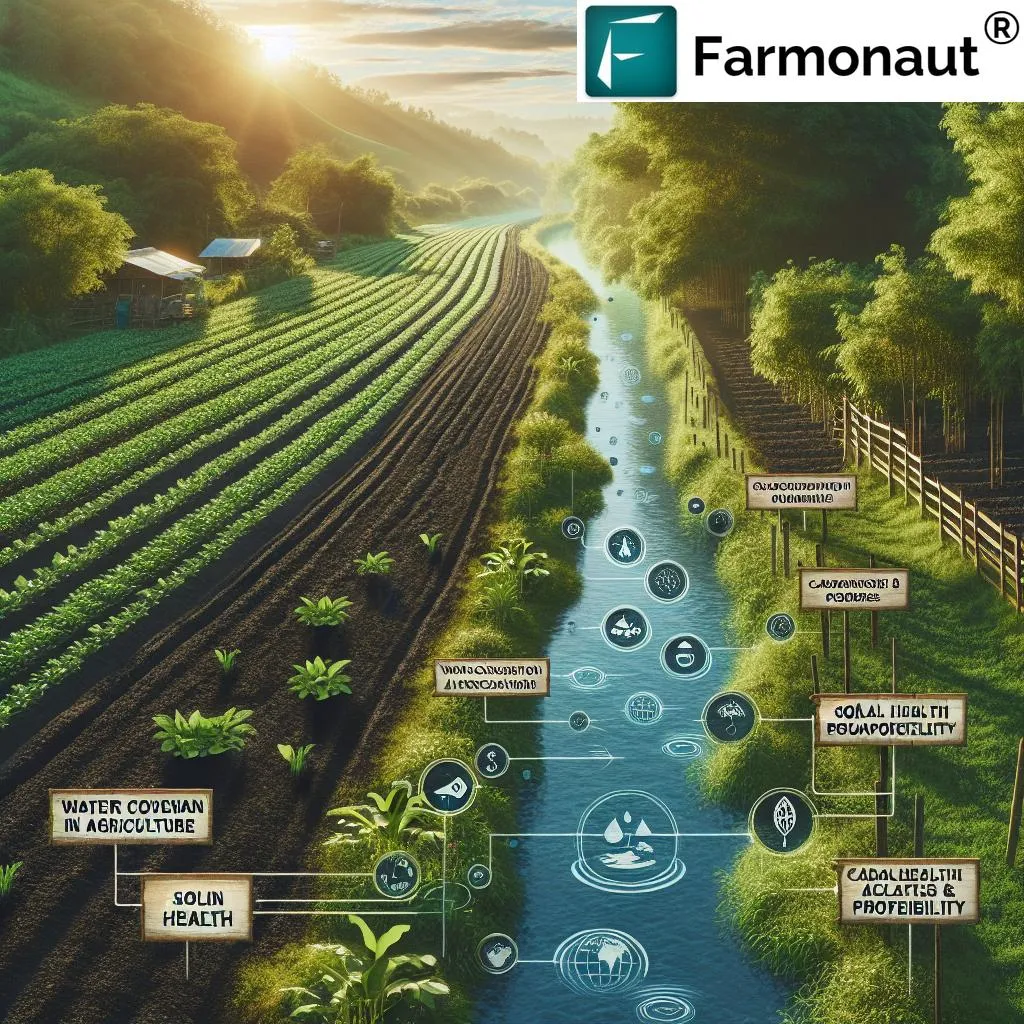
In the rapidly evolving landscape of agriculture carbon credits, the news today reflects more than just policy shifts—it marks a fundamental transformation in how farmers and agribusinesses balance the urgent need for increased food production with the imperative to reduce greenhouse gas emissions and promote sustainability. Rising climate ambitions, maturing carbon markets, and the strong push for innovation have made agriculture carbon credits a powerful mechanism for change, driving adoption of emission-reducing and climate-smart practices across the globe.
With agriculture accounting for 20–25% of global greenhouse gas emissions, much of the sector’s emissions profile is complex, stemming from not only livestock methane, nitrous oxide from fertilized soils, and carbon dioxide (CO₂) from land-use changes, but also machinery fuel, synthetic fertilizers, pesticides, and irrigation. Tackling these sources requires collaboration, advanced agricultural technology, and market incentives—all of which converge in the ongoing push for verified carbon credits and sustainable operations.
Investors are increasingly recognizing the potential of agricultural carbon credits to shape global investment flows. As carbon markets mature and regulatory signals tighten in 2026 and beyond, innovative technologies and robust verification methods are attracting both corporate and public capital to sustainable farming and emissions reduction projects.
Breakthroughs in remote sensing and digital platform verification now underpin the credibility and market acceptance of agricultural carbon credits. Farmers in both developed and emerging markets are adopting precision nutrient management, agroforestry, conservation tillage, and renewable energy to lower carbon footprints and earn additional income from credit sales. Large agribusinesses and food chains are setting carbon neutrality targets, spurring demand for verified credits and sustainable agriculture inputs. Government subsidy programs and climate policies are accelerating the transition to low-carbon farming systems—with a particular focus on satellite-based monitoring for transparency and impact.
However, barriers remain for smallholder farmers, especially regarding access to technology, funding, and knowledge of carbon markets. New inclusive solutions are emerging to bridge these gaps. By 2026, the role of agriculture carbon credits in supporting environmental sustainability and providing income streams to farmers is undeniable. The sector’s transformation is anchored in the intersection of policy, technology, and market mechanisms, ensuring the continued growth of climate-smart agriculture worldwide.
Understanding Agriculture Carbon Emissions: Drivers, Sources, and Opportunities
Agriculture accounts for approximately 20-25% of total global greenhouse gas (GHG) emissions. The sector’s emissions profile is shaped by a multitude of factors:
– Methane (CH₄): Primarily from livestock digestion (enteric fermentation) and rice paddies.
– Nitrous Oxide (N₂O): Released from fertilized soils, especially due to synthetic fertilizers and improper irrigation.
– Carbon Dioxide (CO₂): Arises from land-use changes (deforestation, conversion to agriculture), fossil fuel use for machinery and irrigation systems.
That’s why reducing emissions involves a multipronged approach—ranging from improved input management to smart tech adoption and restoration of degraded lands.
An agriculture carbon credit is a verified, marketable certificate reflecting one metric ton of carbon dioxide equivalent (CO₂e) emissions reduced or sequestered through specific farming practices. Credits can be sold in voluntary or compliance markets, providing additional income for farmers and incentivizing the adoption of sustainable agriculture.
How It Works – Step By Step
– Farm adopts a GHG-reducing practice (e.g., cover cropping, reduced fertilizer application).
– Emission reductions are monitored and quantified (using satellite data, IoT sensors, etc.).
– A third-party verifier confirms the impact, issuing carbon credits to the farm.
– Credits are listed on carbon markets and sold to companies, institutions, or governments needing offsets.
– Farm receives additional revenue, fuelling further investment in sustainable practices.
At the heart of agriculture carbon credits news today is technological innovation, especially in remote sensing, digital platforms, and data analytics. These advancements are lowering transaction costs, shrinking verification timelines, and building confidence in both compliance and voluntary markets for agricultural credits.
Latest Technologies Empowering the Sector:
– Satellite Imagery: Offers global, frequent, and unbiased data coverage to quantify changes in soil carbon sequestration, vegetation health, and crop patterns.
– Drones & IoT-Enabled Sensors: Enable hyper-local monitoring of soil health, crop growth, and even on-field emissions.
– AI Data Processing: Unlocks trends, anomaly detection, and predictive analytics, making it easier to measure, report, and verify emission reductions.
– Blockchain-Based Traceability: Maintains an immutable record of sustainability practices and carbon transactions, vital for keeping credits trustworthy and fraud-resistant.
To reduce agriculture carbon emissions, the sector deploys a growing range of climate-smart practices. These not only decrease greenhouse gas output directly but also increase soil carbon sequestration and regenerative capacity.