
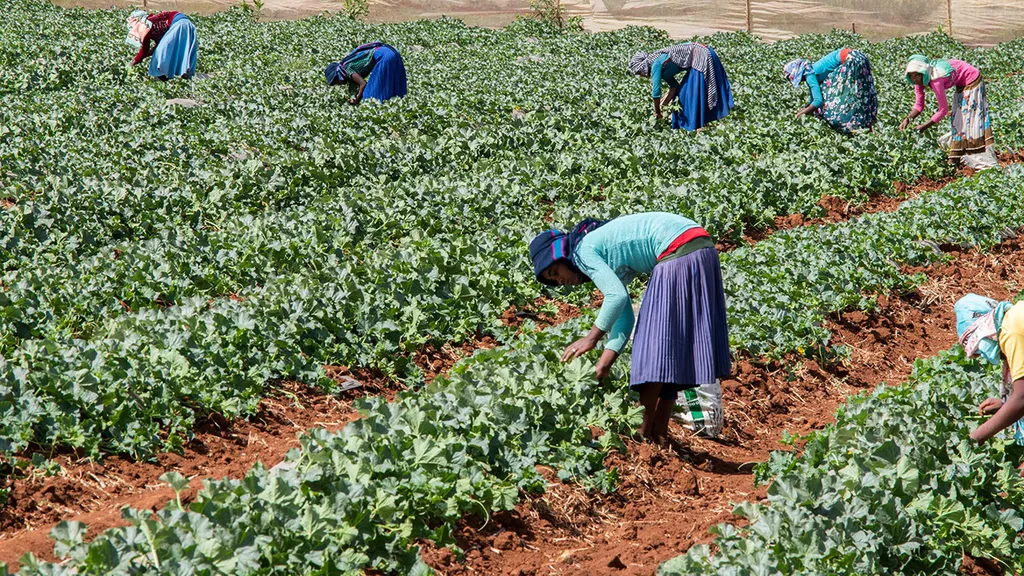
In the heart of Ethiopia’s Jama District, a humble legume is making waves, not just in farmers’ fields but also in the realm of sustainable agriculture and market economics. Grass pea (Lathyrus sativus L.), a crop known for its resilience to harsh climates, is taking center stage in a recent study published in *Legume Science*. The research, led by Yosef Worku Yigezu from the College of Agriculture at Injibara University, delves into the drivers of grass pea market supply and its broader implications for smallholder farmers and ecological resilience.
Grass pea, often referred to as an “insurance crop” due to its ability to thrive in adverse conditions, has been a staple in Ethiopian agriculture for centuries. However, its market potential and the factors influencing its supply have remained underexplored until now. Yigezu’s study, which surveyed 250 grass pea producers, reveals that farm experience, land size, yield, access to credit, and livestock ownership significantly boost market supply. Conversely, the distance to the market acts as a deterrent.
The findings suggest that improving market access and financial support could unlock the commercial potential of grass pea, benefiting both farmers and the broader agricultural sector. “Farmers with higher market supply levels reported greater adoption of sustainable practices and higher follow-up crop yields,” Yigezu notes. This indicates that grass pea is not just a resilient crop but also a catalyst for sustainable agricultural systems.
The study’s recommendations are clear: policy initiatives should focus on enhancing rural transportation and market linkages to lower transaction costs, providing reasonably priced credit, and offering training on soil fertility and market-oriented production. These steps could align with Ethiopia’s Climate-Smart Agriculture policies, promoting economic growth and ecological resilience.
The implications of this research extend beyond Ethiopia. As climate change continues to pose challenges to global agriculture, crops like grass pea could play a pivotal role in ensuring food security and sustainability. By understanding the economic and ecological benefits of grass pea, policymakers and agricultural stakeholders can make informed decisions that support smallholder farmers and promote sustainable practices.
In the words of Yigezu, “This study provides a foundation for future research and policy development in the field of sustainable agriculture.” As the world grapples with the impacts of climate change, the humble grass pea might just hold the key to a more resilient and sustainable future for smallholder farmers worldwide.