
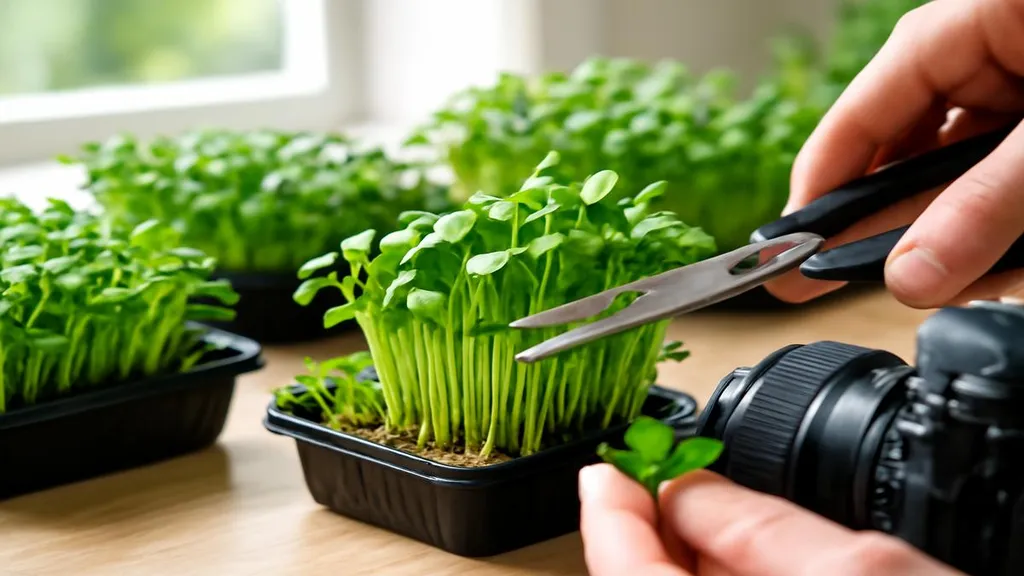
In the quest to bolster food security and reduce malnutrition, researchers are turning to microgreens as a nutrient-packed solution. A recent study published in *Urban Agriculture & Regional Food Systems* has identified optimal growing media that could revolutionize the cultivation of pea and bajra microgreens, offering significant benefits for the agriculture sector.
Microgreens, the young seedlings of vegetables and herbs, are gaining traction for their high nutritional value and rapid growth cycle. However, their cultivation can be challenging, particularly in open ecosystems where environmental factors can lead to desiccation of the growing medium, necessitating higher water and nutrient inputs. This often results in reduced nutritional synthesis and compromised yield.
To address these challenges, Avinash Sharma, a researcher from the Faculty of Agricultural Sciences at Arunachal University of Studies, conducted a study to identify the best growing medium for enhancing the yield and nutritional quality of microgreens in controlled environments. The study focused on two local varieties: Pennisetum glaucum L. R. Br. var. Rijka Bajri (bajra) and Pisum sativum var. arvense L. var. Durga (pea).
The research utilized a completely randomized design to grow these microgreens in various substrate combinations, including cocopeat mixed with clayey-loam soil, vermiculite, perlite, vermiwash, azolla, tree bark, rice straw, rice husk, and wood sawdust. The findings revealed that different substrates significantly influenced the growth and yield of the microgreens.
For bajra microgreens, the combination of cocopeat and wood sawdust (T8) emerged as the most effective substrate, yielding 3–5 grams of microgreens. In contrast, pea microgreens thrived best with cocopeat and vermicompost (T1), producing yields of 4.67–9 grams. “The study highlights the importance of selecting the right growing medium to optimize the yield and nutritional quality of microgreens,” Sharma noted.
The research also examined the phenotypic traits that correlated with yield. For bajra microgreens, plant height, root length, dry weight, and nutrient transport showed positive correlations. In pea microgreens, shoot length, leaf area, and germination were key factors. These insights could guide farmers and agritech companies in developing tailored growing media to enhance microgreen production.
The study’s findings have significant commercial implications for the agriculture sector. By optimizing the growing medium, farmers can reduce water consumption by 90% and land use by 80%, aligning with sustainable development goals. This approach not only supports food security but also offers a profitable avenue for farmers to diversify their crops.
Looking ahead, the research suggests several avenues for future exploration. Prolonging the shelf life of growing media, optimizing growth conditions, and promoting beneficial microorganisms like Trichoderma sp. through chemical or nanoparticle synthesis are areas ripe for further investigation. Additionally, the potential of nano-substrate media could open new frontiers in microgreen production, supporting sustainable food security.
As the demand for nutrient-rich, rapidly grown crops continues to rise, this research provides a crucial stepping stone towards a more sustainable and secure food future. By leveraging the insights from this study, the agriculture sector can unlock new opportunities for growth and innovation, ultimately benefiting both farmers and consumers alike.