
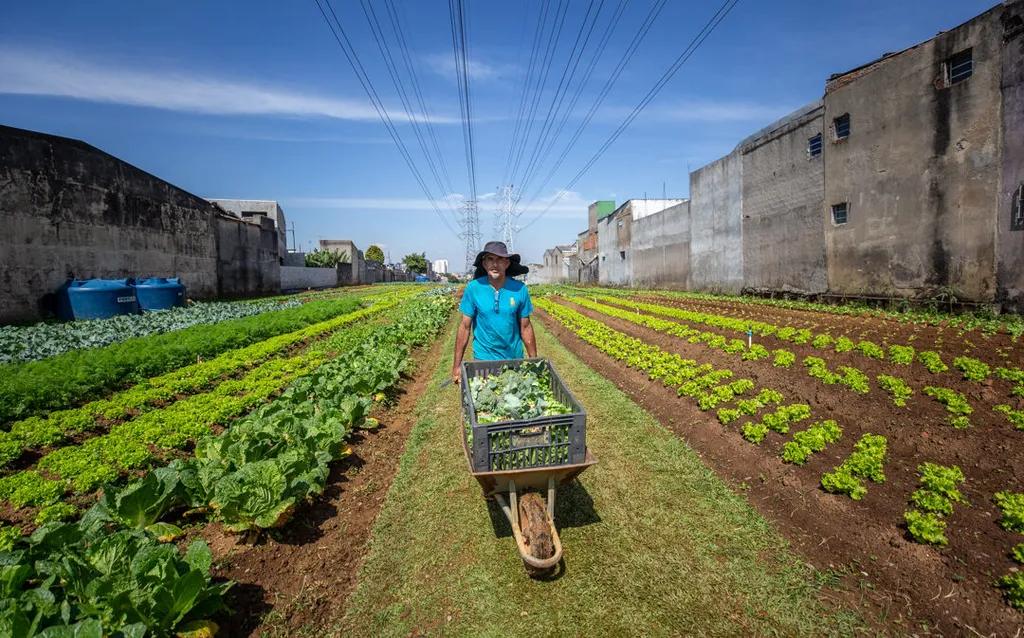
In the heart of São Paulo, a megacity teeming with over 11 million inhabitants, a quiet revolution is taking root. Amidst the urban sprawl, home and community gardens are sprouting, defying the concrete jungle to offer a slice of green, a breath of fresh air, and a plate of homegrown food. A recent study published in ‘Urban Agriculture & Regional Food Systems’ sheds light on the vibrant, diverse, and economically impactful world of urban agriculture (UA) in the dense central areas of São Paulo, led by Gustavo Nagib from Universidade Estadual Paulista (UNESP) Presidente Prudente, Brazil.
The study, based on an online survey of 143 gardeners, reveals a thriving ecosystem of food diversity and environmental benefits. Despite the limited spaces—up to just 10 square meters—these urban oases are cultivating a staggering 172 different food plants. Herbs, nonconventional food plants, and leafy vegetables take center stage, painting a picture of culinary diversity that is as rich as it is sustainable.
“Although having limited spaces (up to 10m2), 172 different food plants were cultivated, predominantly herbs, nonconventional food plants, and leafy vegetables,” the study notes, highlighting the ingenuity of urban gardeners who maximize every square inch of their green spaces.
The economic impacts are equally compelling. Sixty-seven percent of the gardeners reported that up to 25% of the food they consumed in each meal came from their gardens. This not only improves access to fresh, healthy food but also translates into significant savings. While most gardeners were unable to estimate the exact savings on their weekly purchases, the potential for cost reduction is substantial. This could reshape consumer behavior and open new markets for urban farming products, benefiting the broader agriculture sector.
Beyond the plate, these gardens are havens for biodiversity. They attract insects and animals, enriching the urban ecosystem and providing a sense of connection to nature for city dwellers. Twenty-two gardeners, or 16% of the surveyed group, maintained beehives in domestic or community gardens, contributing to the pollination of plants and the production of honey. More than 70% of the gardeners practiced composting, turning organic waste into nutrient-rich soil, further closing the loop of sustainability.
The study underscores the potential of urban gardens to improve access to fresh food, enhance biodiversity, and promote sustainable practices. “While limited in scale, urban gardens in central and highly urbanized areas of Sao Paulo demonstrated potential to improve access to fresh food, enhance biodiversity, and promote sustainable practices,” the authors conclude.
This research offers a glimpse into the future of urban agriculture, particularly in megacities of the Global South. As urbanization continues to rise, the integration of green spaces into the urban fabric could become a cornerstone of sustainable city planning. The findings suggest that even in the most densely populated areas, there is room for growth—both literal and metaphorical.
For the agriculture sector, this means new opportunities for innovation and commercialization. Urban farming could become a significant market, with demand for seeds, tools, and expertise tailored to small-scale, high-density gardening. The study also highlights the need for further research and policy support to harness the full potential of urban agriculture.
As cities around the world grapple with the challenges of urbanization, the lessons from São Paulo offer a beacon of hope. Urban agriculture is not just a hobby; it is a vital component of sustainable urban living, with far-reaching implications for food security, economic development, and environmental stewardship. The future of farming is not just in the fields; it is also in our backyards, balconies, and community gardens, waiting to be cultivated.