
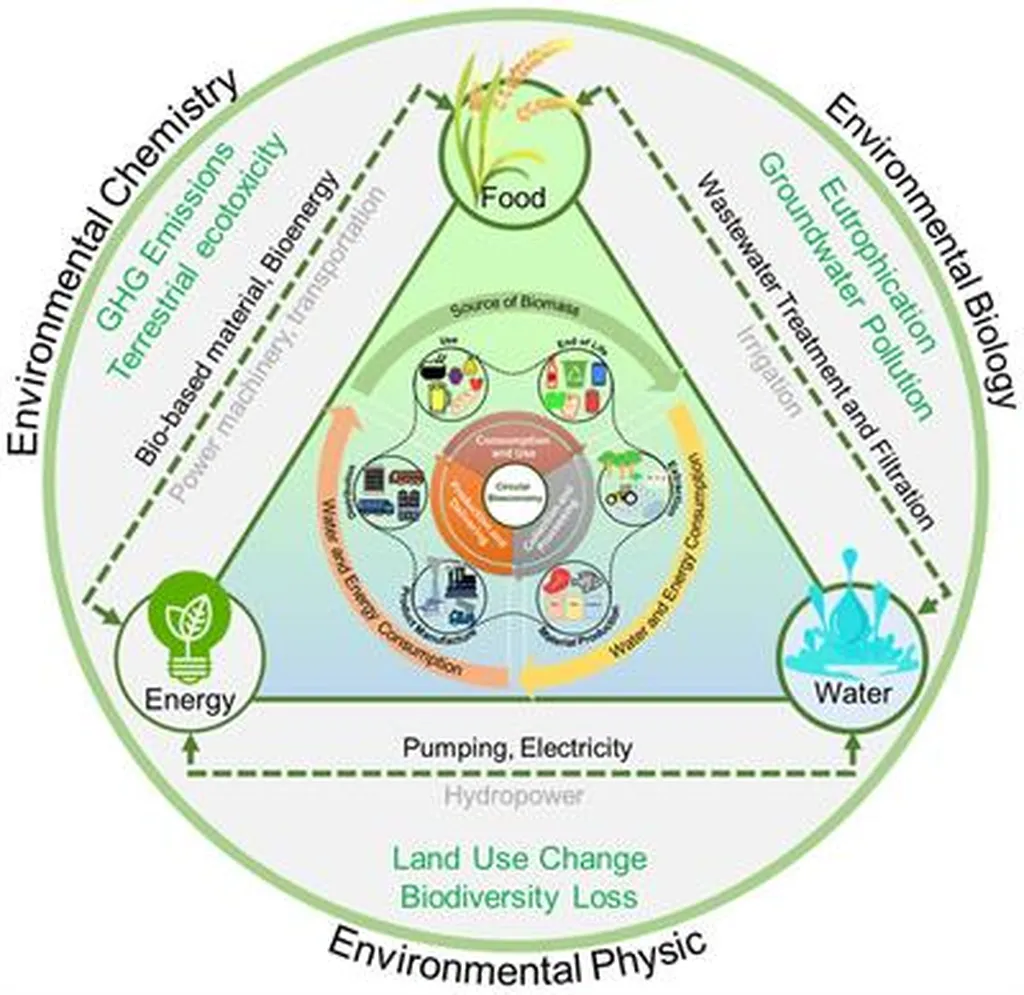
In the heart of bustling cities, a quiet revolution is taking root—one that promises to reshape how we grow, distribute, and consume food. A recent study published in *Urban Agriculture & Regional Food Systems* sheds light on the intricate interplay between food, energy, and water (FEW) in urban food ecosystems, offering a roadmap for sustainable and equitable urban agriculture. The research, led by Jannat Bahanni from the Department of Biosystems Engineering and Soil Science at the University of Tennessee, Knoxville, highlights the pressing challenges and innovative solutions that could redefine the future of urban food systems.
Urban food ecosystems are under siege from multiple fronts: energy consumption, water scarcity, food waste, and inefficient distribution. These challenges not only strain the environment but also exacerbate health inequities and urban vulnerability. Bahanni’s study delves into the benefits, barriers, and solutions of urban food ecosystem sustainability through the lens of the FEW nexus. By reviewing recent literature and analyzing case studies, the research identifies cross-sector barriers such as post-harvest losses, weak cold-chain infrastructure, fragmented governance, and regulatory complexities.
“Equitable access to healthy food depends on not only expanding urban agriculture but also aligning zoning, transportation, and financial mechanisms to address structural inequalities in food distribution, storage, and affordability,” Bahanni emphasizes. This holistic approach is crucial for creating resilient and inclusive urban food systems.
The study proposes FEW-efficient strategies that could revolutionize the agriculture sector. Integrating precision technologies, community-scale waste-to-energy initiatives, and renewable energy-powered urban agriculture are among the key solutions. These strategies not only enhance cost-effective production but also promote the renewability of urban food ecosystems. Participatory governance is another critical component, ensuring that all stakeholders have a voice in shaping the future of urban food systems.
The commercial impacts of these findings are profound. For the agriculture sector, adopting FEW-efficient strategies could lead to significant cost savings and improved productivity. Precision technologies, for instance, can optimize resource use, reducing waste and increasing yields. Community-scale waste-to-energy initiatives can turn food waste into a valuable resource, creating new revenue streams for farmers and urban agriculture enterprises.
Moreover, the study underscores the importance of aligning zoning, transportation, and financial mechanisms to address structural inequalities. This alignment can open up new markets and opportunities for agricultural businesses, fostering innovation and growth. By embedding equity and circular bioeconomy principles into FEW nexus planning, cities can move beyond isolated interventions toward adaptive, regenerative, and inclusive food systems.
The research also highlights the need for policy and infrastructure innovations, partnerships between producers and food-recovery and waste conversion networks, and a redefinition of how cities manage urban food ecosystems. These steps are essential for positioning urban food security as both an environmental and a governance responsibility.
As cities continue to grow, the lessons from Bahanni’s study will be instrumental in shaping future developments in urban agriculture. By embracing a circular FEW nexus perspective, cities can create food systems that are not only sustainable but also equitable and resilient. The journey towards this vision is complex, but the potential rewards are immense, promising a future where urban food ecosystems thrive in harmony with the environment and the communities they serve.