
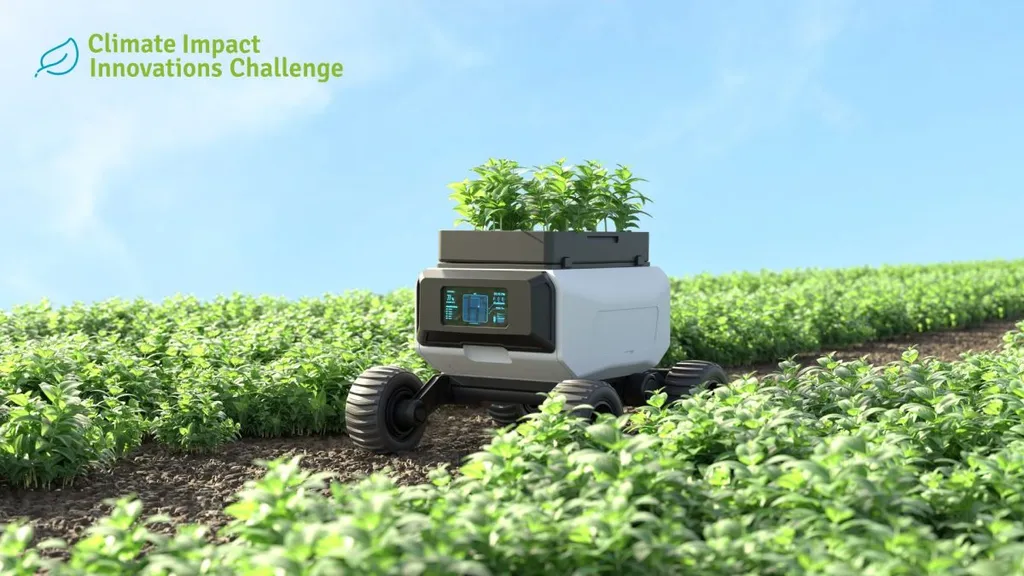
In the face of escalating climate change, the agriculture sector is turning to artificial intelligence (AI) to bolster food security and enhance plant adaptation. A recent review published in *Notulae Botanicae Horti Agrobotanici Cluj-Napoca* by lead author Hend Mandour of Zagazig University’s Faculty of Agriculture, delves into the transformative potential of AI-driven approaches in climate-smart agriculture. The research underscores how AI can accelerate climate adaptation, optimize resource use, and provide actionable insights for farmers and policymakers.
The review highlights AI’s multifaceted applications across four critical domains: high-throughput precision agriculture, accelerated genetic engineering, advanced crop yield modeling, and granular climate and pest forecasting. “AI-driven tools, including IoT sensor networks and deep learning algorithms, enable real-time, plant-specific nutrient and water management,” Mandour explains. This precision not only enhances crop yields but also promotes sustainable agricultural practices by minimizing resource waste.
One of the most promising aspects of AI in agriculture is its ability to accelerate the discovery and validation of stress-resilience genes. By analyzing vast datasets, AI can identify genetic traits that help plants withstand environmental stressors such as drought, salinity, and extreme temperatures. “AI has the potential to markedly support and accelerate the discovery and validation of stress-resilience genes,” Mandour notes. This capability is crucial for developing crops that can thrive in increasingly unpredictable climatic conditions.
The commercial implications of these advancements are substantial. Farmers can leverage AI-driven tools to make data-informed decisions, optimizing their operations for better yields and reduced costs. For instance, AI-powered crop monitoring systems can predict pest outbreaks and disease infections, allowing farmers to take preemptive measures. This proactive approach can significantly reduce crop losses and improve overall farm productivity.
Moreover, AI’s ability to model crop performance under future environmental scenarios provides valuable insights for policymakers. By understanding potential impacts, governments and agricultural organizations can develop strategies to mitigate risks and ensure food security. “We conclude by advocating for essential policy and governance pathways, emphasizing the necessity of transparent international data-sharing frameworks and inclusive technology transfer,” Mandour states. This collaborative approach is essential for ensuring that AI’s benefits are harnessed effectively and equitably.
However, the review also addresses significant challenges impeding AI adoption, including data heterogeneity and scarcity, the potential for algorithmic bias to widen existing resource gaps, and barriers to equitable access for smallholder farmers. Addressing these issues is crucial for the widespread implementation of AI in agriculture. Mandour emphasizes the need for transparent international data-sharing frameworks and inclusive technology transfer to ensure that AI’s benefits are harnessed effectively and equitably.
As the agriculture sector continues to evolve, AI-driven solutions are poised to play a pivotal role in shaping the future of farming. By enhancing food security, optimizing resource use, and promoting sustainable practices, AI has the potential to revolutionize the way we grow and produce food. The research by Mandour and her team provides a comprehensive overview of the current state and future potential of AI in agriculture, offering a roadmap for stakeholders to navigate the complexities of this rapidly evolving field.