
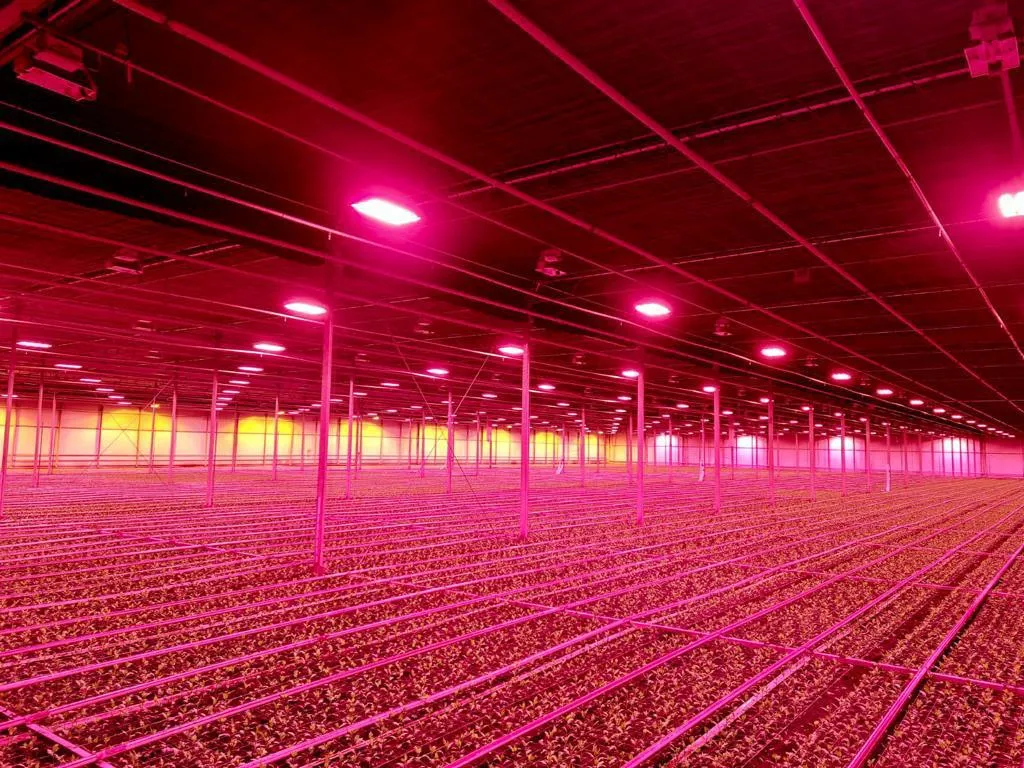
In the rapidly evolving world of controlled-environment agriculture, scientists are continually seeking ways to optimize plant growth and postharvest stability. A recent study published in *Notulae Botanicae Horti Agrobotanici Cluj-Napoca* sheds light on how different LED light combinations can influence the growth and postharvest quality of barley grass (Hordeum vulgare L.) in plant factory systems. The research, led by Si-Hong Kim from the Institute of National Products, Smart Farm Research Center, KIST Gangneung, offers promising insights for the agriculture sector, particularly in enhancing year-round production and extending shelf life.
The study explored various LED light combinations, focusing on their effects on germination, growth, and photosynthetic efficiency. The findings revealed that monochromatic red LED light (R10) yielded the highest germination rate at 95.3%, significantly outperforming other treatments. This light combination also resulted in superior growth characteristics, including plant height, fresh weight, and dry weight. “The red LED treatment not only enhanced germination but also boosted overall plant growth, making it a promising option for commercial plant factories,” Kim noted.
Photosynthetic efficiency, measured by the maximum quantum yield of photosystem II (Fv/Fm), was also highest under the R10 treatment, reaching 0.81. In contrast, blue-enriched treatments (R3B7 and B10) showed lower Fv/Fm values, indicating reduced photosynthetic efficiency. These results suggest that red LED light is optimal for uniform seedling establishment and biomass enhancement in controlled environments.
The study also delved into the impact of different postharvest packaging methods on microbial dynamics and quality attributes. It was found that packaging type had a more significant influence on microbial status and weight loss than the LED treatments themselves. Modified atmosphere packaging (MAP) with an oxygen transmission rate (OTR) of 40,000 effectively minimized moisture loss and microbial proliferation, highlighting its potential for improving postharvest quality retention and microbial safety during distribution and storage.
The commercial implications of this research are substantial. By integrating red-centered LED lighting during production and optimized MAP conditions, plant factories can achieve stable, year-round production of barley grass with extended shelf life. This could revolutionize the agriculture sector, particularly in urban farming and vertical farming systems, where controlled environments are crucial for consistent crop yields.
“The integration of red LED lighting and MAP systems can support commercial plant factories in meeting the growing demand for fresh, high-quality produce,” Kim explained. “This approach not only enhances growth but also ensures that the produce remains fresh and safe for consumers.”
As the agriculture sector continues to embrace technological advancements, this research provides a roadmap for optimizing plant growth and postharvest stability. The findings could pave the way for more efficient and sustainable farming practices, ultimately benefiting both producers and consumers. With further research and development, the integration of LED lighting and MAP systems could become a standard practice in commercial plant factories, driving the future of controlled-environment agriculture.