
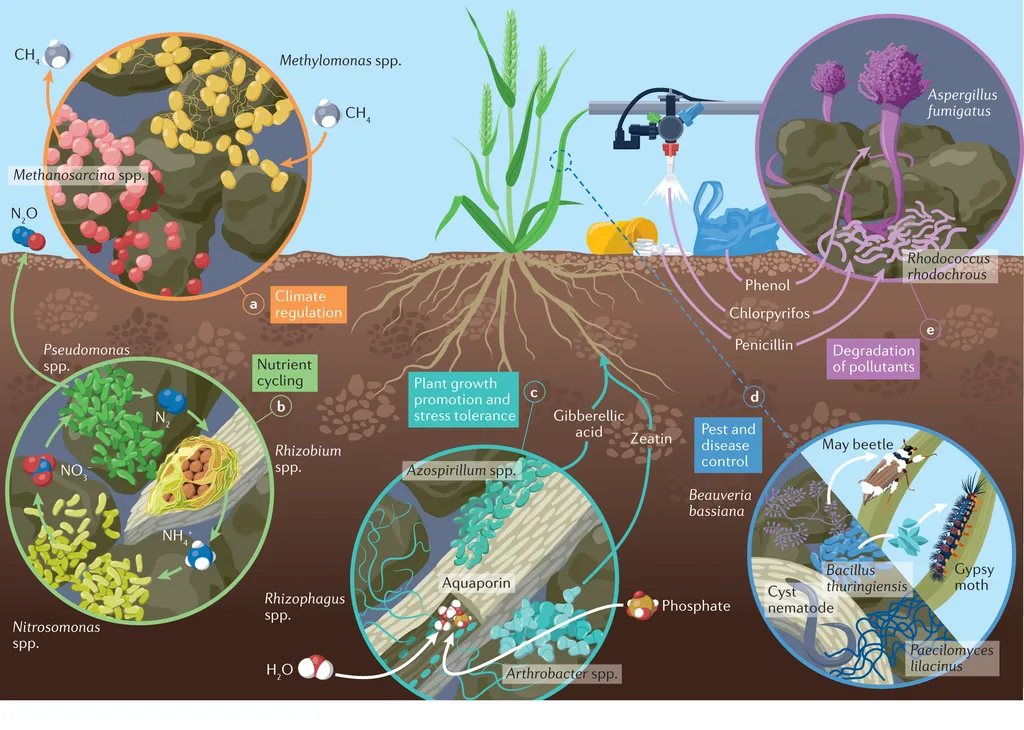
In the ever-evolving landscape of agriculture, the soil beneath our feet is proving to be a powerful ally in the quest for sustainable farming practices. A recent study published in *npj Sustainable Agriculture* has shed light on how specific farming practices can influence soil microbiomes and, in turn, bolster crop defense mechanisms. This research, led by Elias H. Bloom from the Plant Pathology and Plant-Microbe Biology Section at Cornell University, offers promising insights for farmers and agritech innovators alike.
The study surveyed 85 organic farms to identify practices that reshape soil microbiomes and link these changes to plant defense functions. The findings reveal that compost and organic pesticide use are associated with decreased levels of two plant defense compounds, jasmonic and salicylic acid. Conversely, targeted irrigation, grass cover crops, and no tillage were linked to increased jasmonic acid levels. These changes were mediated by shifts in three microbial taxa—Fusarium chlamydosporum, Paenibacillus senegalensis, and Microtrichales spp.—and two beta diversity metrics.
Elias H. Bloom, the lead author, emphasized the significance of these findings: “Our work indicates that soil microbiomes and their ecosystem services can be managed through farming practices. This highlights sustainable pest management strategies that can be prioritized for outreach programs.” This research not only underscores the importance of soil health but also provides a roadmap for farmers to adopt practices that enhance crop resilience.
The commercial implications of this research are substantial. By understanding how different farming practices influence soil microbiomes, farmers can make informed decisions that improve crop yields and reduce reliance on chemical pesticides. This shift towards sustainable soil management could lead to significant cost savings and environmental benefits, making it a win-win for both farmers and the planet.
Structural equation modeling in the study suggested that no tillage, pesticide, and compost use were influenced by farmers’ beliefs in the microbiome. In contrast, the adoption of targeted irrigation and grass cover crops was shaped by abiotic and economic factors. This dual influence highlights the complex interplay between farmer beliefs, economic considerations, and environmental conditions.
As the agriculture sector continues to grapple with the challenges of climate change and resource scarcity, the insights from this study offer a beacon of hope. By leveraging the power of soil microbiomes, farmers can enhance crop defense mechanisms and build more resilient agricultural systems. The research also paves the way for future developments in agritech, where innovations in soil management and microbiome engineering could revolutionize farming practices.
In the words of Elias H. Bloom, “This research is a stepping stone towards a more sustainable and productive future for agriculture.” As we continue to explore the intricate relationships between soil, microbes, and plants, the potential for transformative change in the agriculture sector becomes increasingly clear. The journey towards sustainable farming is just beginning, and the soil beneath our feet holds the key to unlocking a brighter, more resilient future.