
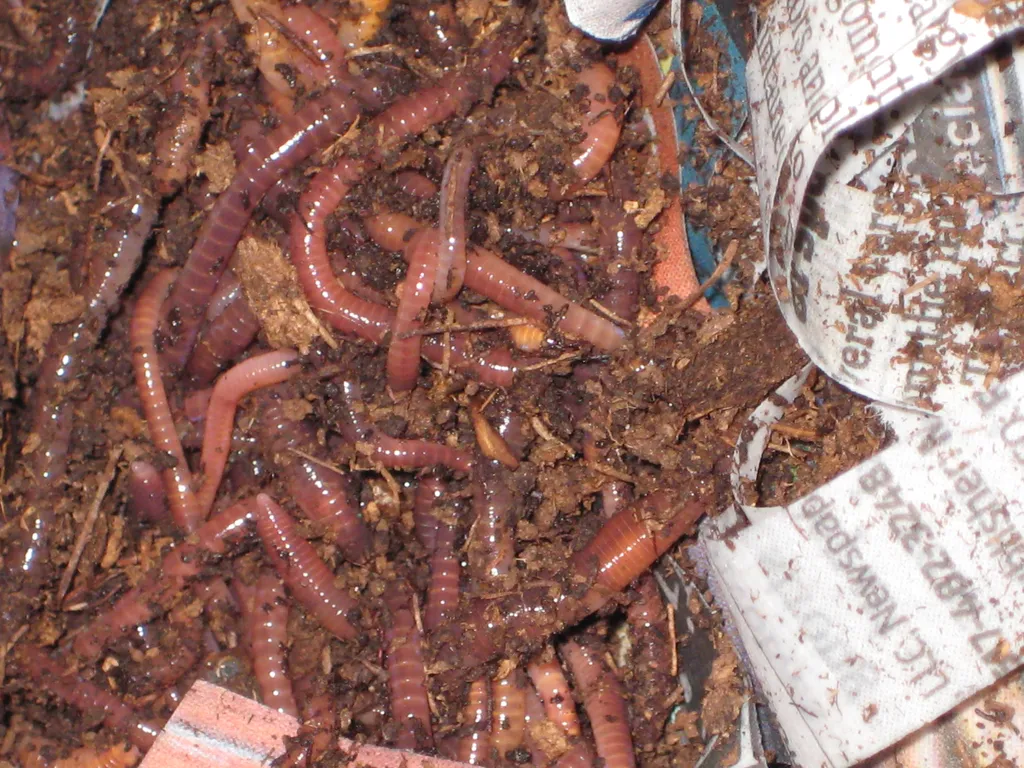
In the heart of Ethiopia, a humble earthworm is making waves in the world of sustainable agriculture. Researchers at Dambi Dollo University have harnessed the power of Eisenia fetida, a species of earthworm, to transform biodegradable waste into nutrient-rich fertilizer. This process, known as vermicomposting, could revolutionize waste management and agriculture in tropical and subtropical regions.
The study, published in *Scientific Reports*, focused on the vermicomposting of three locally available biodegradable wastes: coffee husk, paper waste, and vegetable residues. The lead author, Zelalem Telila from the College of Agriculture and Natural Resource at Dambi Dollo University, explained, “We introduced thirty mature worms per treatment and monitored the process over 60 days. The results were remarkable.”
The researchers found significant improvements in the physicochemical and biological parameters of the substrates. The pH levels stabilized, electrical conductivity decreased, and the organic matter and carbon content reduced, while nitrogen, phosphorus, and potassium levels increased. The final vermicompost was not only well-stabilized but also nutritionally enriched, meeting the standards set by the World Health Organization (WHO) and the Iranian Standards and Quality Inspection Institute (ISIRI).
“This study demonstrates the potential of vermicomposting as a cost-effective, environmentally sustainable, and locally adaptable solution for managing biodegradable waste,” Telila said. The process provides high-quality organic fertilizers for agricultural use, offering a circular economy approach to waste management.
The implications for the agriculture sector are substantial. With the growing demand for organic and sustainable farming practices, vermicomposting presents a viable solution for farmers to manage waste and improve soil health. The process is particularly beneficial in regions where agricultural residues are abundant, such as coffee husks in Ethiopia.
The research also highlights the role of Eisenia fetida in stabilizing organic matter and enhancing nutrient content. The earthworms play a central role in the vermicomposting process, working in conjunction with microbial activity to break down organic residues.
As the world grapples with the challenges of waste management and sustainable agriculture, this study offers a promising solution. The findings could shape future developments in the field, promoting the adoption of vermicomposting as a standard practice in waste management and agriculture.
In the words of Telila, “This is just the beginning. The potential of vermicomposting is vast, and we are excited to explore its applications further.” With continued research and development, the humble earthworm could indeed become a key player in the future of sustainable agriculture.