
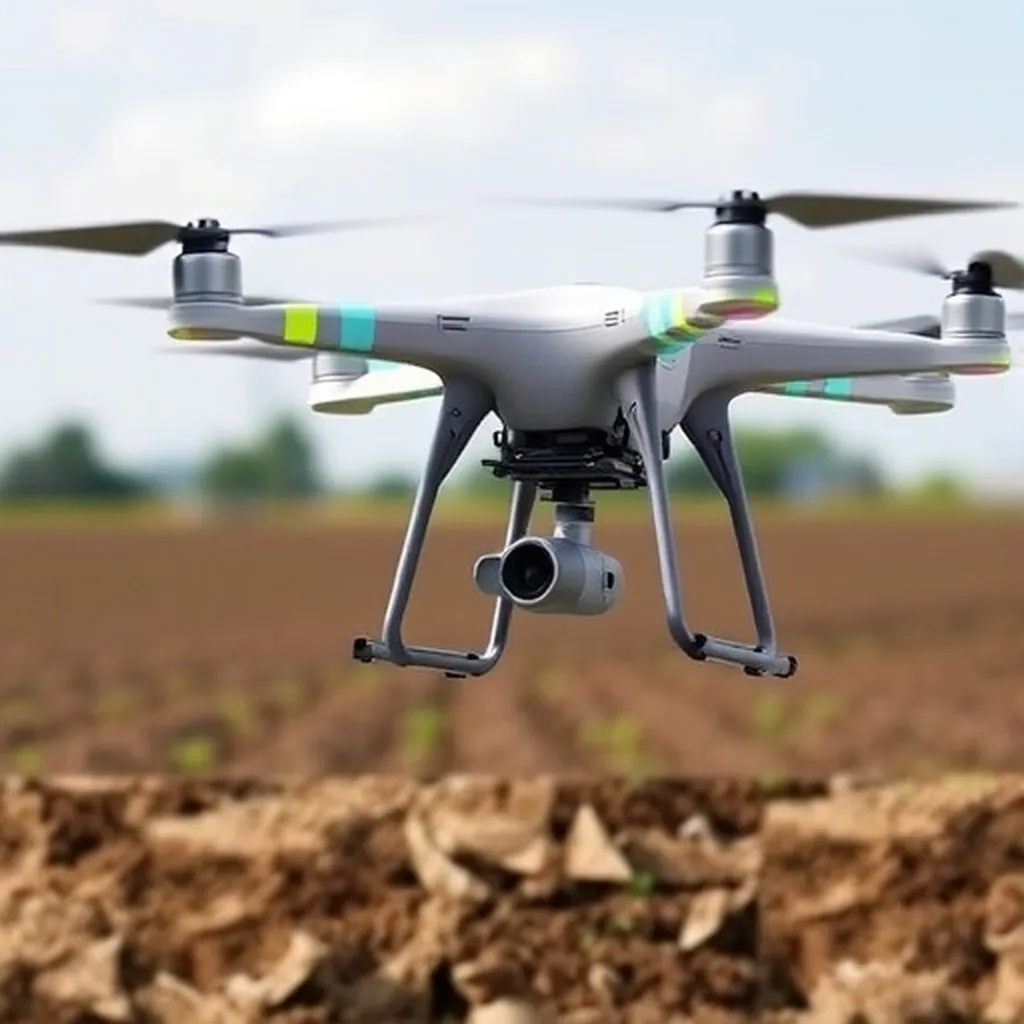
In a groundbreaking development set to redefine precision agriculture and environmental monitoring, researchers have unveiled an innovative smart nail platform designed for wireless subsoil health monitoring. This cutting-edge technology harnesses the synergy of unmanned aerial vehicles (UAVs) and radio frequency interrogation, promising a transformative leap in how farmers and scientists assess soil conditions deep beneath the surface without disruptive excavation.
The study, spearheaded by Ramesh, Y., Rana, M.M., Srinivasan, P., and their collaborators, represents a major advance in sustainable farming and environmental stewardship, leveraging interdisciplinary expertise in materials science, wireless communication, and agricultural engineering. The technological cornerstone of this pioneering approach is the “smart nail” — a sophisticated implantable sensor system engineered to penetrate subsoil layers and continuously collect vital data on soil health indicators such as moisture content, nutrient levels, microbial activity, and pH balance.
Unlike traditional soil sampling methods, which are labor-intensive and static, this smart nail operates autonomously underground. The ease of installation paired with the robustness of embedded sensors enables real-time monitoring, allowing for dynamic management of agricultural inputs to optimize crop yields and minimize ecological footprint.
Central to the system’s innovation is its wireless interrogation capability via UAVs equipped with radio frequency (RF) receivers. The UAVs act as agile data collectors, flying across agricultural fields to remotely stimulate the smart nails and receive sensor data through RF communication. This aerial approach negates the need for laborious manual sensor readouts or expensive fixed wireless infrastructure, significantly reducing operational costs and time. Furthermore, the deployment of UAVs introduces unmatched spatial coverage and temporal resolution, facilitating large-scale environmental monitoring with unprecedented granularity and frequency.
From a materials engineering perspective, the smart nails embody a confluence of resilient, biocompatible materials combined with miniaturized electronics tailored for subterranean conditions. The sensor array within each nail integrates advanced microelectromechanical systems (MEMS) that detect physical and chemical soil parameters. These sensors are encapsulated within a corrosion-resistant shell engineered to withstand varying soil compositions, moisture levels, and microbial environments without degradation over extended periods. This durability ensures long-term deployment stability, critical for continuous monitoring in agriculturally diverse terrains.
The communication module embedded within the smart nail is designed to operate within specific RF bands optimized for soil penetration and minimal signal attenuation. Researchers tailored the RF interrogation protocols to accommodate the complex electromagnetic properties of subsoil environments, overcoming challenges such as signal scattering and absorption by minerals and moisture gradients. These advancements facilitate a reliable bidirectional data exchange between the aerial UAV interrogators and the underground sensors, even at varying depths and soil compositions, thereby enhancing the fidelity and robustness of the acquired data.
A key advantage of this system is its modularity and scalability. Each smart nail is an independent unit, enabling targeted sensor deployment based on spatial variability and soil heterogeneity within a field. Farmers and land managers can customize the density and distribution of these implants to match specific monitoring objectives, whether it be localized nutrient management or broad-spectrum environmental assessments. Coupled with the rapid data collection capabilities of UAVs, this flexibility opens new horizons in adaptive land management that can respond swiftly to changing soil conditions and climatic variables.
The implications for precision agriculture are profound. By providing accurate, real-time data on subsoil conditions, the smart nail platform enables farmers to fine-tune irrigation schedules, fertilizer application, and crop rotation plans. This level of data-driven decision-making reduces excessive chemical use, water waste, and soil degradation, aligning with global sustainability goals and combating negative environmental externalities of traditional farming practices. Additionally, early detection of soil health issues such as nutrient deficiencies, compaction, or contamination can preempt crop failure, ensuring greater food security and farm profitability.
Beyond agriculture, the technology holds promise for broader environmental and ecological applications. Continuous subsoil monitoring can inform reforestation efforts, wetland restoration, and land rehabilitation projects by providing critical data to assess soil recovery and ecosystem health. Moreover, this system could aid in carbon sequestration research by monitoring organic matter dynamics and soil respiration rates, contributing valuable insights to climate change mitigation strategies. The ability to remotely and efficiently gather subterranean environmental data is a turning point for environmental science and policy planning.
The integration of UAV-facilitated RF interrogation brings a novel dimension of automation and precision that enhances the monitoring process’s overall efficiency. The UAVs’ flight paths are programmed via advanced algorithms to optimize field coverage and sensor interrogation frequency, enabling continuous data streams with minimal human intervention. Real-time processing of sensor data, supplemented with geo-referenced metadata, feeds into cloud-based platforms supporting machine learning models that predict soil health trends and offer actionable insights. This smart data ecosystem exemplifies the next generation of digital agriculture and environmental monitoring systems.
Safety and environmental impact considerations were paramount in the development of the smart nail platform. Research teams conducted extensive biocompatibility and toxicity analyses to ensure the materials used pose