
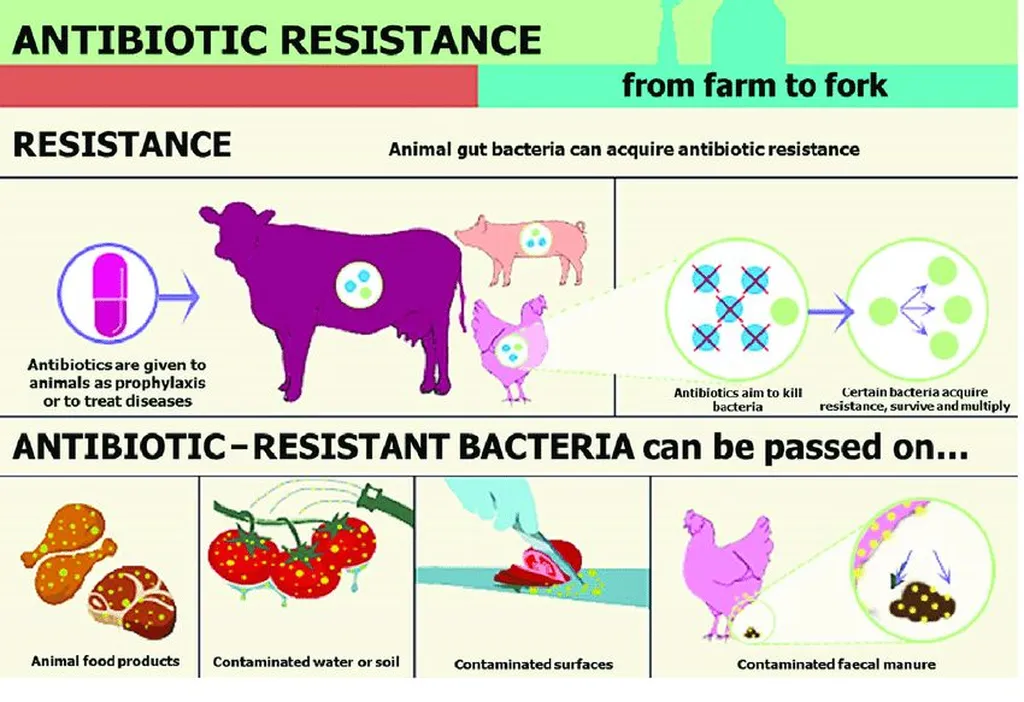
In the heart of Africa’s agricultural landscape, a silent crisis is unfolding, one that threatens to undermine the very foundations of food security and public health. The overuse and misuse of antibiotics in livestock farming are driving antibiotic resistance, a global menace that is particularly acute in Africa. A recent review published in *MicrobiologyOpen* sheds light on this pressing issue, offering a path forward that could reshape the future of animal agriculture.
Antibiotics have long been a staple in animal production, used not just to treat diseases but also to promote growth and boost productivity. Across the continent, various classes of antibiotics are routinely added to animal feed, from beta-lactams to fluoroquinolones. However, this practice is exerting a dangerous selective pressure on bacteria, accelerating the development of antibiotic resistance. “The continuous supplementation of animal feed with antibiotics is a significant driver of resistance,” explains lead author Mercy A. Alabi, a microbiologist at the University of KwaZulu-Natal in Durban, South Africa. “This misuse in animal agriculture is contributing to the growing global threat of antibiotic resistance, affecting animal, human, and environmental health.”
The consequences of this trend are far-reaching. Resistant strains of bacteria such as Staphylococcus aureus, Pseudomonas aeruginosa, Escherichia coli, Klebsiella pneumoniae, and Salmonella species have been widely reported in animal, human, and environmental samples. The transmission of these resistant bacteria from animals to humans can occur through direct contact, contaminated manure, wastewater, or the consumption of contaminated animal products. This poses a major public health challenge, with significant implications for the agriculture sector.
The economic impact of antibiotic resistance in livestock is staggering. Reduced treatment efficacy leads to increased morbidity and mortality in animals, resulting in substantial financial losses for farmers. Moreover, the potential for zoonotic transmission of resistant bacteria can lead to human health crises, further straining healthcare systems and economies. “The misuse of antibiotics in livestock farming is not just a health issue; it’s an economic one,” Alabi emphasizes. “It’s a threat to the sustainability of animal agriculture and the livelihoods of millions of farmers.”
To mitigate these risks, the review calls for a restriction on the use of antibiotics as growth promoters in animal farming. Instead, alternative feed additives such as probiotics, prebiotics, and phytobiotics are proposed as sustainable replacements. These alternatives have shown promise in enhancing animal growth and productivity without the associated risks of antibiotic resistance. “We need to shift our focus towards these safer alternatives,” Alabi suggests. “They offer a more sustainable path forward for animal agriculture.”
Education and regulation are also crucial components of the solution. Farmers need to be informed about the risks associated with antibiotic misuse and the benefits of sustainable alternatives. Governments must implement strict regulations to control the sale and misuse of antibiotics in livestock production. “This is a collective effort,” Alabi notes. “It requires collaboration between scientists, farmers, policymakers, and the broader community.”
The review published in *MicrobiologyOpen* by Mercy A. Alabi and her colleagues serves as a wake-up call, highlighting the urgent need for action in the face of antibiotic resistance. It offers a roadmap for the future of animal agriculture, one that prioritizes sustainability, public health, and economic resilience. As the world grapples with the challenges of antibiotic resistance, this research provides a beacon of hope, guiding the way towards a safer, more sustainable future for all.