
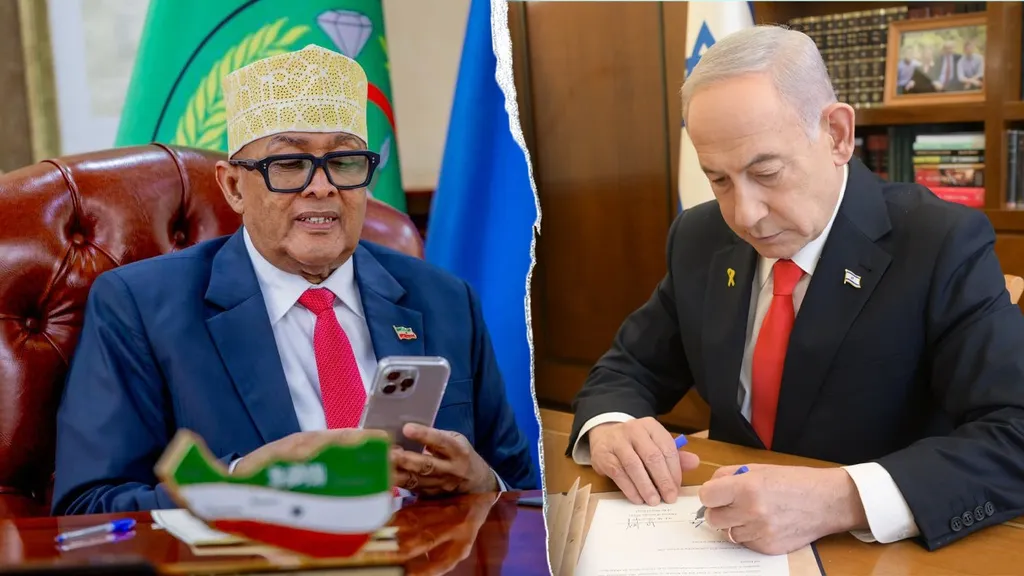
In a groundbreaking move that has sent shockwaves through the international community, Israeli Prime Minister Benjamin Netanyahu officially recognized the Republic of Somaliland as an independent and sovereign state on Friday. This historic decision makes Israel the first UN member state to grant de jure recognition to the breakaway region since it declared independence from Somalia in 1991. The move represents a significant departure from the African Union’s longstanding policy on the inviolability of colonial borders, setting a new precedent for international relations in the region.
Netanyahu justified the recognition as an extension of the Abraham Accords, positioning Somaliland as a crucial pro-Western anchor in the volatile Horn of Africa. Military analysts have also highlighted a more immediate tactical motivation: Somaliland’s coastline lies between 300 and 500 kilometers from Houthi-controlled territory in Yemen. By recognizing Somaliland, Israel can establish a permanent presence in the Gulf of Aden, creating a southern counter-Houthi axis to secure vital shipping lanes. This strategic move is expected to bolster regional stability and economic peace, with Israel announcing immediate bilateral agreements in agriculture, technology, and health.
The announcement has not been met with universal acclaim. Somalia, Egypt, Turkey, and Djibouti issued a scathing joint condemnation, with Somali Prime Minister Hamza Abdi Barre declaring the recognition null and void, labeling it a direct attack on Somalia’s territorial integrity. Egyptian Foreign Minister Badr Abdelatty led a series of telephone consultations with his counterparts from these countries, as reported from Cairo. Additionally, regional allies of Somalia have voiced categorical rejection of unconfirmed reports suggesting that Israel may view Somaliland as a potential relocation site for Palestinians displaced from Gaza. While the Somaliland government has not commented on these specific allegations, Somalia has warned that it would never accept the Palestinian people becoming stateless on its soil.
Netanyahu’s move has also stirred debate within the United States. Washington maintains a “Somalia First” policy, fearing that recognition of Somaliland could undermine the fight against al-Shabaab militants in Mogadishu. However, influential Republicans and security advisors see Somaliland as a critical hedge against Chinese expansion in neighboring Djibouti and a necessary partner for the new US naval strategy in the Red Sea. With a UN member state now leading the way, Addis Ababa is widely expected to finalize its own recognition in exchange for the long-awaited 20-kilometer lease of Somaliland’s coastline for landlocked Ethiopia.
This development underscores the complex geopolitical dynamics at play in the Horn of Africa. As the international community grapples with the implications of Israel’s recognition of Somaliland, the region stands at a crossroads, poised for both unprecedented cooperation and potential conflict. The coming months will be crucial in determining how these shifts play out and what they mean for the future of the region.