
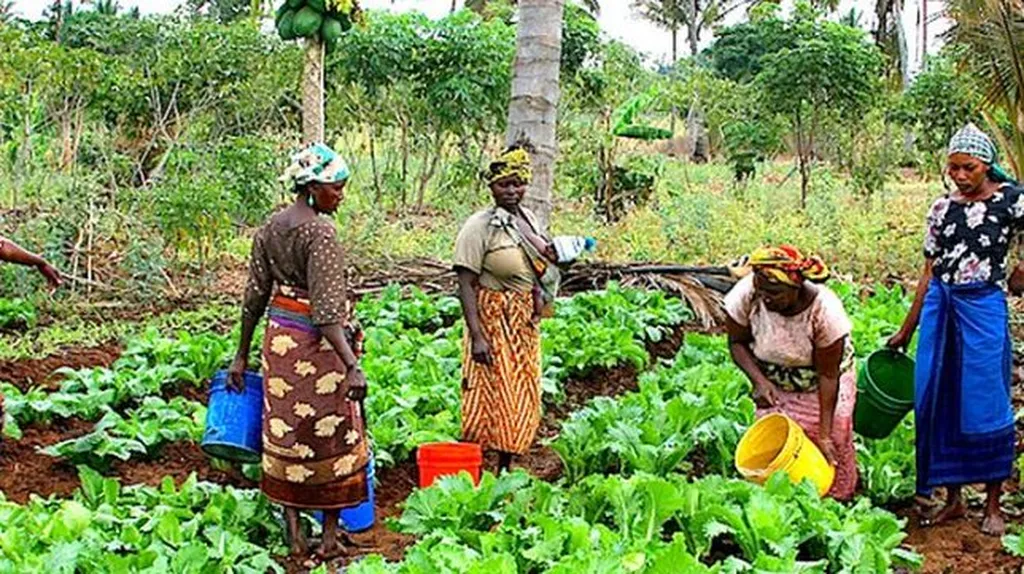
In the heart of Nigeria’s Oyo State, a quiet revolution is taking root, one vegetable farm at a time. A recent study published in the *Journal of Agriculture and Rural Development Studies* has shed light on the intricate dance between socioeconomic factors, climate-smart practices, and the profitability of vegetable farming in Egbeda Local Government Area. The research, led by Olaoluwa Ayodeji Adebayo of the Federal College of Forestry, Forestry Research Institute of Nigeria, offers a nuanced look at how smallholder farmers can navigate the challenges of climate change and economic constraints to boost their incomes and sustainability.
The study, which surveyed 145 vegetable farmers, revealed that the majority were male, aged between 31 and 40, and operated small-scale farms of less than one hectare. Despite these modest beginnings, many farmers have embraced climate-smart agricultural practices such as crop rotation, mulching, and the use of improved seeds. “The adoption rates were surprisingly high,” Adebayo noted, “with over 70% of farmers practicing crop rotation and mulching. This reflects a growing awareness of the need for sustainable production systems.”
However, the path to profitability is not without its hurdles. Farmers cited inadequate facilities, high input costs, and limited access to extension services as significant barriers. The regression analysis conducted by Adebayo and his team highlighted that farm size, association membership, and access to climate-smart agricultural information were key determinants of monthly profit. “Farmers who are part of cooperative networks and have access to relevant information are better equipped to make decisions that enhance their profitability,” Adebayo explained.
The study’s findings have significant implications for the agriculture sector, particularly in the context of climate change and the need for sustainable livelihoods. By understanding the socioeconomic factors that influence the adoption of climate-smart practices, policymakers and agricultural extension services can tailor their interventions to better support smallholder farmers. “Strengthening farmers’ access to land, input resources, and cooperative networks, alongside integrated extension services and multi-channel information dissemination, will enhance climate-smart agriculture adoption and profitability,” Adebayo emphasized.
The research also aligns with global efforts to achieve the Sustainable Development Goals, particularly Zero Hunger and Climate Action. As Nigeria and other countries strive to build resilient and sustainable agricultural systems, studies like this one provide valuable insights into the practical steps that can be taken to support smallholder farmers.
Looking ahead, the findings of this study could shape future developments in the field of climate-smart agriculture. By highlighting the importance of socioeconomic factors and institutional participation, the research underscores the need for a holistic approach to agricultural development. This approach should encompass not only technological innovations but also the socioeconomic and institutional frameworks that enable farmers to adopt and benefit from these innovations.
In the words of Adebayo, “The future of agriculture lies in our ability to integrate climate-smart practices with the socioeconomic realities of smallholder farmers. By doing so, we can create a more resilient and sustainable agricultural sector that benefits both farmers and the environment.” As the world grapples with the challenges of climate change and food security, the insights from this study offer a beacon of hope and a roadmap for action.