
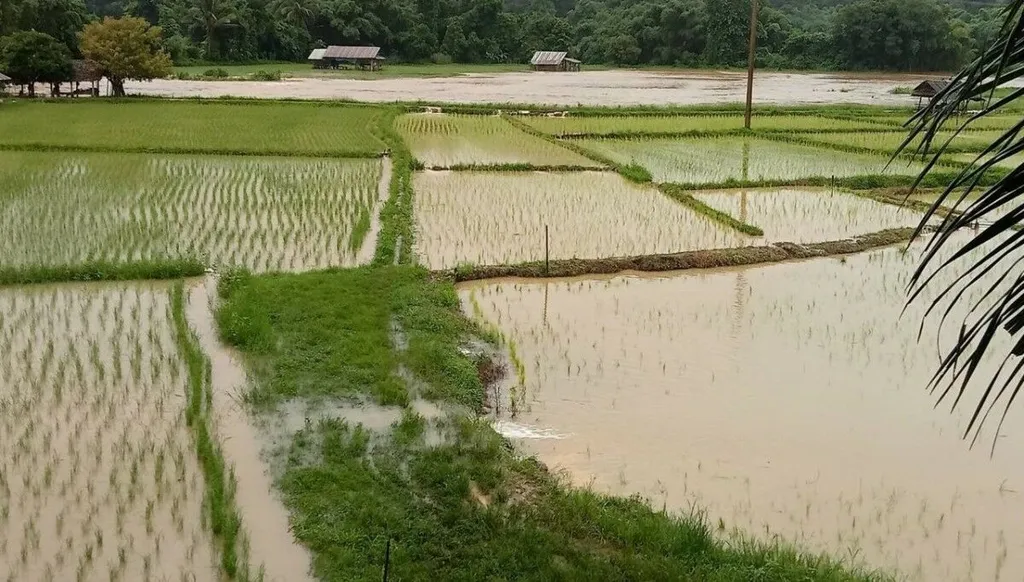
In the heart of Northeast Thailand, a silent transformation is taking place in the rice fields that have long been the lifeblood of rural communities. As urbanization creeps in, farmers are changing the way they tend to their soil, and the implications could resonate far beyond the paddies. A recent study published in *Forest and Society* and led by Sujitra Yodda from Khon Kaen University’s Program on System Approaches in Agriculture for Sustainable Development, sheds light on these shifts and their potential consequences.
The research, which surveyed 150 farmers across three villages along a rural-urban continuum, reveals a stark trend: as villages become more urbanized, the use of organic soil amendments declines sharply. In rural areas, over 80% of farmers incorporate livestock manure into their fields, but this figure plummets to around 30% in more urbanized communities. Instead, periurban and urban farmers are turning to chemical fertilizers, a shift that could have profound implications for soil health and food security.
“This decline in organic amendment use is a significant concern,” Yodda explains. “Organic matter is crucial for maintaining soil structure, fertility, and microbial activity. Its reduction could lead to long-term degradation of soil quality.”
The study also found that farmers applying higher amounts of organic matter tended to use less chemical fertilizer, suggesting that organic amendments could play a key role in reducing chemical input. However, urbanized farmers face constraints such as limited supplies, high costs, and labor shortages, which hinder their ability to apply organic amendments.
The commercial impacts of these findings are substantial. As urbanization continues to encroach upon agricultural lands, the shift towards chemical fertilizers could lead to increased input costs for farmers and potential yield declines in the long run. Moreover, the reduced use of organic amendments could compromise the environmental sustainability of rice production, a critical sector in Thailand’s economy.
The research underscores the urgent need for policy interventions to promote sustainable organic soil management practices in urbanizing communities. This could involve subsidies for organic amendments, support for local production and distribution systems, or education and training programs to help farmers adopt more sustainable practices.
As the world grapples with the challenges of urbanization and sustainable agriculture, this study serves as a stark reminder of the need to balance economic development with environmental stewardship. The findings could shape future developments in the field, prompting policymakers, agricultural practitioners, and researchers to rethink soil management strategies in urbanizing areas.
In the words of Yodda, “The shift towards chemical fertilizers is a double-edged sword. While it may offer short-term gains in yield, the long-term costs to soil health and food security are too great to ignore.” The challenge now is to find a way to reconcile these competing priorities and ensure the long-term sustainability of rice production in Northeast Thailand and beyond.