
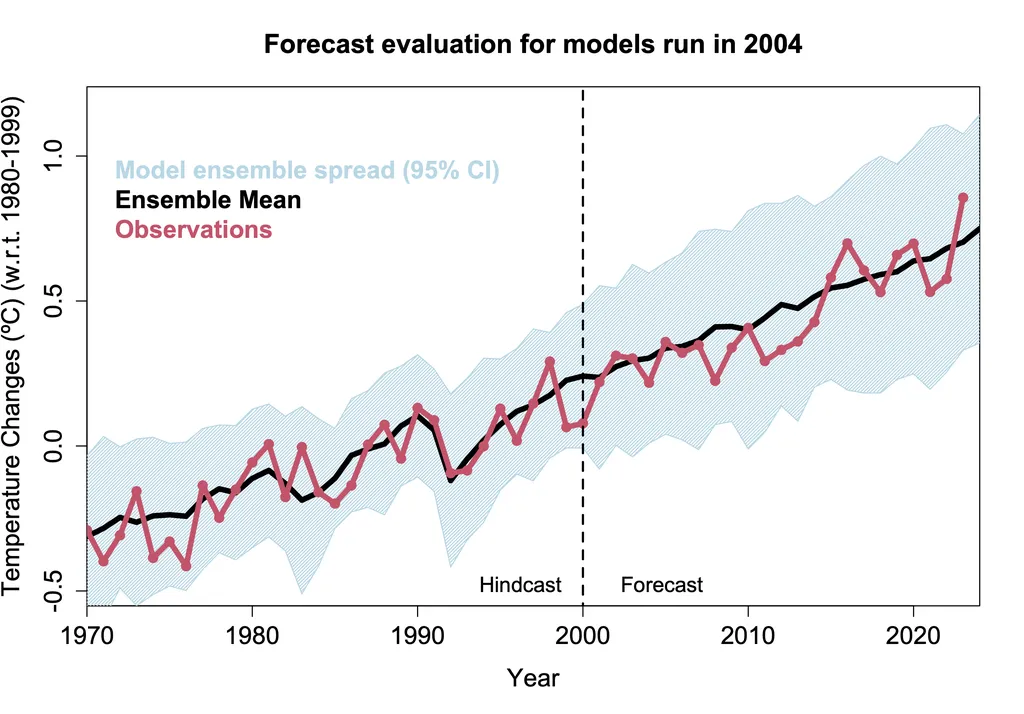
The year 2023 is set to conclude as the second hottest on record, trailing only 2024, continuing a recent trend of exceptional and unexplained warming. The last three years have been the hottest ever recorded, each measuring more than 1.5 degrees Celsius warmer than preindustrial times. This temporary breach of the international goal to limit warming below 1.5 degrees C has significant implications for the agriculture sector and investors.
The recent surge in warming, which has outpaced climate model predictions, has puzzled scientists. Experts have explored various potential factors, from the 2022 eruption of the Hunga Tonga–Hunga Ha‘apai underwater volcano to a drop in sunlight-blocking pollution. Climate scientist Zeke Hausfather examined four potential drivers of the warming surge in a recent analysis published in Carbon Brief.
First, the Hunga Tonga–Hunga Ha‘apai eruption sent a massive plume of heat-trapping water vapor into the upper atmosphere. Second, there has been a recent uptick in solar output. However, Hausfather found that these factors could explain less than half of the temperature jump. Third, the formation of a powerful El Niño in late 2023, which drove up temperatures worldwide, may explain the exceptional warmth in 2024 but not the temperature surge in early 2023.
Lastly, the dramatic drop in sulfur dioxide emissions, a pollutant from coal power plants and cargo ships that blocks sunlight and cools the planet, has contributed to warming. Sulfur dioxide emissions have declined by 40 percent in the past 18 years, with a steep drop in shipping pollution due to a 2020 international rule. While most research has found that cuts to shipping pollution have had a modest impact on temperatures, one study by James Hansen, formerly the chief climate scientist at NASA, found that the drop in shipping pollution could explain nearly all of the recent exceptional warming.
For the agriculture sector, the implications of this warming trend are profound. Higher temperatures can lead to increased evaporation and reduced soil moisture, negatively impacting crop yields. Extreme weather events, such as droughts and floods, are also becoming more frequent and intense, further threatening agricultural productivity. Farmers may need to adapt by adopting new technologies, changing crop varieties, and implementing more sustainable farming practices.
Investors in the agriculture sector must also consider these changes. The increased frequency of extreme weather events and the potential for reduced crop yields can lead to market volatility and increased risks. However, there are also opportunities for investment in technologies and practices that can help the agriculture sector adapt to and mitigate the impacts of climate change.
In conclusion, while the recent surge in warming may be temporary, it highlights the urgent need for action to address climate change. The agriculture sector and investors must adapt to these changes to ensure food security and economic stability in the face of a warming world.