
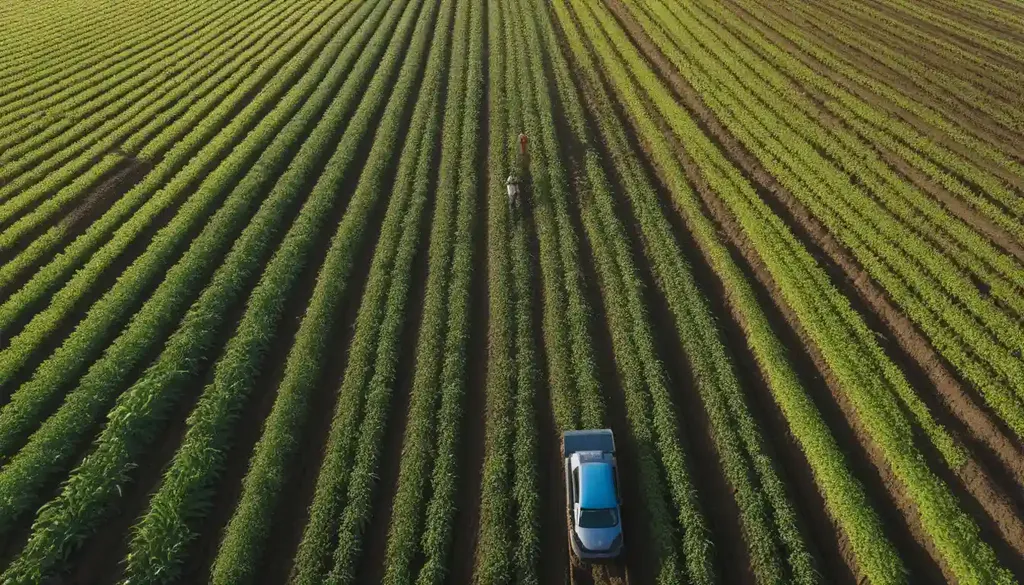
China’s commitment to modernizing its agriculture and advancing rural vitalization during the 15th Five-Year Plan period (2026-30) has been widely commended by officials and experts. This strategic priority is seen as crucial for the country’s overall modernization and food security, especially amidst global uncertainties.
Minister of Agriculture and Rural Affairs Han Jun emphasized that agricultural and rural modernization is integral to China’s path to modernization. Speaking to Xinhua News Agency ahead of the annual Central Rural Work Conference in Beijing, Han described rural modernization as a “ballast stone” for economic and social stability. He noted that it supports the establishment of a new development paradigm by narrowing the urban-rural gap and ensuring farmers benefit from modernization. By 2035, hundreds of millions of farmers are expected to step into modern life, unleashing enormous momentum for development and consumption.
China enters the next five-year planning period on a solid foundation, with steady growth in grain and major agricultural product output. Grain production reached a record 715 million metric tons this year, with science and technology contributing over 64 percent to overall agricultural growth. However, challenges remain, including lagging rural development and sustaining income growth for farmers. Han called for continued focus on agriculture, rural areas, and farmers.
To address these challenges, China will launch a new round of measures to raise grain production capacity by 50 million tons, accelerate the construction of high-standard farmland, advance the seed industry, and promote smart agricultural machinery. The country will also develop a more diversified food supply system and expand agricultural processing to boost farmers’ incomes.
Sun Qixin, president of China Agricultural University, highlighted the importance of developing new quality productive forces in agriculture tailored to local conditions. Biotechnology is expected to be a core engine for this development, with breakthroughs in gene editing and synthetic biology likely to reshape production models and upgrade agricultural industries. China’s scientific and technological innovation in the seed industry has entered the world’s top tier, with researchers identifying new genes that regulate crop yield and quality. A new generation of improved varieties, including high-yield rice, water-saving and disease-resistant wheat, high-density and machine-friendly maize, and high-oil soybeans, has been bred.
The integration of big data, cloud computing, and artificial intelligence into farming is transforming traditional practices, making smart agriculture a key driver of new quality productive forces. From drones to intelligent farming robots, next-generation agricultural machinery is accelerating the shift toward automated and data-driven production. China has selected its first quality inspection and testing center for smart agriculture technologies and equipment, filling a gap in the country’s smart agriculture testing system. The talent pool for smart agriculture continues to expand, with training programs drawing nearly 40 million participants this year.
Preventing a return to poverty will also be a key priority during the next five years. China will continue supportive policies and integrate regular assistance into future rural vitalization efforts. A dynamic monitoring and assistance system seeks to prevent large-scale relapse into poverty. Measures such as east-west cooperation and targeted assistance for key counties will continue. Han added that China will promote deeper integration of rural industries and foster distinctive local product chains to support stable income growth for farmers.
According to the Ministry of Agriculture and Rural Affairs, all 832 counties previously lifted out of poverty have each developed two to three leading industries with competitive strengths. Employment among the formerly impoverished population stabilized at more than 30 million people, accounting for over two-thirds of household income for these families. In the first three quarters of this year, rural residents in formerly impoverished counties recorded per capita disposable income of 13,158 yuan ($1,872), up 6.5 percent year-on-year and 0.5 percentage point faster than the national rural average.