
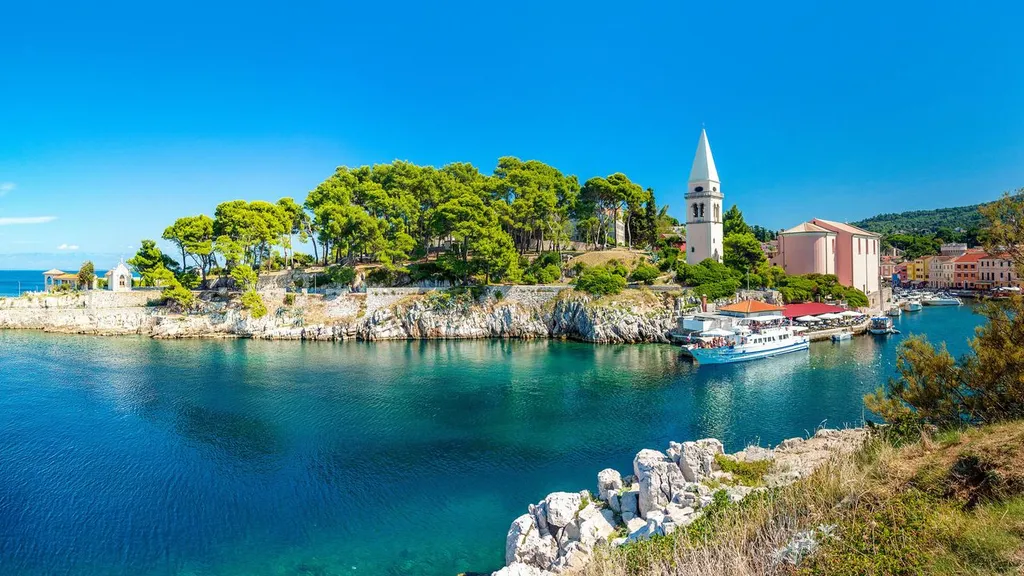
In the sun-drenched landscapes of Croatia’s Lošinj Island, a silent transformation has been unfolding over the past five and a half decades. A recent study published in *South-East European Forestry* has peeled back the layers of this change, revealing a dramatic shift in land cover and land use that could reshape the island’s future and offer lessons for similar regions worldwide.
Using digital orthophoto maps from 1968 and 2024, researchers led by Jelena Kolić from the University of Zagreb’s Faculty of Forestry and Wood Technology have meticulously tracked the evolution of Lošinj’s landscape. Their findings paint a picture of significant reforestation and natural vegetation succession, driven by a complex interplay of historical, social, and economic factors.
The most striking change observed is the explosive growth of Aleppo pine forests, which have expanded from a modest 200 hectares in 1968 to a sprawling 800 hectares in 2024. Simultaneously, indigenous vegetation, primarily consisting of holm oak (Quercus ilex) and associated species, has also seen a doubling in area. These changes haven’t come at the expense of agricultural lands alone; the study also highlights the encroachment of settlements and transport infrastructure, which have collectively doubled in size over the same period.
“This research underscores the profound impact of human activity on the landscape,” Kolić noted. “The expansion of settlements and infrastructure, coupled with the abandonment of agricultural practices, has triggered a cascade of ecological changes that we’re only beginning to understand.”
For the agriculture sector, these findings carry significant implications. The near-disappearance of agricultural areas on Lošinj serves as a stark reminder of the consequences of land abandonment and shifting economic priorities. As rural depopulation and reduced land use intensity continue to drive reforestation and natural succession, policymakers and agricultural stakeholders must grapple with the challenge of balancing economic development with environmental conservation.
The study’s use of geographic information systems (GIS) and remote sensing techniques has not only shed light on past changes but also provides a valuable tool for predicting future trends. By quantifying spatial and attribute data, researchers can offer data-driven insights to inform sustainable land management practices and mitigate potential negative impacts.
As Kolić and her team continue to unravel the complexities of Lošinj’s evolving landscape, their work serves as a potent reminder of the power of geoinformation and remote sensing in shaping our understanding of the world around us. For the agriculture sector, the lessons gleaned from this research could prove invaluable in navigating the challenges and opportunities that lie ahead.