
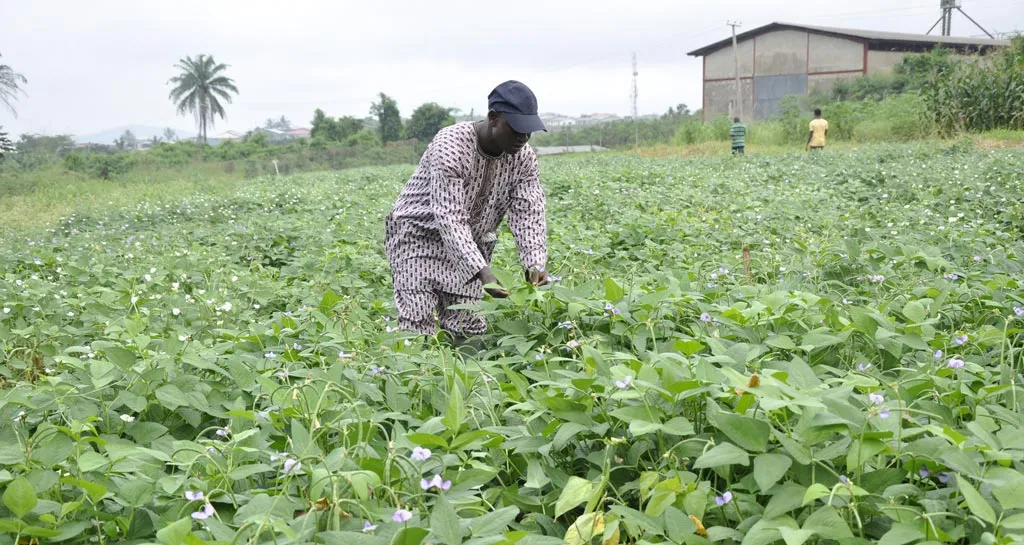
In the heart of Morocco, a treasure trove of genetic diversity is quietly thriving, offering promising prospects for the agriculture sector. A recent study published in the *Journal of Agriculture and Environment for International Development* has shed light on the remarkable variability and viability of Moroccan cowpea landraces, a crop that could play a pivotal role in enhancing food security and sustainable agriculture.
Cowpea (Vigna unguiculata (L.) Walp.) is a hardy legume known for its nutritional value and ability to withstand harsh climatic conditions. Yet, in Morocco, it remains a marginal crop, putting its local genetic resources at risk. To address this, researchers led by Zineb Moudni from the TEDAEEP Team Research at Abdelmalek Essaâdi University, examined nineteen traditional cowpea populations collected across Morocco. Their goal was to evaluate germination capacity, assess morphological diversity, and understand the patterns of variation and correlations between these traits.
The study revealed significant variability within and between populations for both germination and seed morphological traits. “Most populations exhibited high germination capacity and rapid germination rates, indicating an almost complete absence of dormancy,” Moudni explained. This is a crucial finding, as it suggests that these landraces could be readily integrated into agricultural systems without the need for extensive pre-sowing treatments.
The morphological traits of the seeds also showed substantial intra- and inter-population variability, reflecting a high level of phenotypic richness. This diversity is not just a testament to nature’s bounty but also a valuable resource for breeders. By identifying and utilizing these diverse traits, breeders can develop new cowpea varieties that are better adapted to different environments and resistant to various stresses.
Principal component analysis (PCA) identified four distinct population clusters, indicating that the spatial structuring of these landraces is influenced by both morphological and germination traits, as well as geographical connectivity. This understanding could guide conservation efforts and help preserve the genetic diversity of these valuable resources.
The commercial implications of this research are substantial. With climate change posing increasing threats to agriculture, the need for resilient and diverse crop varieties has never been greater. The Moroccan cowpea landraces, with their high germination rates and morphological diversity, could offer solutions for farmers facing challenging growing conditions. Moreover, the nutritional quality of cowpea makes it an attractive crop for enhancing food security.
Looking ahead, this research could shape future developments in the field by informing conservation strategies and breeding programs. By harnessing the genetic potential of these landraces, researchers and farmers can work together to develop sustainable and resilient agricultural systems. As Moudni noted, “These findings highlight the remarkable richness of Morocco’s local cowpea genetic resources, offering valuable insights for conservation and breeding programs to support food security and sustainable agriculture.”
In an era where the agriculture sector is grappling with the impacts of climate change and the need for sustainable practices, the Moroccan cowpea landraces stand as a beacon of hope. Their genetic diversity and resilience offer a promising avenue for enhancing food security and supporting sustainable agriculture. As research continues to unravel the potential of these landraces, the future of cowpea cultivation in Morocco and beyond looks increasingly bright.